


















Returning to Star Citizen in October 2026: Cargo, Engineering and New Work

A familiar ship can lead to a very different evening now. Get reacquainted with the systems that change how you travel, work and look after your crew.
The ship may look familiar, but the evening you planned around it might work rather differently now. Cargo needs moving, equipment has a place, and a ship losing power can leave somebody inside it with a repair job. Returning to Star Citizen is easier when you know which habits to keep and which ones are going to catch you out.
This is a guide to returning in October 2026, built around the live game’s documented systems. Alpha 4.10.2 test-server changes belong in a separate conversation until they reach LIVE. An exciting PTU video is not a guarantee that the same feature is waiting in your normal session.
Check the account before making plans for the fleet
The current Game Access selection period runs until 1 November 2026. In My Hangar → Game Access, eligible pledges can be selected to protect access to Star Citizen and Squadron 42. Only pledges that actually contain game access qualify; a standalone ship does not gain it because of its size or value.
If you have accumulated several packages over the years, check which ones are selected. That is an account housekeeping job worth doing before a long evening in the game. It is separate from choosing which ship you want to fly.
Cargo is something you handle
For players returning from older cargo systems, the biggest practical adjustment is the freight elevator. Goods stored at a location can be brought onto its platform, moved with a tractor tool and loaded into the ship. At the destination, unloading and sending the freight down are part of completing the journey.
Contract hauling and commodity trading are also different jobs. A hauling contract asks you to move assigned cargo; trading involves choosing goods and a destination yourself. Before accepting a job, check container sizes as well as the total SCU. A ship’s headline capacity does not tell you whether a particular box fits its grid or can pass through its access route.
Automatic loading exists in supported circumstances, but it is not a universal replacement for the manual workflow. Build the trip around the facilities at both ends and the cargo in question. Bringing the right handling tool is now as ordinary a preparation as bringing enough fuel.
)/75/patch-website-qa.webp)
A dark ship may need an engineer
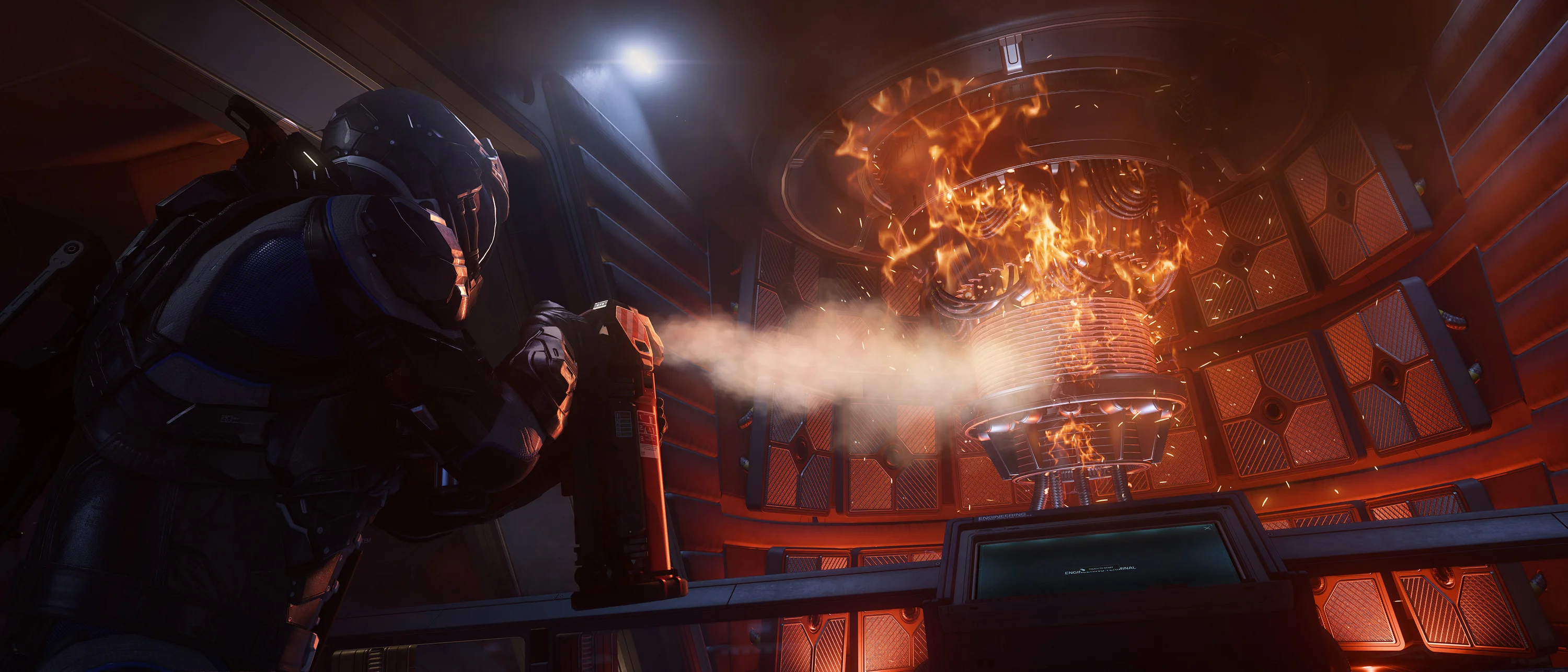
Engineering adds more to a voyage than another display in the cockpit. Power allocation, relay fuses, component condition and fire can affect whether the ship keeps working. A pilot can ask for power that the available system cannot deliver; a damaged relay can interrupt distribution even when the power plant itself is present.
The engineering display’s Rooms, Configuration and Presets views help you understand the ship. A relay can operate with one working fuse, although with reduced capacity. Repairing damage, replacing a suitable component and waiting for a temporary thermal or distortion shutdown are different responses to different faults.
On a larger ship, that gives another crew member something meaningful to do during a difficult flight. Alone, it makes accessible components and a familiar interior more valuable. The useful question is not whether every ship needs a full engineering team; it is whether you know what is reachable aboard the one you are taking out.
Gathering has a destination beyond the trade terminal
Crafting connects materials and blueprints to equipment you can use. Item fabricators take the required resources and turn them into the selected item, with material quality affecting the finished result. Mining, salvage and refining therefore feed more than a sale: they can support the equipment you or your group want to make.
Wikelo’s Alpha 4.10 exchanges connect to that loop. The new ship exchange supplies a single-use blueprint for a requested item, which you fabricate and deliver. Armour and weapon exchanges still involve gathering and handing in items, with a retained blueprint added to the reward. Read the particular showroom contract rather than relying on a recipe from an earlier visit.
There is a persistence detail for industrial players too. Alpha 4.10 added ore and commodity containers to long-term persistence going forward, but the notes distinguish ore pods supplied with ships from in-game-purchased pods: the stock pods are part of item recovery and do not preserve their contained ore through that system. Do not treat every container that looks similar as having identical persistence behaviour.
Nyx has work for independent miners
Recco Battaglia is back in Levski as an in-person mission giver. Her introduction leads through three story missions before opening further repeatable work, including rock cracking, defending miners, finding missing people and recovering items.
Her rewards lean towards hardware and blueprints, including mining modules, containers and ore pods. That gives a miner another reason to visit Nyx beyond finding a deposit: a progression route tied to the people working there. Recco’s history as a miner injured while saving colleagues gives those jobs a more personal setting than an anonymous terminal listing.
Siege of Orison is now a smaller, instanced fight
If your memory of Siege of Orison is a sprawling shared event, the Alpha 4.10 version needs a fresh explanation. It is an FPS mission in a closed instance for you and your party, up to four players, entered through instance lifts near the Crusader showroom after the introduction.
The three platforms have been reworked, and respawn checkpoints return you within the instance instead of sending you back to Orison General. Those checkpoints do not consume medgel. The revised Nine Tails include distinct bosses and elites, with completion rewards and loot giving the mission a different rhythm from its earlier incarnation.
That is a good example of why old articles should keep their dates and context. Earlier Siege coverage described the game that existed then. For tonight’s session, use the current mission and party requirements.
Leave some space in the evening
Start with one ship and an activity you already enjoy. A miner can get acquainted with handling and refining materials; a combat group can try the revised Orison mission; a crew can learn its ship’s engineering spaces during an ordinary journey. There is no need to turn the first night back into a checklist of every new system.
Read the current known issues before committing a valuable load or a long journey. Some faults have a specific workaround and others do not. The game has more connected activities now, but a claim that every route is reliable would do returning players no favours.