






















Star Citizen Combat: Shields, Armour and TTK

How shields, armour thresholds and component damage shape ship combat—and what September’s temporary TTK experiments changed before their rollback.
Landing shots and damaging a ship are no longer the same thing. An intact layer of armour can stop a projectile before it harms the hull or components, leaving a fast-firing loadout effective against one target and poorly suited to another. Shield loss still opens an opportunity, but it does not erase the protection underneath.
Alpha 4.7 introduced a minimum projectile-damage threshold for vehicle armour. September’s combat experiments then changed shields, weapon damage and armour together to alter how long fights lasted. Those experiments were temporary: the fourth test ran inside the 4.10.2 PTU, but the 29 September build explicitly restored normal balance. Its figures below describe that experiment, not a new Live loadout meta.
Why some shots cannot penetrate armour
A high damage-per-second figure can hide weak individual projectiles. At full armour health, the 4.7 threshold can block certain projectiles from damaging the armour itself, the ship and its components. Firing more of those rounds does not automatically solve the problem. As armour health falls, smaller projectiles can begin to damage the ship and its internal systems.
That makes weapon choice depend on the target as well as the rate of fire. A loadout suited to fighting small ships need not be equally capable against a heavily protected hull. It also means a shield break alone is not proof that every gun now has a useful route to the components beneath.
Turrets, thrusters and other subparts received modified deflection values to act as weak points. Destroying one does not create a permanent bypass through the ship: pass-through damage at that location then uses the normal armour values. Precision can therefore remove an exposed threat without granting unlimited access to the main hull behind it.
Choosing weapons for shields, armour and components
- Energy weapons attack shields and reduce armour health, helping open a route for further damage.
- Ballistics have greater potential to penetrate towards internal components as armour is reduced, with shield penetration also part of their behaviour.
- Explosives primarily damage external components and armour.
- Distortion interrupts nearby components at the point of impact.
The balance between those effects can change between builds. A damage-per-second figure is useful, but it will not tell you how a weapon handles every layer of a particular target’s protection.
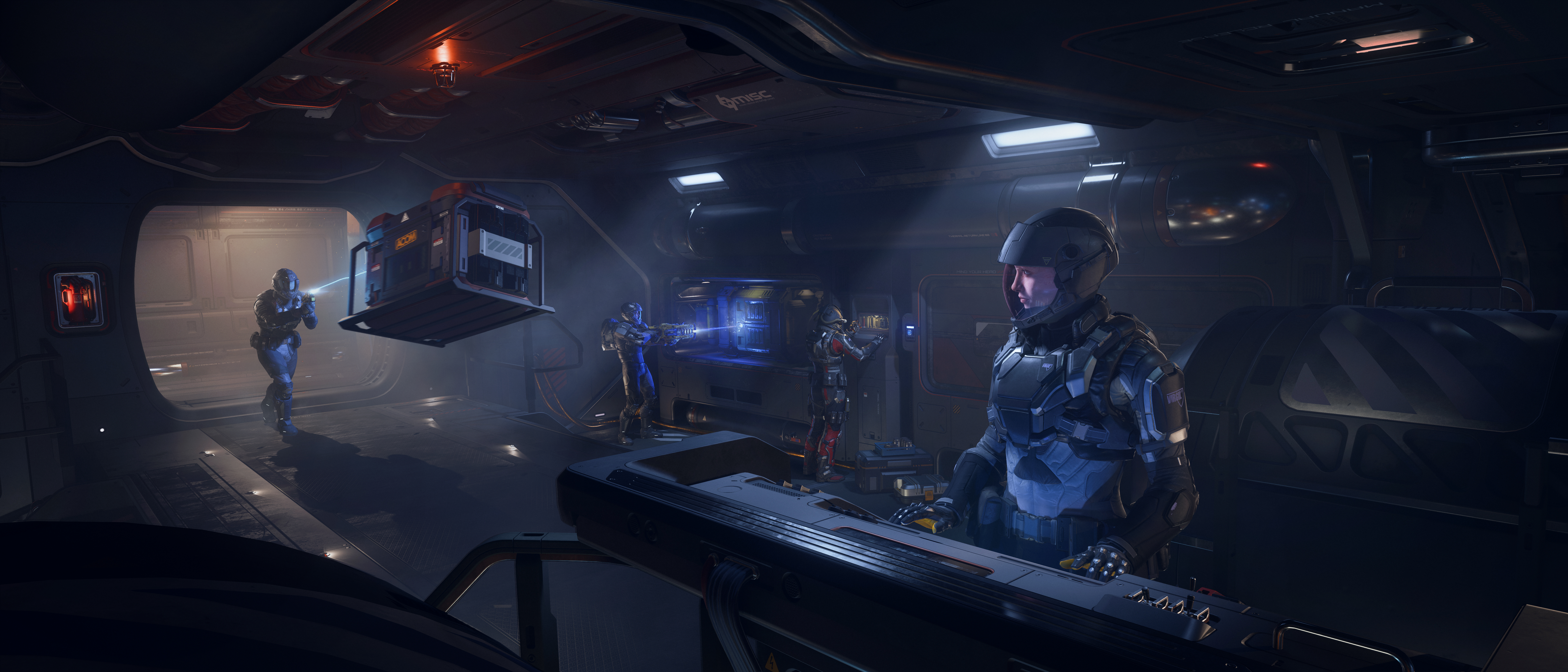
A smaller fighter can still contribute by engaging other fighters or attacking vulnerable external systems. That is a different assignment from trying to destroy the protected main body of a large ship. A group can combine those jobs rather than expecting each pilot’s weapons to perform identically against every target.
For a solo pilot, that choice happens before leaving the hangar. A nimble fighter can outfly a heavier opponent and still struggle to get through its protection if the individual rounds are too weak. Bringing weapons suited to the target is as important as keeping it in the sights, although shield and component bugs can also account for attacks that appear ineffective.
September’s attempt to rebalance a fight
The second test had left small and medium ships dying too quickly for surveyed players. Feedback on large and capital ships went both ways, while lower shield health and increased absorption had unintentionally strengthened ballistics. Changes to shield recharge and its delay were received more positively. The next experiment tried to retain those gains while giving shields a larger share of the fight.
The third Tech Preview aimed to put roughly two-thirds of a fight into breaking shields, leaving one-third for armour and critical parts. It also sought to balance energy against ballistics, refine the delay before shields recover, increase PvP time to kill relative to the second test, keep PvE faster and increase the survival time of large and capital ships.
Critical-part health could not be adjusted quickly with the tools available. To change its share of the fight, the test raised shield and armour values around it, then increased projectile damage to avoid stretching every engagement by the same amount. Large percentage changes therefore described a coordinated experiment, not a simple across-the-board durability buff.
The initial controlled work used Gladius-versus-Gladius combat before broader PvP and PvE scenarios. Results from that pairing were not guaranteed to transfer unchanged to other hulls, shield sizes or weapon sizes. For a capital crew, a fighter test is useful context, but it cannot supply the exact survival time of their own ship.
The test sequence, including the rollback
- 17 September — Tech Preview 3: all backers could test in the PU and Arena Commander on US Tech Preview servers. The post lists builds 12660092 and 12689504. Earlier changes were reverted unless specifically retained.
- 25 September — Tech Preview 4: the revised experiment ran inside Wave 1 PTU build 12770507 for the weekend. It was explicitly not intended to ship with 4.10.2.
- 29 September — PTU build 12811422: the TTK experiment was no longer active and normal balance returned.
The fourth-test feedback survey was scheduled to remain open until 15 October. A survey remaining open does not mean the experimental values are still enabled in the game.
Tech Preview 3: bigger shields and unintended failures
The third-test notes listed shield-health increases of 134–212%, armour-health changes ranging from a 30% reduction for small ships to an increase of up to 96% for capital ships, and a 145% increase in projectile alpha damage. Energy armour deflection rose by 145% and ballistic deflection by 80%.
Shield resistance was set to 40–50% against ballistic damage and 35–45% against energy damage, depending on shield health and assigned power. Ballistic shield absorption ranged from 0–80% according to shield health. The delay after shield damage increased by 100%; the delay after a shield break increased by 70%, which was 30% lower than in the second test.
Shield regeneration increased by 95% in the stated figures while retaining the intended relative slowdown alongside the other changes. The test also fixed a problem that let ships with multiple shield faces recharge four times faster than expected. An AI modifier made NPC ships take 40% more damage for PvE.
However, the build did not match every intended value. Shields accidentally had double their intended health, and incorrect power-pip entries left some shields unable to function. A separate bug made ships skip their over-damage health buffer and explode instead of first becoming disabled. A pilot could therefore face an excessively long shield fight and still see the target explode as soon as that protection failed.
Ballistics still emerged as too strong, and large ships were dying sooner despite their doubled shield health. Shield power allocation also failed to provide the intended balancing control because players tended to maximise it under the engineering system. Feedback strongly opposed the extra damage taken by AI ships, prompting further discussion as well as the smaller modifier in the next test.
Tech Preview 4 reduced ballistic damage and corrected shields
The next experiment corrected shields towards their intended health, cut ballistic damage by 20% relative to TP3 and provisionally cut the alpha damage of the AD4B, AD5B, Deadbolt IV and Deadbolt V by an additional 20%. Those weapon-specific cuts followed concerns that the guns were dominating the feedback. That extra reduction applied on top of the general ballistic cut, so those four weapons took the larger adjustment.
Large and capital shield and health values were examined more closely and generally increased to approach the two-thirds-shields, one-third-armour-and-critical-parts goal. Energy and ballistic deflection were adjusted again, and the AI damage modifier was reduced.
The fourth-test values below were stated relative to Live at the time, rather than as additional changes to apply on top of the TP3 figures:
| System | TP4 change from Live |
|---|---|
| Shield health | +17% to +70% |
| Armour health | −20% to +100% |
| Energy alpha damage | +145% |
| Ballistic alpha damage | +116% |
| Energy armour deflection | +80% |
| Ballistic armour deflection | +64% |
| Ballistic shield resistance | 40–50%, varying with shield health and power |
| Energy shield resistance | 35–45%, varying with shield health and power |
| Ballistic shield absorption | 0–80%, varying with shield health |
| Recovery delay after damage | +100% |
| Recovery delay after shield break | +70% |
| AI damage received | +20% |
Regeneration was adjusted to the health increase and remained slower than Live. The over-damage bug was still unresolved, with a reported reproduction rate of 25–50%. A ship exploding immediately after losing its protection could therefore bypass the disabled phase the test was supposed to preserve.
Disabling a ship is not the same as making it explode
Damage to components can remove a ship’s ability to fight or travel before the hull is destroyed. Distortion can temporarily shut components down, while physical damage may require repair or replacement. For the crew aboard, keeping a power plant, shields or propulsion operational is a more immediate task than watching a single abstract health total.
The engineering model includes a buffer after critical hull health reaches zero. Continued damage beyond that buffer can produce a hard death and explosion. A destroyed power plant can also trigger a critical failure, leaving a chance to act before the worst outcome. The September bug interfered with that sequence, so test footage of ships skipping straight to explosions should not be treated as evidence that soft death was deliberately removed.
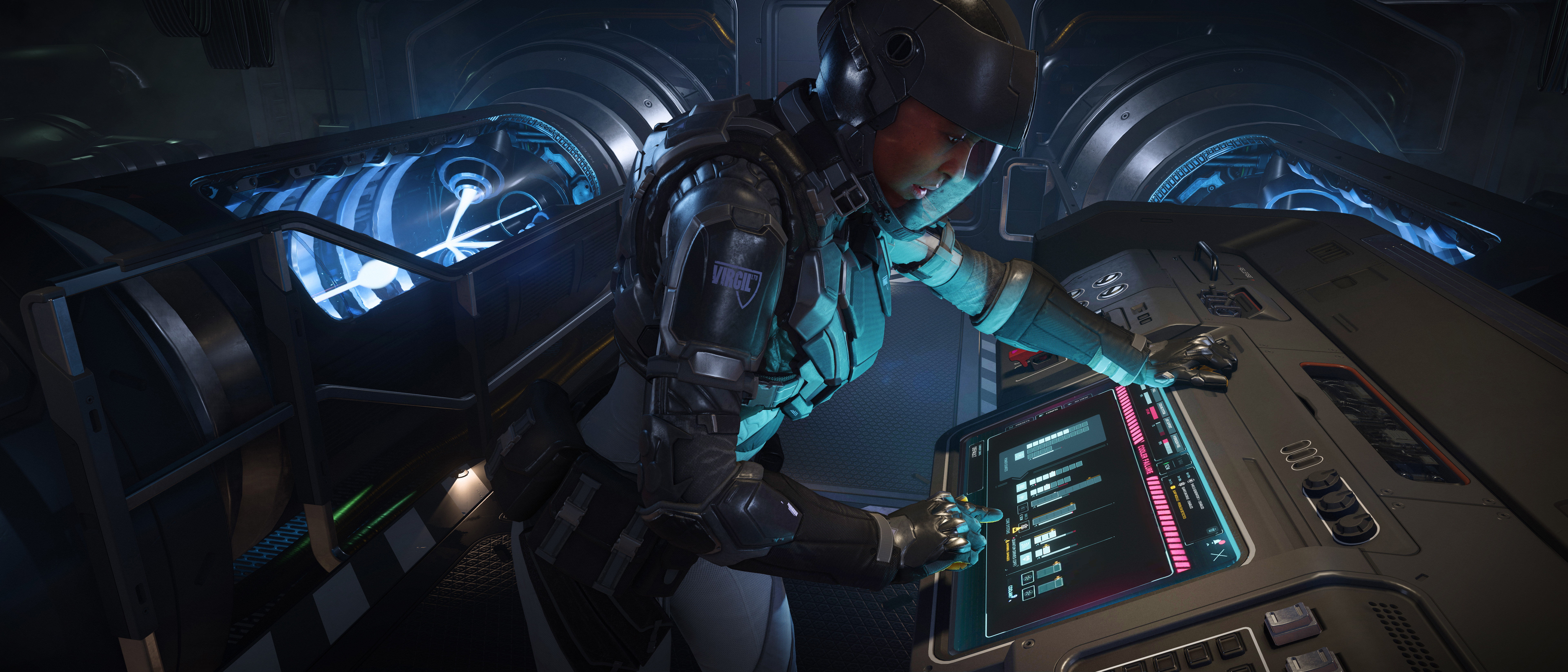
A larger crew can divide piloting, weapons and damage control, while a single-seat pilot relies on the available MFD controls and limited repair options. The engineering system gives crews something to preserve when a ship is damaged; it does not guarantee that every engagement leaves enough time to save it. The temporary TTK tests were attempting to alter that window, and their September rollback leaves their proposed balance separate from the current release.