





















Argo MOTH vs Reclaimer: Choosing a Salvage Ship for Your Crew

Three Argo scraping stations or a capital-sized Aegis salvage rig: the better fit depends on your crew, your cargo handling and what happens at the refinery.
The Reclaimer makes a magnificent promise when its floodlights pick out a wreck: bring enough people, stay a while and turn the remains into a substantial haul. The Argo MOTH offers a more manageable way into that kind of evening. It puts three scraping stations, structural-salvage equipment and automatic box handling into a ship a small group can keep busy without taking on a capital-sized industrial operation.
That does not make the MOTH a replacement for the Reclaimer. They suit different crews, and their structural salvage produces different grades of material. The choice starts with who regularly comes along, then reaches into unloading, refinery turnaround and how much ship you want to move between jobs.
A MOTH gives a small crew plenty to do
Argo recommends a pilot and at least one other operator, with room to make use of a crew of four. Its three hull-scraping turrets are independently manned: one faces forward and the others cover the sides. The pilot handles the structural-salvage arms, while the co-pilot has control of the defensive missile turret. With all three scraping stations occupied, the pilot can position the ship while everyone else works across the wreck.
You can take it out alone, but doing so means moving between stations. That changes the pace. A pilot cannot keep repositioning the ship and continuously operate a separate scraper at the same time. A pair has a more natural division of labour, and a regular four-person group can make full use of the arrangement. None of those crews should expect the same throughput simply because they own the same hull.
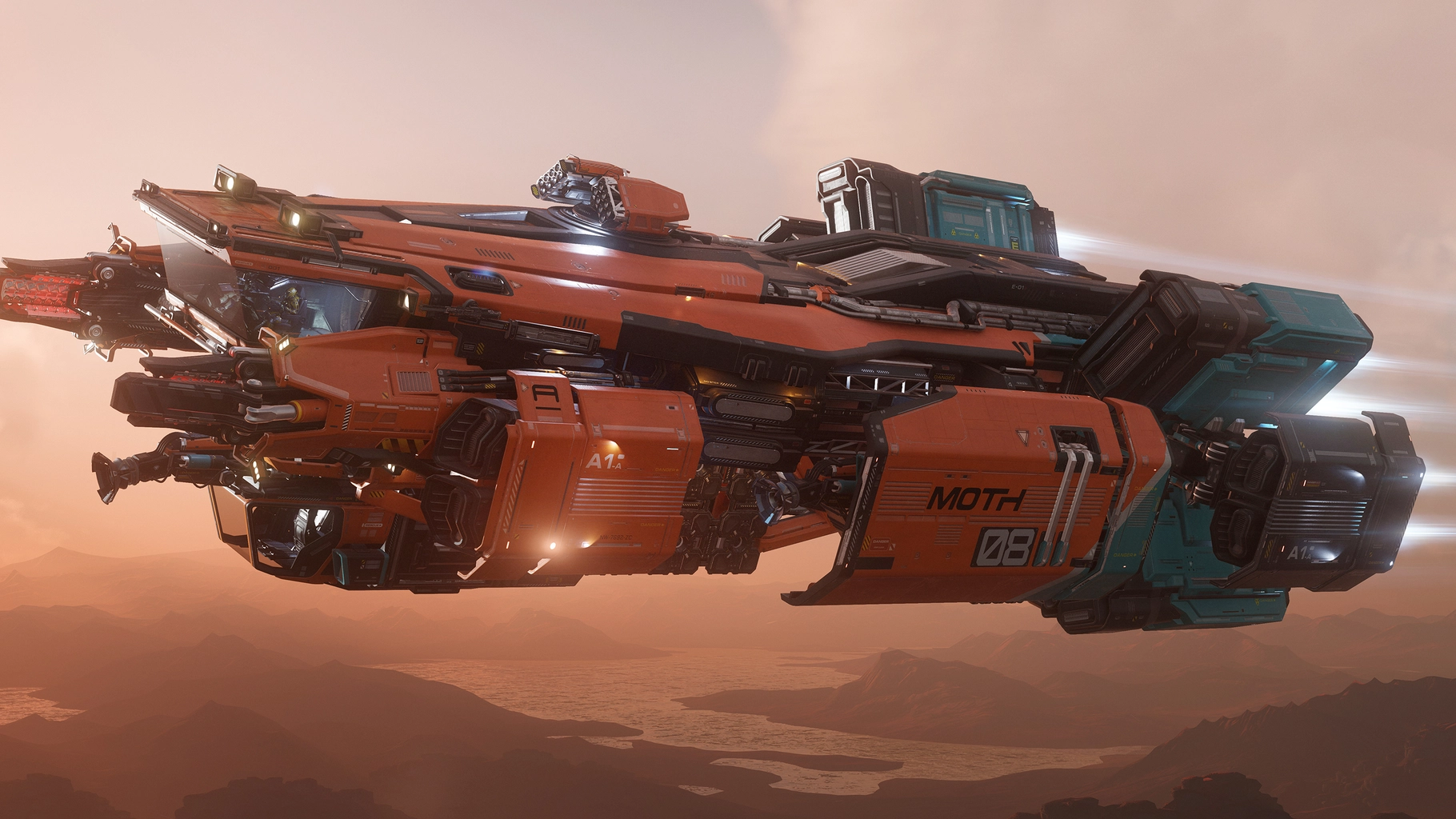
The MOTH also deals with a familiar irritation for salvage crews: someone having to leave the interesting work to move another box. Its two external side grids receive cargo automatically, while the rear hold provides additional storage. That makes the ship particularly appealing to a group coming from smaller salvagers, where emptying a buffer can interrupt scraping repeatedly.
Its family resemblance to the MOLE is unmistakable, but it is a dedicated salvage ship rather than a mining variant. The chunky Argo layout puts the working stations close to the action. Its three replaceable salvage heads also give the crew room to alter their equipment instead of committing to a single bespoke tool.
The Reclaimer is a much larger undertaking
A 160-metre Reclaimer is more than three times the MOTH’s 45-metre length. At 120 metres across and 55 metres high, it asks for a very different approach to manoeuvring and landing. Its size is part of the attraction: a crew has a substantial industrial ship to inhabit, with dedicated salvage stations and a large hold, rather than several players sharing a small cockpit.
The current specification lists a crew of five and 420 SCU of cargo capacity. Those figures describe its intended scale; they do not mean that exactly five people must be aboard before it can move, or that every crew will fill the hold at the same speed. Scraping, positioning, processing and cargo handling still have to be covered by the people actually present.
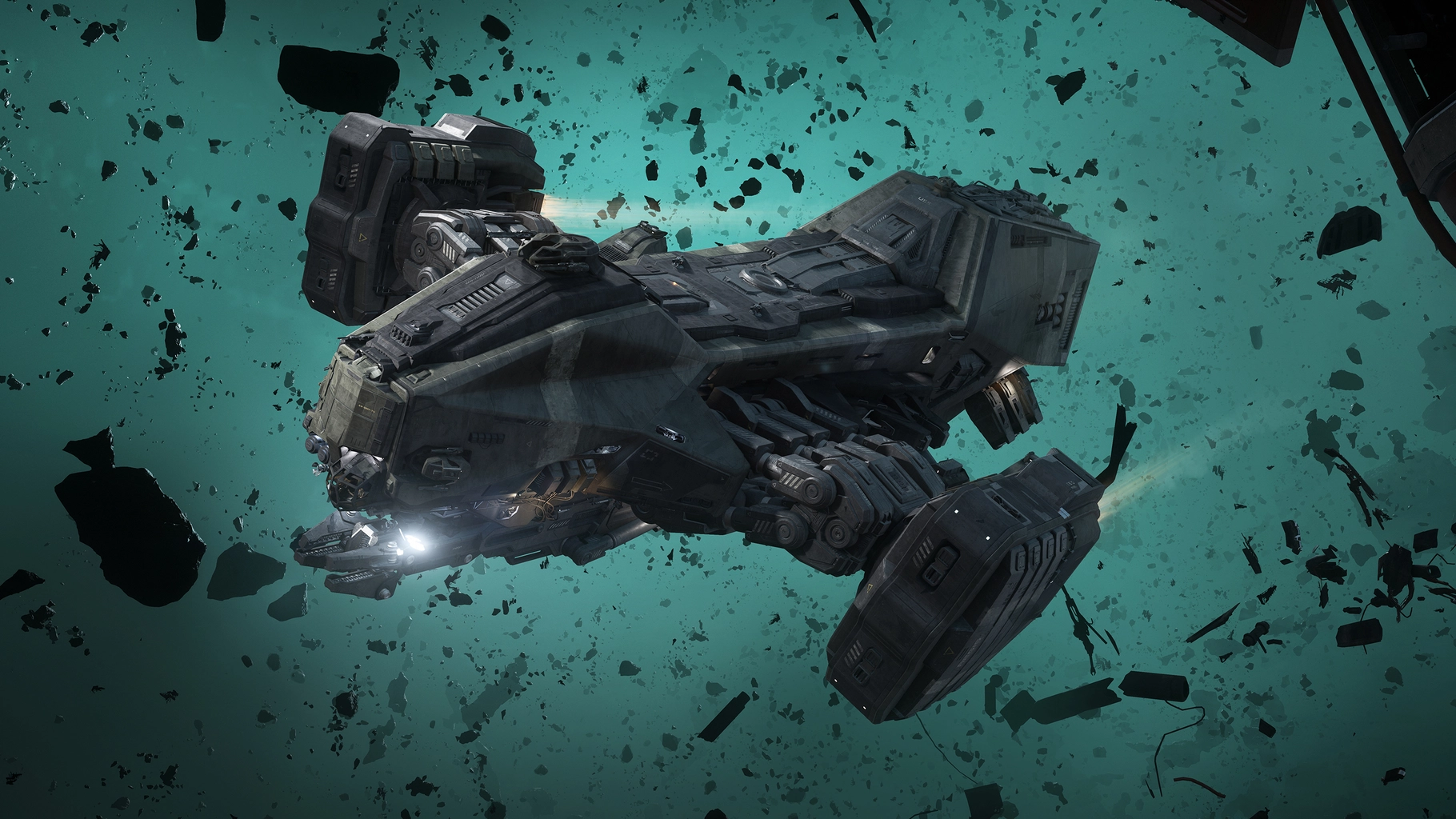
For a group that enjoys a long salvage session, the Reclaimer offers room to settle into those jobs. For two friends squeezing in a shorter evening, the MOTH’s smaller hull and external loading arrangement are easier to justify. A larger hold is useful when a crew can keep feeding it, but it also leaves a larger amount of material to move at the end of the trip.
Structural salvage changes the refinery calculation
Both ships can recover Recycled Material Composite, or RMC, by stripping a hull. Structural salvage is a separate process, breaking down the wreck itself. Here the MOTH and Reclaimer do not produce interchangeable raw output.
| Structural output | Argo MOTH | Aegis Reclaimer |
|---|---|---|
| Salvage class | Medium | Heavy |
| Construction material | Pieces | Salvage |
| Density within the three salvage grades | Medium | Lowest |
| Refinery processing time | Intermediate | Longest |
| Refined yield | Intermediate | Highest |
The Reclaimer’s heavier salvage grade has the stronger refined yield, with a longer processing wait. The MOTH sits between it and the Rubble produced by light salvagers. That gives the Reclaimer a reason to exist beyond cargo capacity, while leaving the MOTH attractive to crews who prefer a smaller operation and a quicker refinery turnaround.
What your crew brings home depends on the whole session: travel, finding a usable wreck, the number of active operators, unloading and refinery availability. RMC scraping and structural salvage also contribute differently to the load. A crew that enjoys stripping a hull thoroughly may have a different result from one concentrating on structural recovery.
What the MOTH can break, and where the cargo goes
The MOTH’s fracture capability is described as reaching ships such as the Origin 600i and MISC Starfarer. Its side scrapers have broad coverage, but they still work from their own positions rather than acting as three forward-facing pilot guns. Setting the ship alongside a wreck so the operators have useful angles is part of flying it well.
Argo’s detailed cargo layout documents two 96-SCU external grids and a 32-SCU rear hold, giving 224 SCU on physical grids. Two 32-SCU buffers add processing storage; they are not another pair of cargo decks. Keeping those categories separate matters when discussing how much a ship can carry and how much it can process before unloading.
The external arrangement makes the MOTH recognisable and gives loaders access to the cargo without working through a large internal hold. It also makes load distribution relevant: an uneven load can affect handling. The ship may be smaller than a Reclaimer, but it still rewards a pilot who treats it as an industrial machine rather than a fighter with an oversized hold.
Which one would we take?
For a pair or a flexible group of up to four, the MOTH is the stronger starting point. Its stations give additional friends useful work as they join, automatic loading removes some box-handling interruptions, and its dimensions are less demanding. It is particularly compelling when the alternative is taking a Reclaimer out with too few people to enjoy the ship’s scale.
For a regular industrial crew, the Reclaimer remains the more ambitious choice. Its hold and heavy structural-salvage output give a committed group a reason to build an evening around it. It suits players who enjoy the shipboard operation as much as reaching the next wreck, and who are willing to manage the cargo and refinery work that follow.
A solo pilot should also consider whether either ship is necessary. Seat-swapping is possible, but a purpose-built solo salvager can make a much more satisfying everyday companion. Our Vulture, Fortune and Salvation comparison covers that smaller end of the profession.