








What to know
The ARGO SRV is a single-seat recovery tug built around a heavy tractor rig and a stabilizing MaxTraction plate. It can tow disabled ships, reposition large objects, and support recovery work where the casualty cannot move under its own power.
SRV specifications
A controlled tow begins before the tractor locks on
The pilot has to understand the disabled ship's mass, damage, attachment point, and destination before moving it. Tractor control, rear-facing stability, range, and a compact habitation space support longer recoveries away from a station.
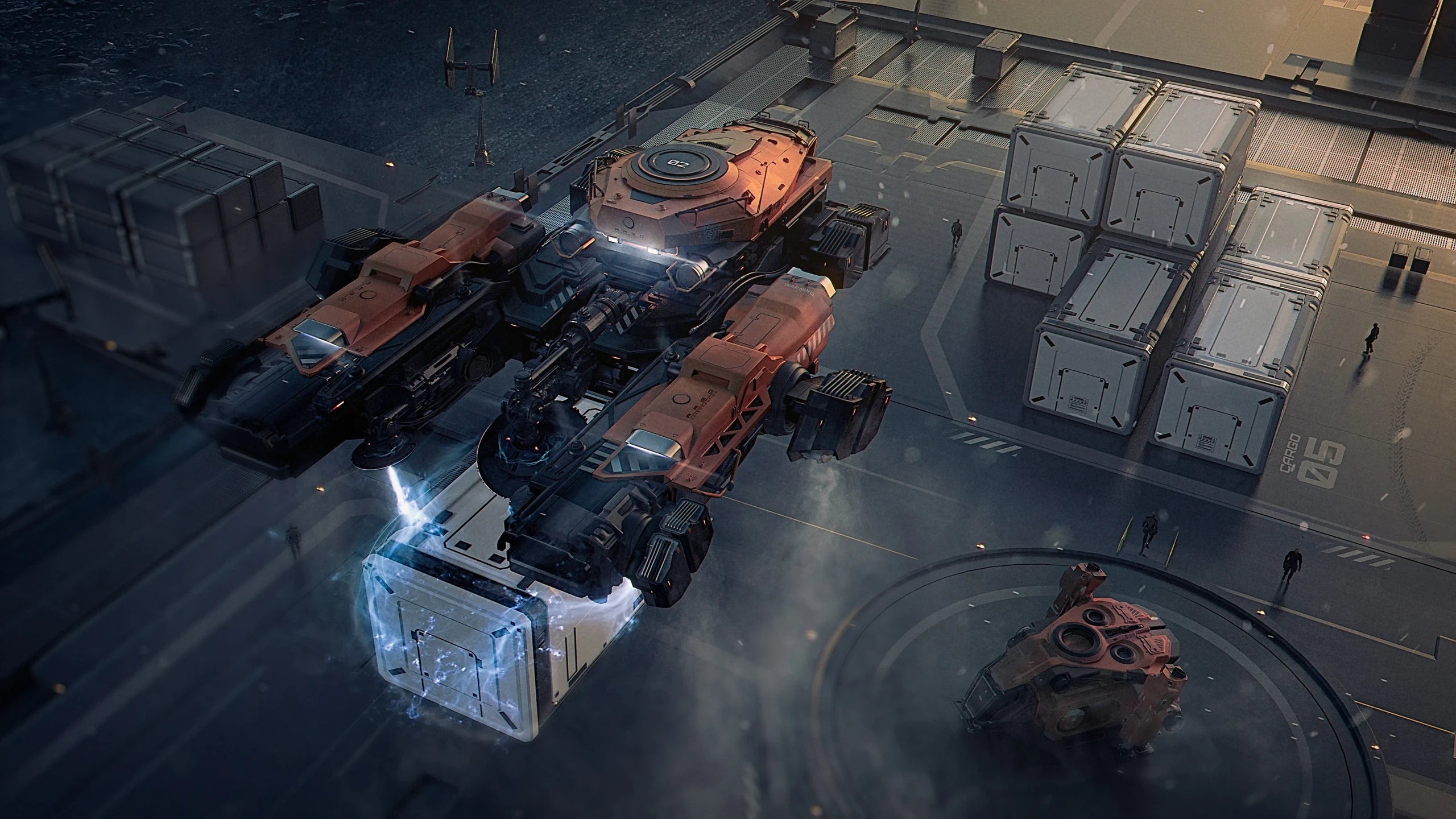
The ship that moves the ship
The SRV is not a repair bay or a medical ship. Its job is to establish a secure tractor connection, control both hulls through the tow, and leave the recovered craft where repair, salvage, or traffic-control crews can take over.
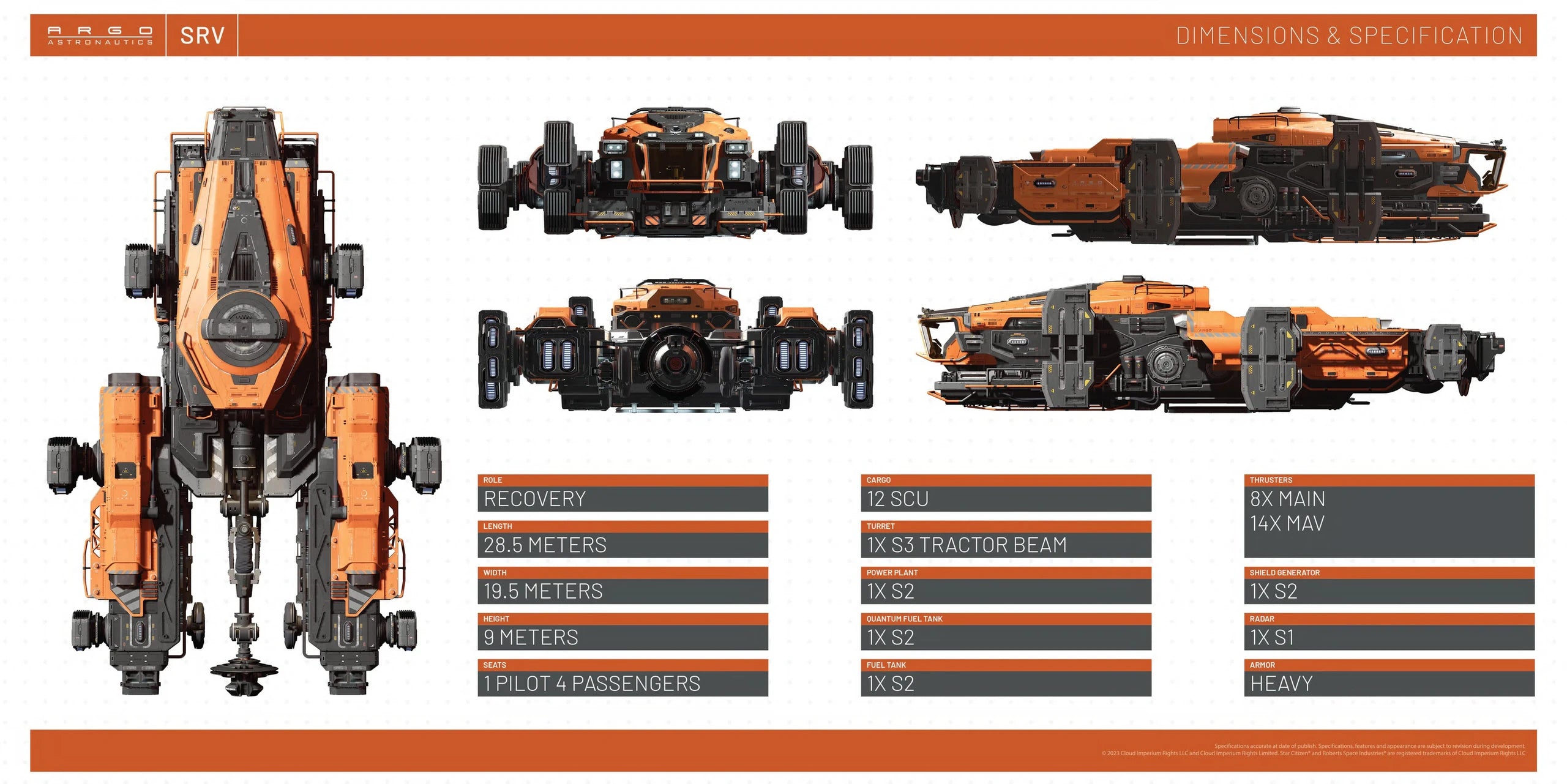
Development note: The SRV is flight ready and entered the live game in Alpha 3.21.1. Because Star Citizen remains in active development, specifications, features, and imagery may change over time.
Support another ship with the SRV
The SRV carries the Arm-Assist Tractor Rig into the field and gives both crews a clear route from first inspection to a safe handoff.
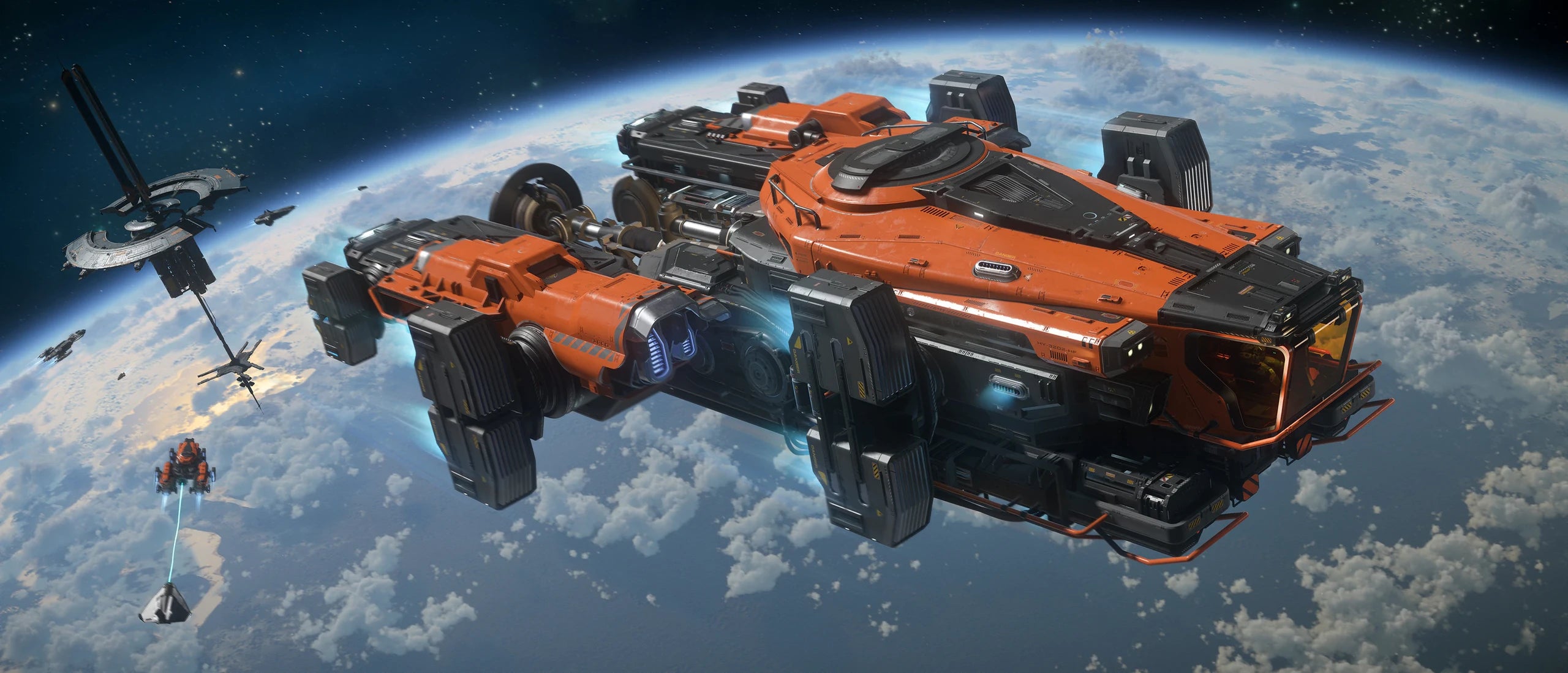
ARGO's custom-designed tractor plate was developed specifically for the SRV. Its unique specifications include a hydraulic boom and bespoke gimbal mount for maximum flexibility.
A compact living area supports longer recovery trips and gives the crew of a disabled ship somewhere protected to wait during the tow.
Fuel capacity and onboard habitation let the SRV reach disabled ships beyond the immediate station area and remain with a longer tow.
The SRV matches movement and communication with the supported ship before bringing tools or transfer equipment close.
Dedicated controls give the SRV's support crew a clear view of tool condition, connection, and progress.
Arm-Assist Tractor Rig on the SRV
The rear tractor rig gives the pilot the pulling force and fine control needed to tow a disabled ship or reposition a large object without relying on the casualty's own engines.
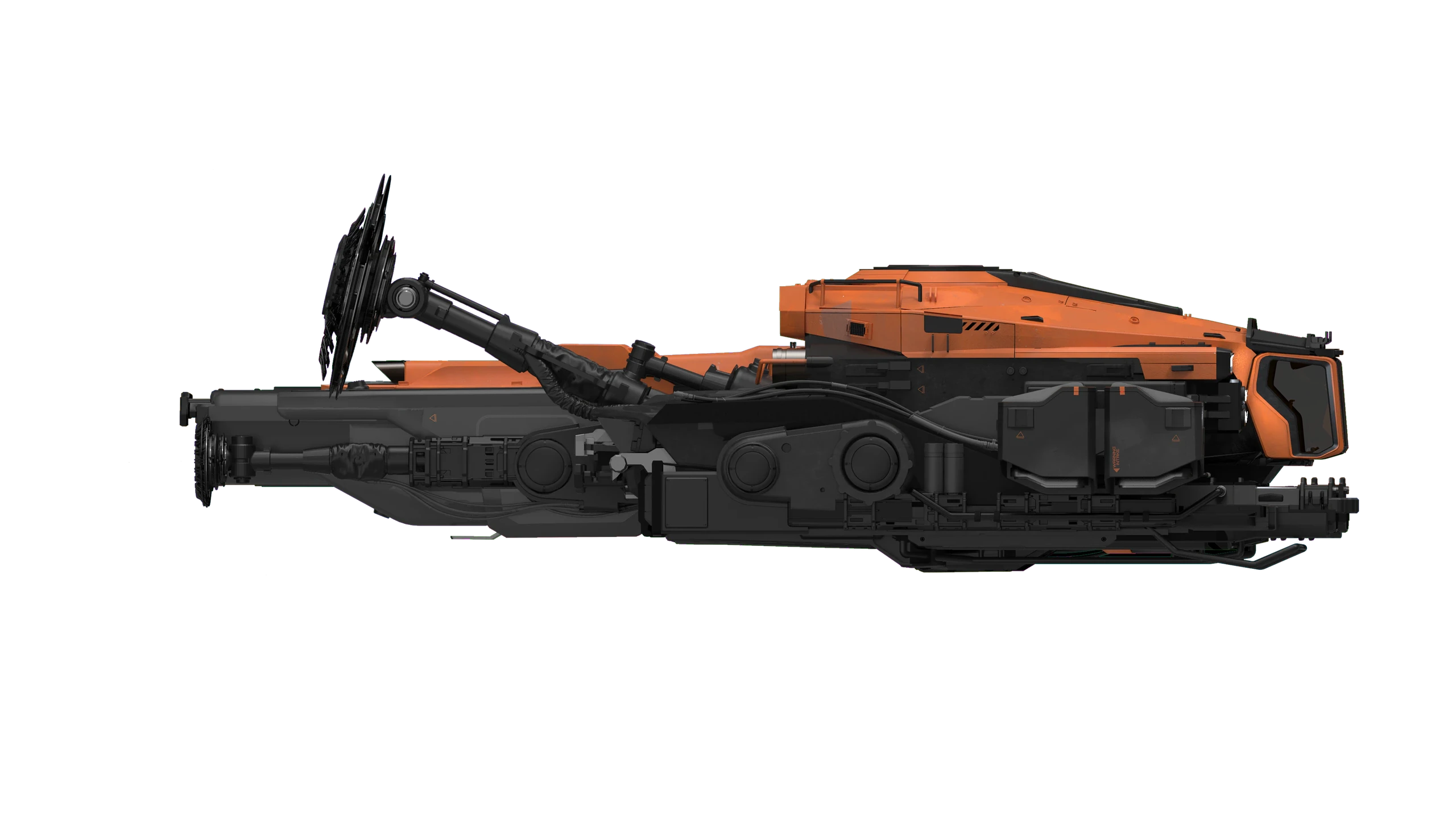
Arm-Assist Tractor Rig
Confirm what the other ship needs before the SRV brings the Arm-Assist Tractor Rig into the work area.
Hold a stable relative position while the crew applies the Arm-Assist Tractor Rig beside another ship.
Confirm the repair or transfer before the SRV withdraws the Arm-Assist Tractor Rig from the client ship.
Moving a ship that cannot move itself
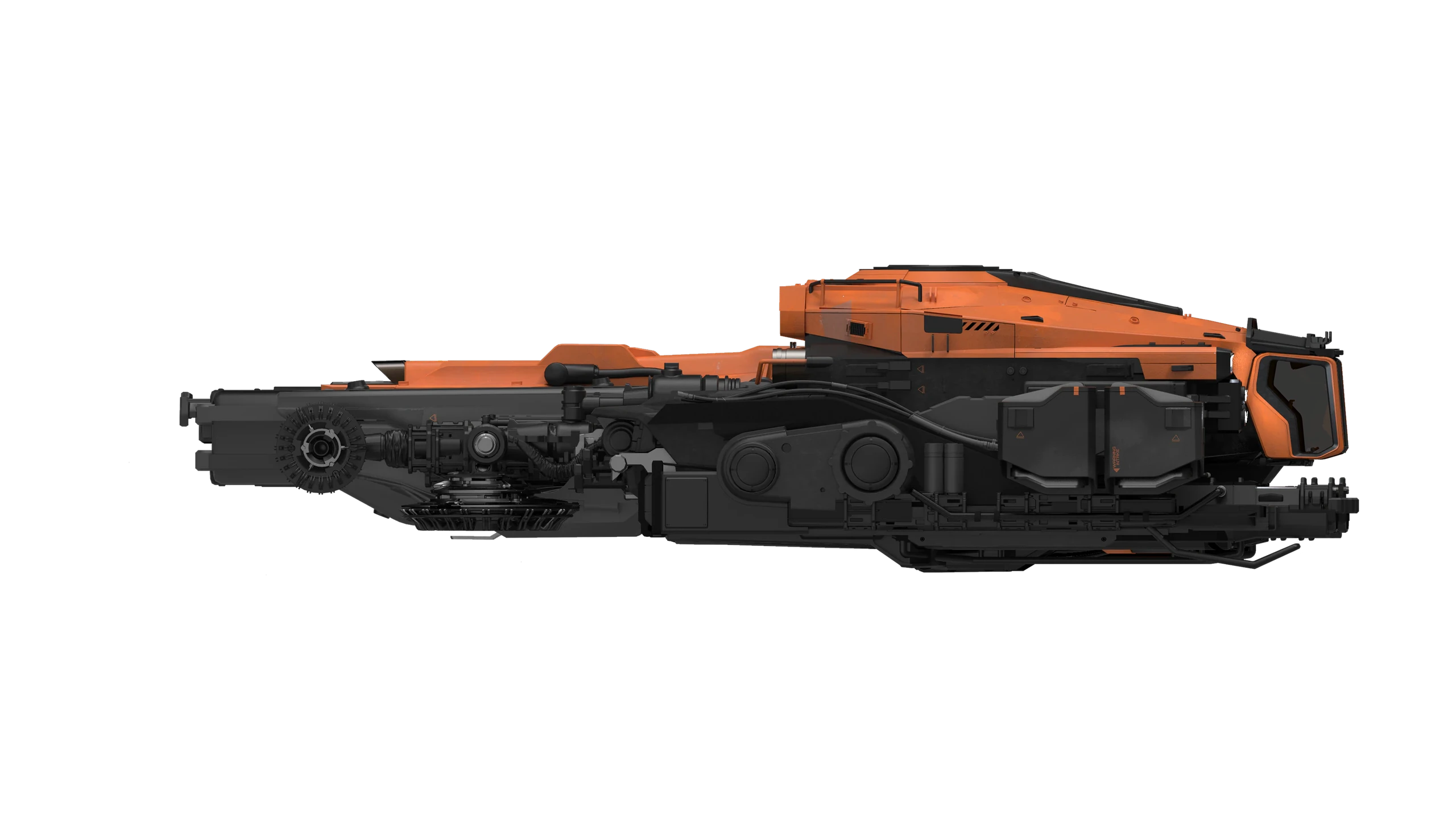
The SRV turns the Arm-Assist Tractor Rig into a practical towing service by controlling both the disabled hull and the route it must travel.
-
Understand the mass, damage, and destination
The SRV's crew needs a safe attachment point and a route that the disabled ship can survive.
-
Bring the Arm-Assist Tractor Rig onto the casualty
The crew places the SRV where its service equipment can work without creating a second hazard around the casualty.
-
Control both ships through the tow
For the SRV, acceleration, rotation, obstacles, and traffic affect the unpowered hull as much as the tug.
-
Leave the recovered ship stable and accessible
Both crews confirm the SRV's equipment is clear and the casualty is stable before moving apart.
The SRV, from diagnosis to handoff
The SRV brings its Arm-Assist Tractor Rig to a damaged or stranded ship, with the access, supplies, and testing needed to complete the job safely.
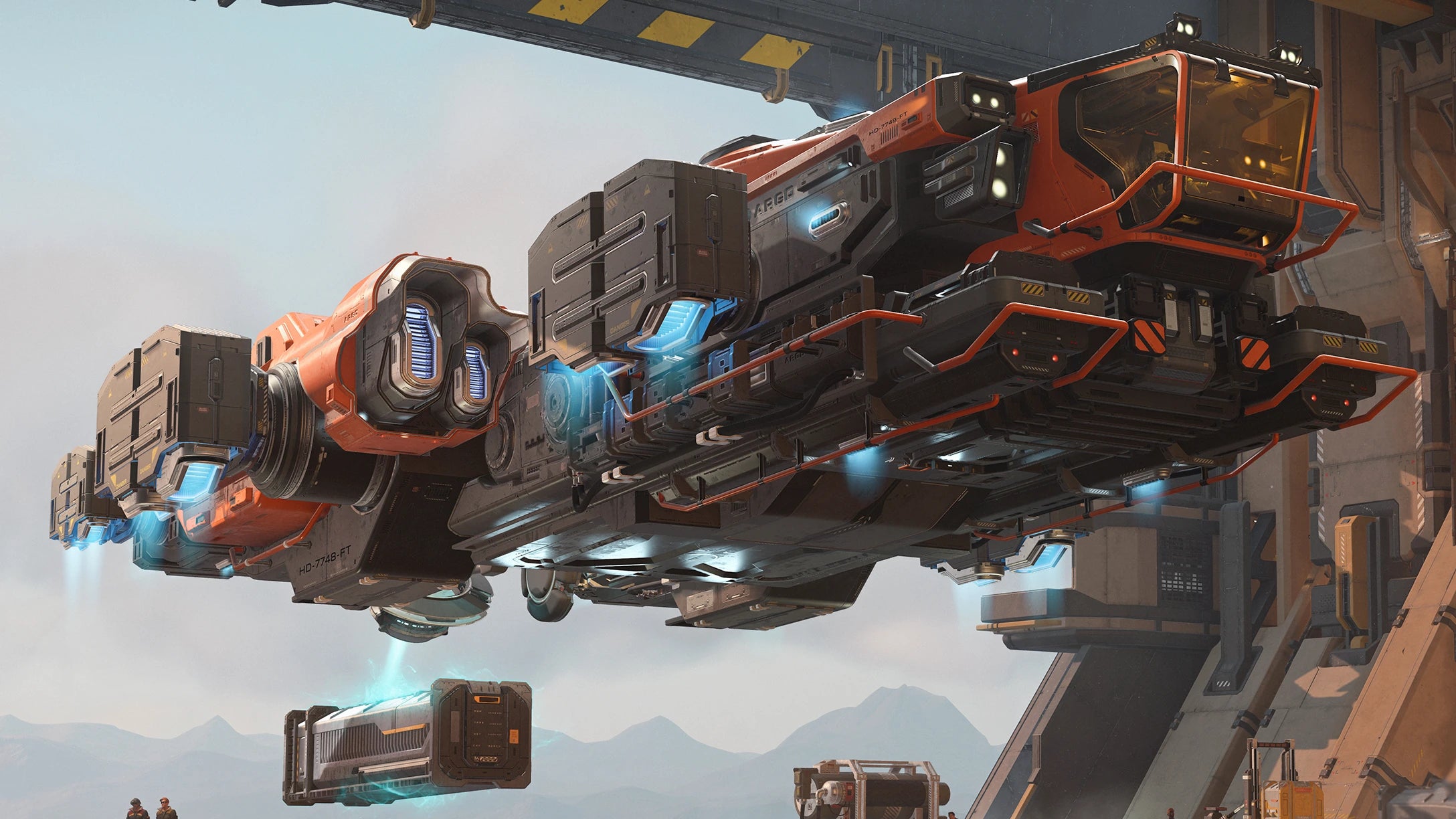
The ship has an internal storage capacity of 1.2 SCU and features racks built to carry a range of utility items.
The SRV can transport a maximum of 12 SCU of cargo in its undercarriage holding.
Fine movement and clear communication help the SRV establish a stable worksite around another ship.
Aboard the SRV, controls, supplies, and crew stations stay connected to the Arm-Assist Tractor Rig throughout each service visit.
The SRV's pilot manages two ships through one tow
The SRV's pilot has to control the tug, the disabled hull, and the route as one connected movement.
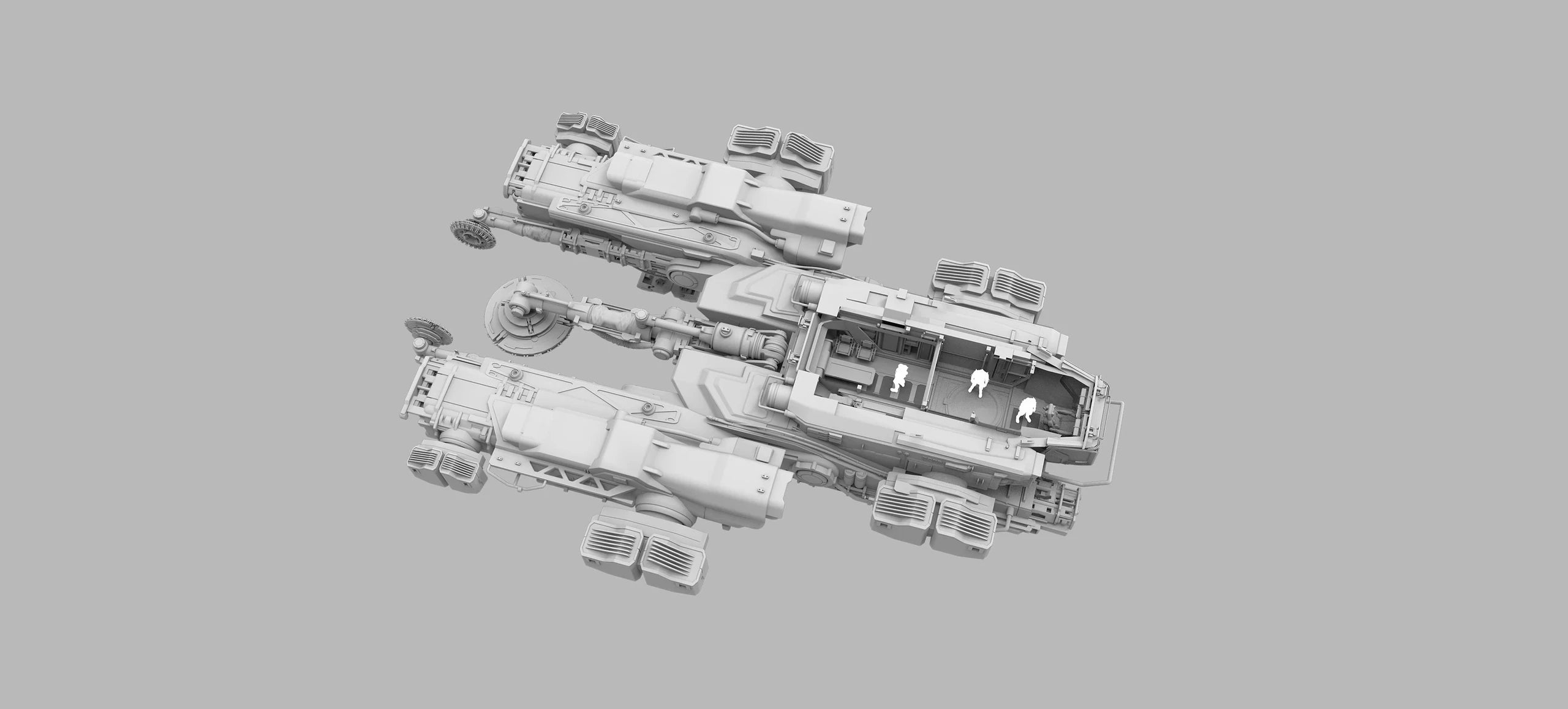
Mass, attachment, route, and destination decide the recovery
The SRV applies its Arm-Assist Tractor Rig to a disabled hull while the pilot controls relative movement, obstacles, and the condition of the casualty throughout the route.
For the SRV, mass, damage, free rotation, and the safest attachment point must be clear before the pull begins.
On the SRV, careful relative position lets the Arm-Assist Tractor Rig work without creating another hazard for the supported ship.
For the SRV, the tow ends with the casualty stable, accessible, and clear of the tug's equipment.
Find your SRV
Explore in-stock SRV ships, upgrades, and game packages available from The Impound.