
























Grey's Market Basher light fighter
JUNKYARD-BUILT LIGHT FIGHTER

Basher Review

Small ship. Enormous attitude.

A pocket-sized light fighter assembled from equal parts menace, imagination and things that look as though they were found behind a garage. It brings six Size 2 guns, four small missiles and a heroic quantity of scrapyard theatre to a class usually obsessed with clean aerodynamics.

Pilot weapons6 x Size 2
Missiles4 x Size 1
Crew1 pilot
Internal storage650 micro-SCU
VisibilityQuestionable
CharacterOff the scale

THE MARKET IS OPEN

A scrapyard fever dream

The Basher is not the clinical choice, the sensible choice or the choice with the best view out. It is a compact, single-seat light fighter built around six pilot-controlled guns and a shape that looks improvised without feeling unfinished. More than anything, it is the one with a pulse.

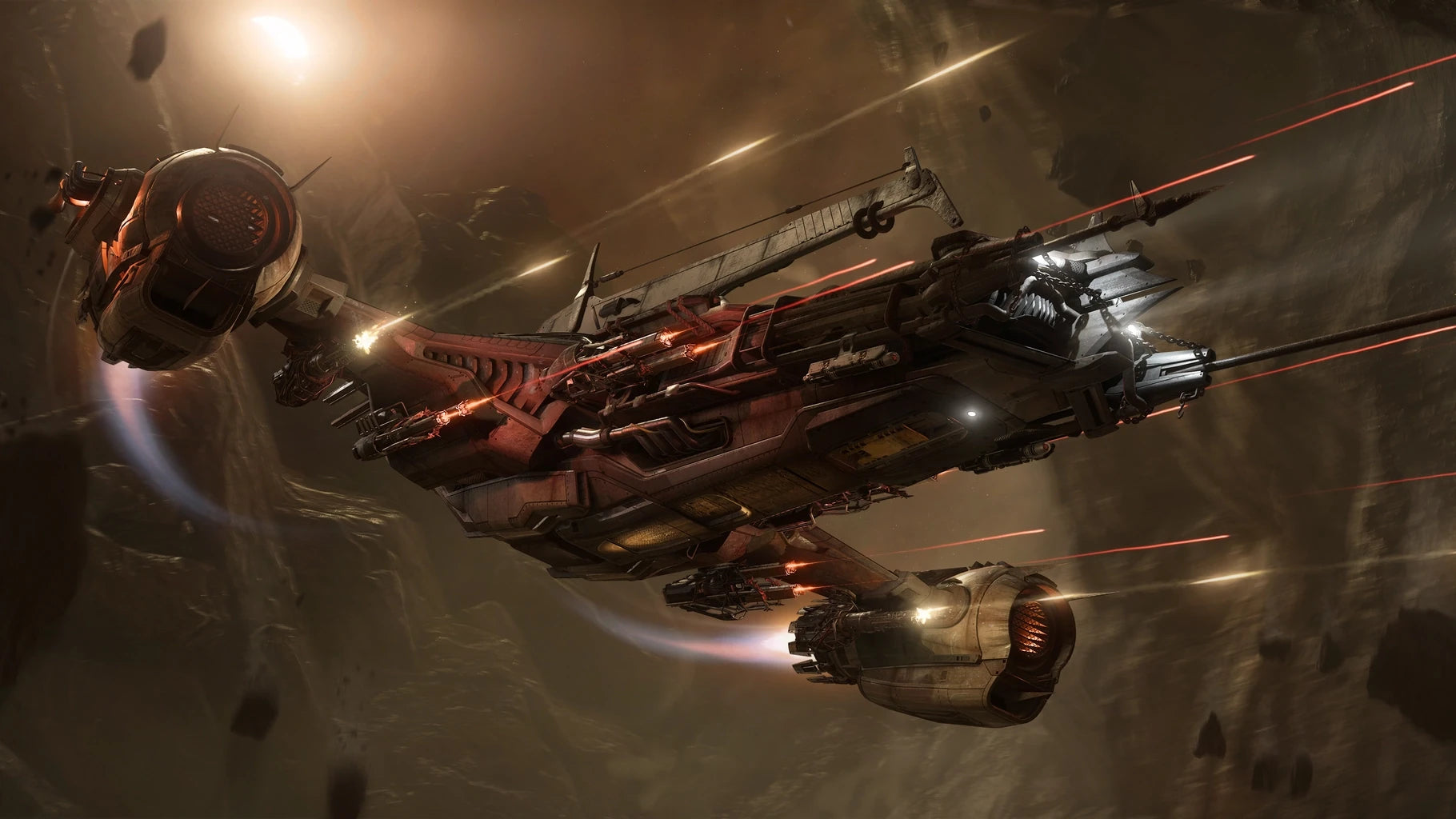
Grey's Market Basher in flight
First impression

Chaos, carefully assembled

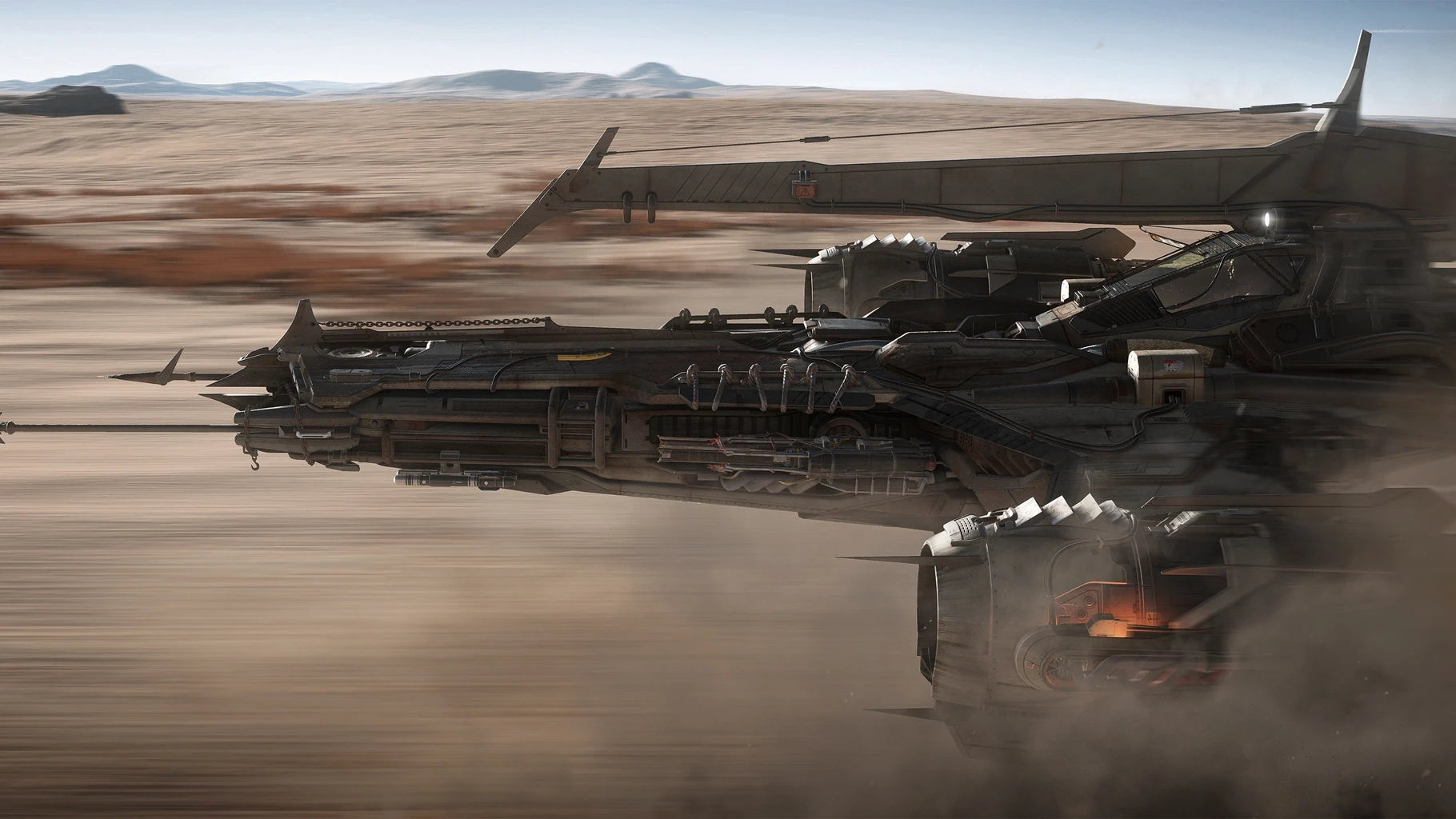
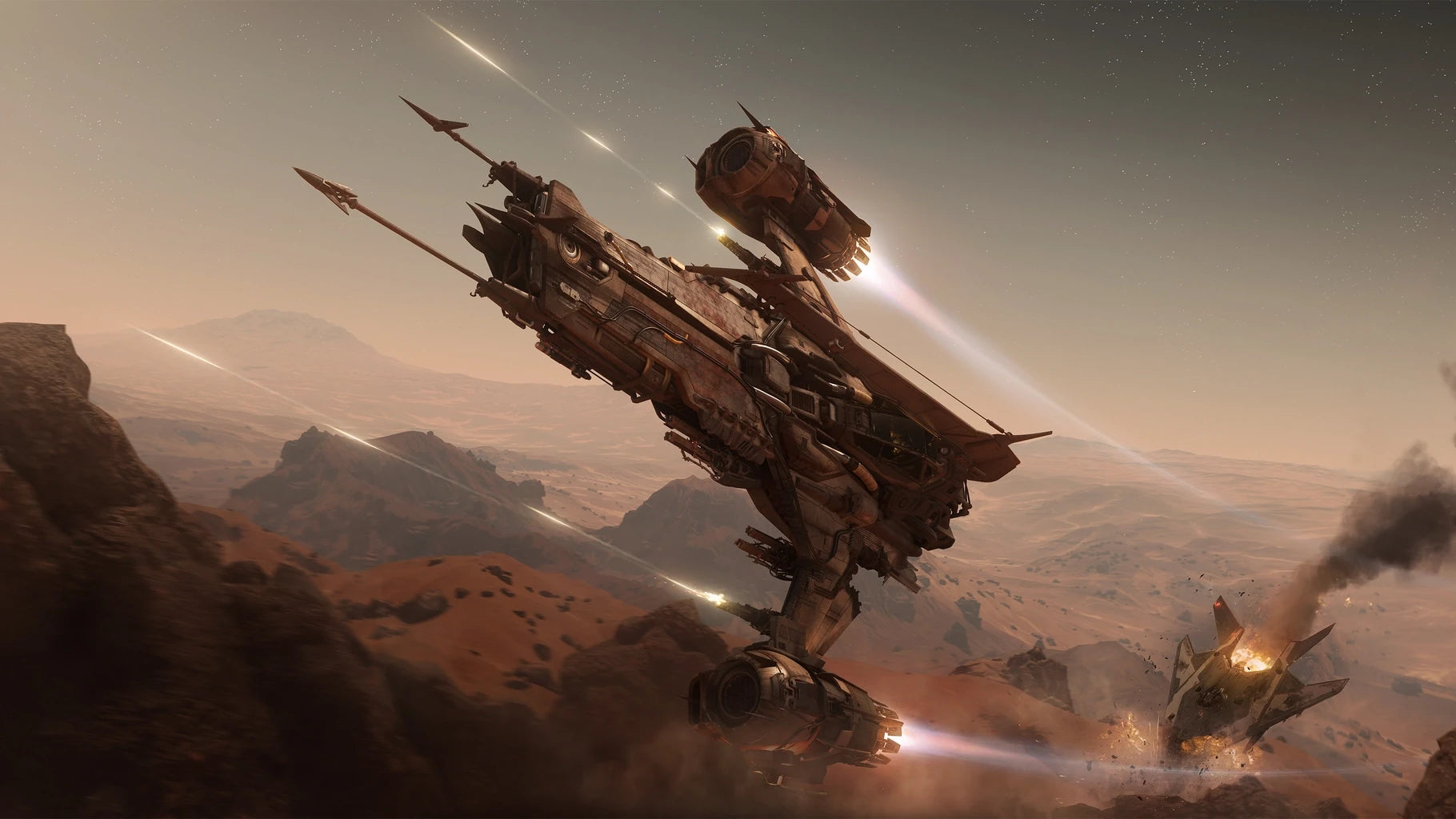
The Basher looks as though a breaker's yard swallowed a muscle car, a racing skiff and half a fishing trawler, then coughed up a fighter. Chains, hoses, harpoons, rope and panels with no interest in lining up properly cover a tiny frame that could have been anonymous. It is anything but.

The important bit is that the chaos feels deliberate. This is not a familiar hull wearing a novelty body kit. The long side nacelles, triangular frontal stance, exposed mechanical clutter and compact cockpit all belong to the same visual idea. Somebody has worried over every bracket and battered edge until the ship acquired a personality of its own.

That personality is doing much of the selling. On paper, the Basher is a straightforward light combat ship: one pilot, six Size 2 weapon mounts, four Size 1 missiles and very little room for anything that does not directly help it fight. In the hangar, it feels more like a machine that escaped from a particularly enthusiastic chop shop.

Road test

The full, rusty story

Six guns, one terrible view and enough exterior hardware to worry a maritime museum. The Basher has plenty of immediate visual impact, but the interesting questions begin after the walkaround: how the cockpit works, whether the weapon count translates into useful combat power, what the compromised visibility costs and whether this tiny fighter can do anything beyond looking magnificent in bad light.

What exactly is it?
01

What exactly is it?

In short, the Basher is a single-seat light fighter from Grey's Market, arriving as a compact combat ship rather than a specialist salvage craft or a utility machine disguised by aggressive styling. Its job is refreshingly uncomplicated: put one pilot, six Size 2 guns and four Size 1 missiles into the smallest, most difficult-to-ignore package possible.

That makes it an odd sort of surprise. It is not filling a vast hole in the fleet, nor is it replacing a long-awaited ship that owners have spent years planning around. Light fighters are not exactly rare. The Basher matters because it approaches a familiar job with a completely new frame and a visual identity strong enough to make several cleaner, more conventional rivals look as if they were designed by an accounting department.

Size is central to the idea. In early images it was easy to mistake all the external machinery for evidence of a larger industrial ship. Up close, the opposite is true. The cockpit, nacelles, landing gear, weapons and storage are all compressed around one pilot. It has the intimacy of a snub fighter but the equipment and independent operating manners of a proper light combat ship.

Do not mistake its smallness for delicacy. The Basher is visually dense, heavily armed for its footprint and covered in the sort of details usually reserved for ships with corridors in which to display them. The result is not revolutionary in function. It is revolutionary in how much personality Grey's Market has managed to bolt onto something so small.

What do you think of the design?
02

What do you think of the design?

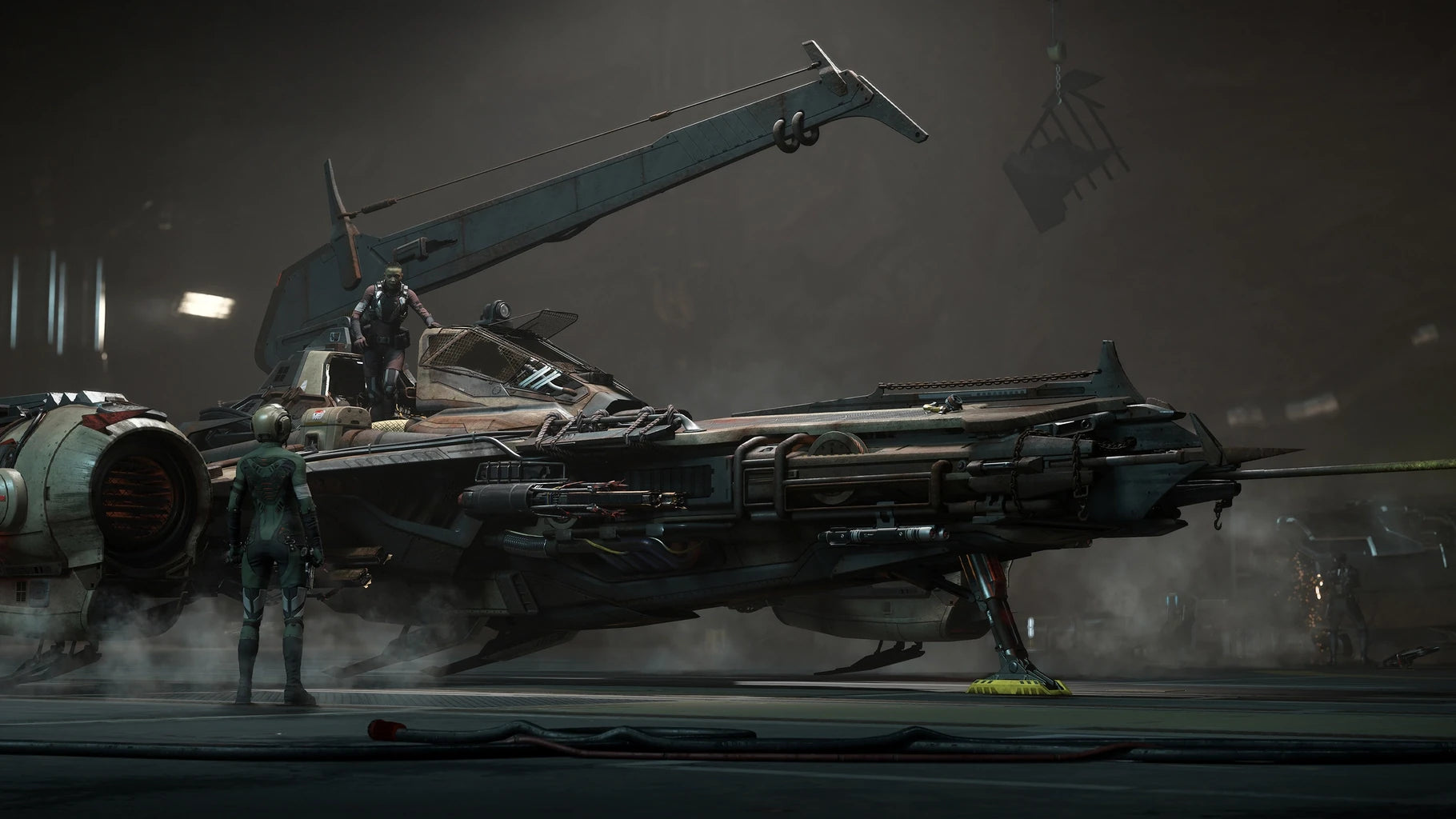
Take a proper walk around it and the first surprise is not the rust, but the consistency. The Basher is full of visual noise, yet very little of it feels random. Rope, chains, hoses, exposed brackets and improvised panels repeat across the hull, giving the ship a coherent chop-shop language. This is organic clutter rather than the usual neatly stamped science-fiction detailing, and it makes the surfaces feel handled, repaired and argued over.

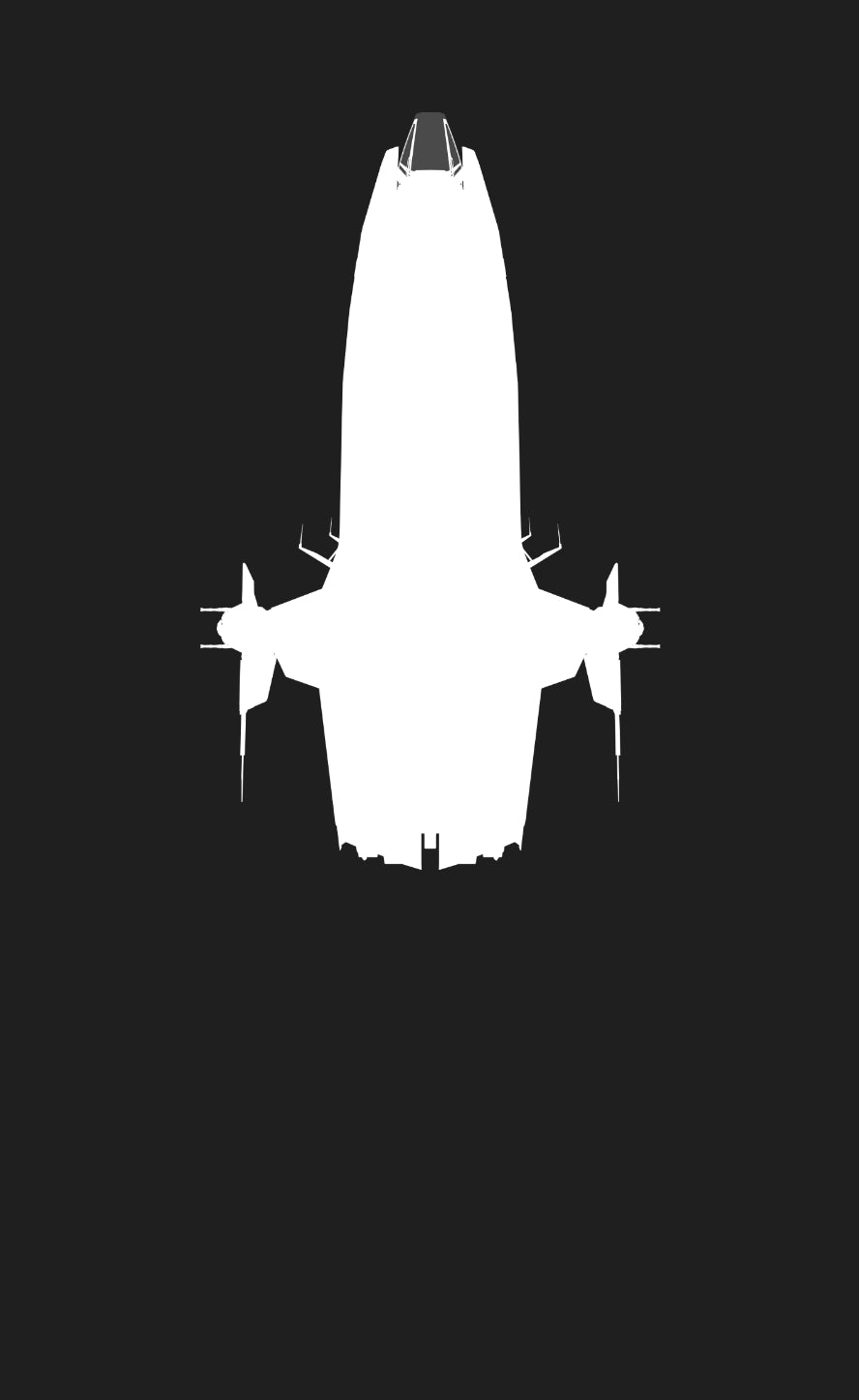
The overall shape is just as important. Long nacelles sit on either side of a compact central body, giving the profile the stretched purposefulness of an old bomber. From the front, the body narrows into a low triangular stance, while a small scoop pushes through the nose like the intake on a muscle car that has made several questionable life decisions. The rear is all engines and structure. The landing gear unfolds into thin, insect-like feet that look far too dainty for the machinery they support, yet suit the ship perfectly.

Then there is the equipment that may or may not be equipment. Harpoons hang from the hull. A crane-like structure rises above the cockpit. Chains run where smooth composite would be lighter, tidier and almost certainly more sensible. Some early imagery showed a Basher without the structure on top, which raises the possibility that it can be removed or changed, but its practical purpose is not obvious. If it is only decoration, that is mildly disappointing. The ship looks ready to tow wreckage home by force, and it would be wonderful if some of that threat were functional.

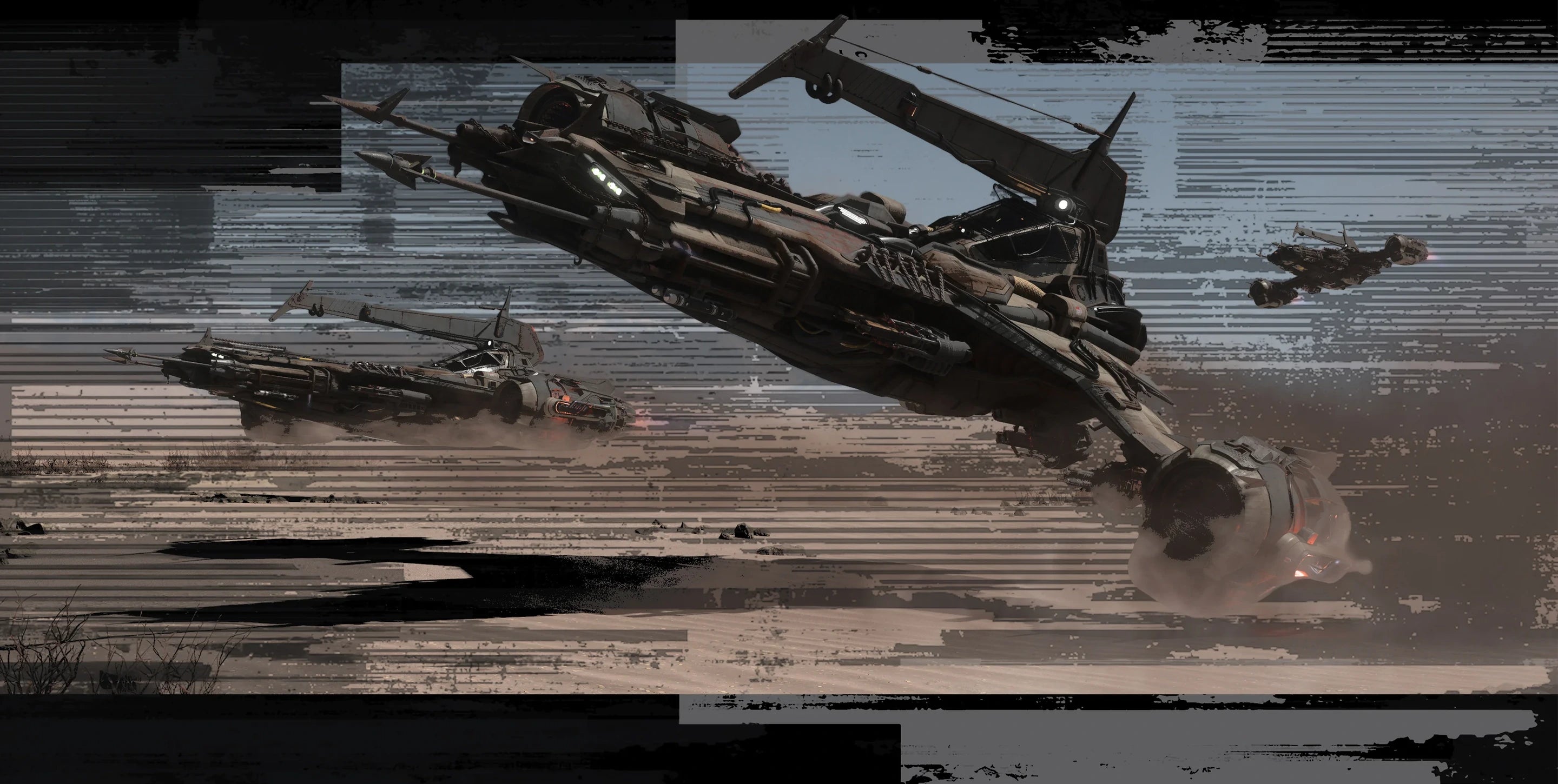
Still, as an object, it is excellent. It belongs on the industrial outskirts of Hurston and in the improvised settlements of Pyro in a way polished showroom fighters do not. Put it against clean white hangar walls and it looks rebellious. Put it in dust, rust and failing sunlight and it looks native.

What's it like inside?
03

What's it like inside?

Entry is direct and familiar: climb in, lower yourself into the pilot's seat and discover that Grey's Market has interpreted personal space as a weakness. The cockpit is tiny. Not small in the efficient, minimalist sense, but genuinely compressed, as if every display and structural member was installed before anyone remembered that a human being also needed to fit.

The layout makes the most of it. Three main multifunction displays sit ahead of the pilot, with smaller instruments worked around the available gaps. One gauge is mounted at an angle because there appears to be nowhere else for it to go. That is the sort of detail that sells the interior. A perfectly straight panel would look designed; the Basher looks assembled. Rusty surfaces, visible fixings and uneven structure extend the exterior's character into the cockpit rather than abandoning the theme at the door.

There are thoughtful touches. The cockpit lights can be switched off when the interior reflections become distracting. Personal weapons have a rack that resembles a reinforced basket, which is both absurd and completely appropriate. Rifle and heavier weapon storage are easy to understand, and the physical objects sit naturally within the space instead of feeling pasted onto a generic interior.

Visibility, unfortunately, is not a thoughtful touch. The canopy is interrupted by thick struts, substantial side structures and the apparatus above the pilot's head. Chicken-wire-like reinforcement surrounds glass that should already be extraordinarily strong, adding another layer between the pilot and the useful universe outside. It may be intended as balance for a small ship carrying six guns. Whatever the reason, situational awareness is noticeably compromised. The cockpit is full of charm, but charm is less helpful when the target disappears behind your own roof.

Are six guns enough?
04

Are six guns enough?

They are certainly enough to get your attention. The Basher carries six pilot-controlled Size 2 weapons, with the standard arrangement combining four energy guns and two ballistics. Four Size 1 missiles sit beneath the ship as a secondary option. On something this compact, the visual and numerical effect is considerable: almost every available piece of fighter appears to have a weapon attached to it.

The useful distinction is between firepower and dominance. Six Size 2 mounts provide dense, flexible damage against other small ships, especially when the pilot can keep the nose on target. They do not turn the Basher into a miniature heavy fighter, and they will not make the armour of much larger classes disappear through confidence alone. In a light-fighter engagement the loadout is meaningful. Against heavier targets it becomes a question of patience, component choice and knowing when to stop proving a point.

The standard weapon mix also gives the ship two different ammunition stories. The energy group can keep working as long as power and cooling allow, while the ballistic pair brings a different rhythm and finite reserves. Keeping the groups separate makes sense, particularly if you want the ballistics available for a deliberate finishing burst rather than watching them empty themselves during every optimistic shot.

More importantly, the hardpoints are conventional enough to invite experimentation. The supplied guns fit the aesthetic, but the pilot is not trapped with them. Six replaceable Size 2 mounts leave room to tune projectile speed, range, capacitor demand and ammunition around the way you actually fight. The Basher's stock setup is an introduction. The real appeal is building a six-gun arrangement that makes the small frame feel like your own bad idea.

What's it like to fly and fight?
05

What's it like to fly and fight?

The Basher's operating modes are conventional: standard flight, guns, missiles and scanning are all where an experienced pilot expects them to be. A VTOL mode can be selected, although there are no obvious dedicated lift thrusters presenting themselves during a walkaround. That is not a serious problem, but it is another small example of the ship offering a switch before clearly explaining the machinery behind it.

In the air, the compact proportions make sense. This is a light fighter intended to change direction, stay active around another small target and make its six forward weapons count. It does not feel like a heavy platform shrunk in the wash. The pilot still needs to manage position, keep the nose involved and avoid extended exchanges where limited protection becomes more important than the impressive gun count.

The weak link in the standard fit is the radar. During a close engagement, useful target information can arrive uncomfortably late; a complete firing solution may not appear until the range has collapsed to roughly 800 metres. That is very close when the canopy already removes generous pieces of the sky. A better radar should be near the top of the ownership list, not because upgrades are fashionable, but because information is armour in a fighter this exposed.

Actual time-to-kill is less spectacular than the six-gun headline might suggest. A similarly small opponent can still take sustained work, and pilots coming from medium or heavy fighters may initially wonder why the fireworks have not ended the argument sooner. That is the correct lesson. The Basher is a new frame with strong light-fighter armament, not a cheat code. Learn its movement, improve its components and use the small silhouette. The experience becomes satisfying precisely because the ship still asks something of the pilot.

Can it do useful work?
06

Can it do useful work?

Within reason. The Basher has 650 micro-SCU of internal storage accessed from an exterior quarter panel. That is slightly less than the capacity commonly found in comparable small ships, and the number sounds almost comically modest when written beside cargo vessels measured in hundreds of full SCU. But context matters: this is personal inventory space, not a freight grid.

For a bunker or mercenary run, it is enough to matter. A pilot can carry ammunition, supplies and recovered equipment, or make room for roughly a set and a half of armour depending on exactly what is packed. Combined with the personal weapon rack, that gives the Basher a credible life outside a pure arena fight. Land near the job, take the rifle, complete the work and return with more than you started with.

What it cannot do is pretend to be a daily living space. There is no bed, no proper cargo bay and no room to move around behind the pilot. Long independent expeditions are not part of the proposition. Refuelling, repairs and personal comfort will pull the Basher back toward support more often than a larger multi-role ship.

The external details create expectations the practical systems do not yet fulfil. Harpoons and the crane-like top structure suggest salvage, towing or improvised recovery, but there is no clear supporting function. If those elements remain purely aesthetic, the Basher's utility ceiling stays low. As delivered, it is a fighter with enough storage to support short ground missions, which is useful. It simply looks capable of doing something much stranger.

Who should actually buy one?
07

Who should actually buy one?

Start with the people who should not. If your priority is the clearest canopy, the most clinical combat efficiency or the safest answer produced by comparing component tables, the Basher is unlikely to be your natural home. Its view is compromised, its storage is modest and the standard radar immediately asks for money and attention.

It makes more sense for pilots who value the feeling of a machine as much as its numbers. The Basher is one of those ships whose identity survives repainting and loadout changes. Its shape is recognisable at a distance, its interior tells the same story as its hull and even the weapon rack has been made into a joke with structural integrity. That consistency is rare.

There is also a satisfying ownership path. The six hardpoints encourage experimentation, the radar presents an obvious first upgrade and the mixed stock weapons give the pilot a reason to think about grouping and ammunition. You can improve it without erasing what made it interesting. Swap the guns, change the missiles, refine the components and the Basher remains unmistakably a Basher.

Buy it for its looks, then decide how much combat performance you can extract from the frame. That sounds backwards only if ships are appliances. For many pilots, they are also characters, habitats and objects they spend an unreasonable amount of time admiring in a hangar. By that measure, the Basher understands its audience very well.

What's the verdict?
08

What's the verdict?

The Basher is not the new champion of light fighters. It does not make every established rival obsolete, and it does not disguise its compromises. The cockpit view is poor, the standard radar is underwhelming, personal storage is below the usual small-ship allowance and much of the most exciting exterior equipment appears decorative.

What it does is make a familiar class feel fresh. The six Size 2 guns give it a real combat premise. The tiny silhouette and light handling support that premise rather than fighting it. The weapon rack and internal storage add just enough practicality for mercenary work. Most importantly, the design has been carried through with unusual conviction, from the nose scoop and insect landing feet to the angled cockpit gauge and basket-like rack.

That cohesion matters. Plenty of ships are effective. Fewer make you want to orbit them with the camera, looking for the next hose, chain or improvised repair. The Basher feels loved by the people who built it, which is an odd thing to say about a fictional machine assembled to look unloved, but there it is.

So the verdict is simple. Do not choose it because you believe six guns automatically settle every fight. Choose it because you want a capable small fighter with an outrageous amount of character, and because you are willing to trade some visibility and polish for a machine that feels genuinely new. The Basher is flawed, focused and fabulous - a scrapyard terrier with more teeth than sense.

Measured with instruments

How the Basher stacks up

A scientific assessment, provided your definition of science includes pointing at a rusty fighter and making an approving noise.

Scorecard

Numbers with opinions

Design9/10
Firepower7/10
Visibility4/10
Practicality5/10
Character10/10
The good

Reasons to want one

  • A genuinely distinctive small-ship design
  • Six size-two guns on a tiny frame
  • Obsessive exterior and cockpit detail
  • Useful storage for short mercenary work
The catches

Reasons to squint

  • The cockpit view is impressively obstructed
  • The stock radar should be replaced early
  • Storage is useful rather than generous
  • The wildest exterior hardware is mostly theatre
Grey's Market Basher parked in a hangar
THE FINAL WORD

Good taste was shown the airlock

The Basher is cramped, compromised and far too pleased with its own collection of chains. Its standard radar needs help, the canopy makes situational awareness unnecessarily theatrical and several of its most dramatic exterior fittings seem to have no practical job. It is also one of the most characterful little fighters around. The six-gun layout gives the design enough combat substance to avoid becoming a costume, while the storage and weapon rack make short mercenary outings plausible. Choose it because you want the ship you turn around to look at after landing, not because a spreadsheet declared it unbeatable. Then fit a better radar so you can see everything else before landing.

Why The Impound

A secure Star Citizen store built for serious players

For more than 13 years, The Impound has helped thousands of customers upgrade their fleets with confidence. We focus on what matters most: secure transactions, reliable support, fast delivery, fair pricing, and a better way to buy digital items.
A secure Star Citizen store built for
13+
Years helping players buy securely.
100%
Own-stock fulfillment for stronger purchase protection.
Fast
Delivery focused on getting orders out as quickly as possible.
LTI
Access to dream ships with lifetime insurance options.

Security

Because we sell from our own stock, every purchase is built around protection, consistency, and long-term peace of mind.

Support

Questions, issues, and edge cases are handled by real staff who know the verse and care about the customer experience.

Speed

We know how exciting a new ship can be, so we do our best to keep fulfillment fast and the process hassle-free.

Affordability

Our goal is to keep prices competitive while maintaining a broad catalog of ships, upgrades, and hard-to-find items.

More than a store.

More than a store.

The Impound is also a community for Star Citizen players. From active conversations to collaborations, contests, and creator partnerships, we’re building a place people want to come back to.

  • A passionate player community with helpful, active members.
  • Events, collaborations, and partnerships across the scene.
  • Review rewards that encourage honest customer feedback.
Expand your fleet for less.

Expand your fleet for less.

No need to wait for availability. Get access to sought-after ships, strong buyer protection, and the confidence that what you buy stays yours.

  • Lifetime insurance options on eligible purchases.
  • Secure digital purchasing backed by own-stock fulfillment.
  • Easy paths to shop, compare, and upgrade your fleet.