

























Star Citizen Crafting Guide: Materials, Fabricators and Refinery Capacity

Turn a mining haul and spare equipment into the gear you want to carry, from choosing blueprint materials to recovering resources for the next build.
A rifle you assemble in an Item Fabricator can handle differently from another made from the same blueprint. Your material choices affect its statistics, giving a mining haul or a dismantled piece of equipment a purpose beyond clearing inventory. The blueprint decides what you can build; the resources you put into it help decide the result.
Crafting arrived in Alpha 4.7 with hundreds of blueprints for FPS weapons and armour, including variants. The practical starting point is a fabricator, an unlocked blueprint and enough of each required material. You can begin with the small collection of blueprints supplied to every player, then expand that collection through mission contracts.
Set up the fabricator where your materials are
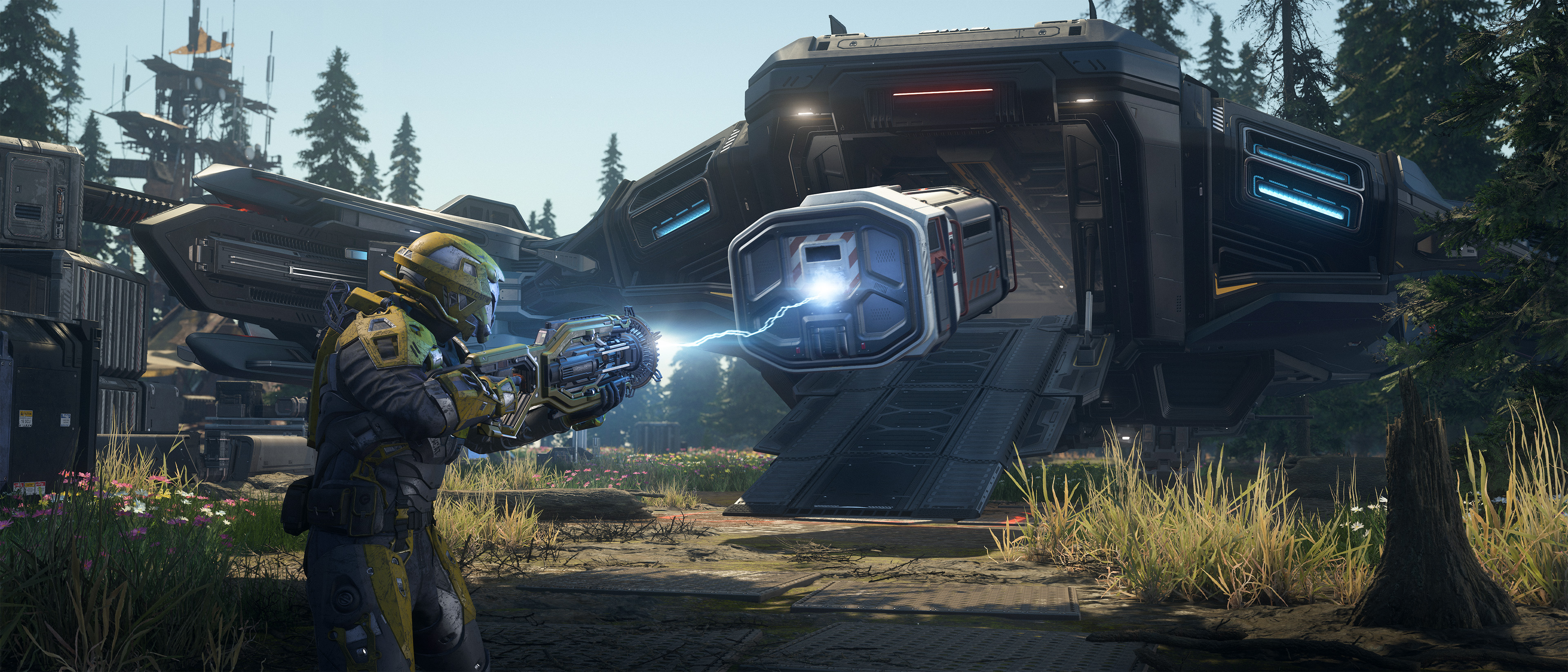
Item Fabricators are available from various Kel-to and Dumper’s Depot shops in Stanton and refinery shops in Pyro. Players who earned one during Lifeline for Levski may already have a machine. Retrieve it through a freight elevator, move it with a tractor beam and use its screen to open your blueprint library. Close its door before moving it with a tractor beam. The same freight system lets you store the machine again.
The fabricator has an internal cargo grid for resources and finished items. In your hangar it can also access local inventory, so putting everything in local inventory is not the only way to feed it. That extra access makes a hangar convenient when your supplies are already stored there, while the machine’s own input and output space remains important when moving it elsewhere.
It can attach to cargo grids and fit aboard certain ships for crafting away from the hangar. Compatibility still depends on the space and grid available; the ability to move a fabricator does not make every ship a suitable workshop. You do not need a ship with a built-in workshop to use this portable machine.
Choose a blueprint before collecting a hold full of ore
Open the fabricator’s library and select an unlocked blueprint. Available recipes are highlighted among those you have yet to discover. Each recipe gives you the resources and quality requirements for that item. Most of the blueprint collection comes through mission contracts, with different missions drawing from their own blueprint pools. An acquired blueprint is bound to your account and survives character death.
Check those requirements before committing resources to a particular item. A material having a quality value does not mean every recipe uses it: only some resources were used by the initial crafting blueprints, and requirements can change as crafting develops. Gathering the right ingredients for a blueprint you own gives you an immediate job to run; collecting unfamiliar resources is a longer-term choice.
The starting collection is enough to learn the machine. As more blueprints become available, choose the equipment you actually want to replace or improve before spending your better materials. There is no need to use your highest-quality stock simply to see the queue working.
Find the resource, then check its quality
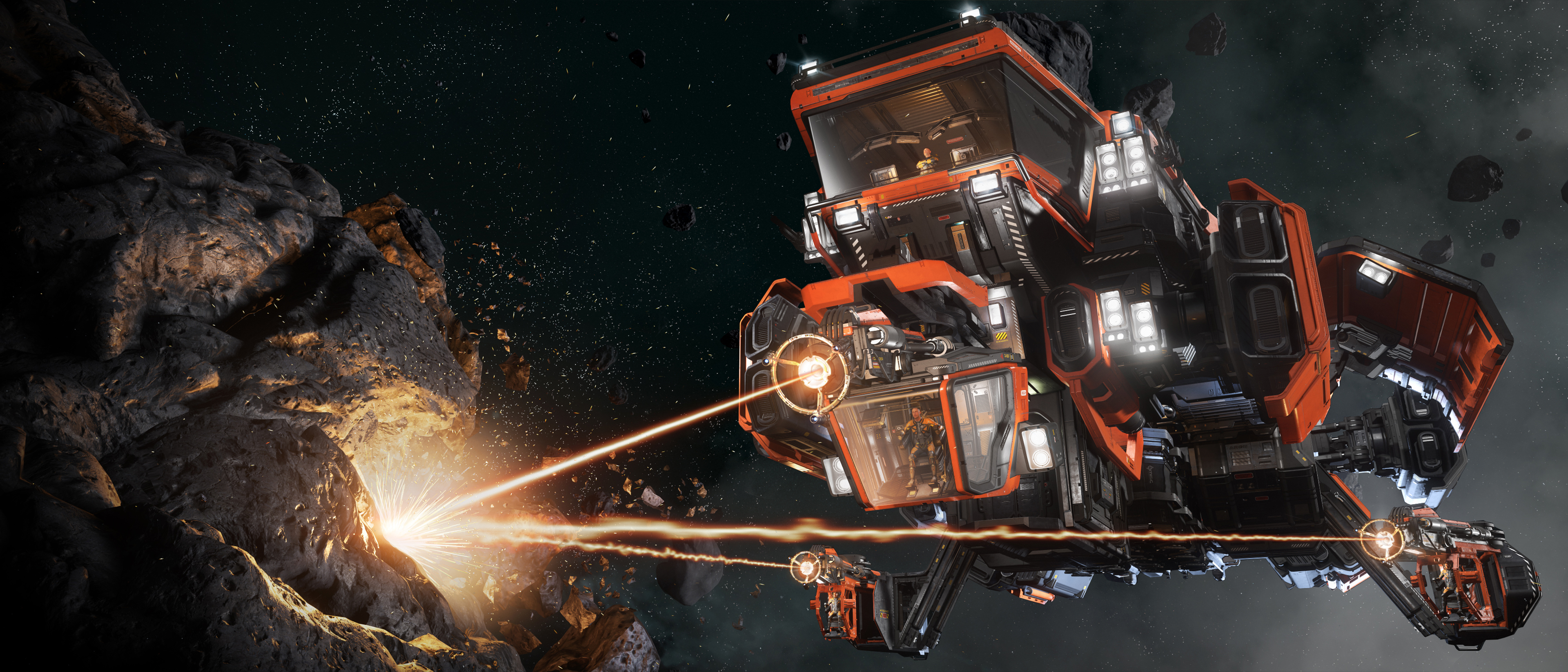
Mining supplies the raw resources for crafting. The scanning display identifies a node’s main resource, helping you decide which rocks deserve a closer look. Quality is visible in the mining interface, inventory and crafting screen. Check the required material and its quality before investing the time to extract it.
Refining preserves material quality: turning Iron Ore into Iron carries its quality rating into the refined output. Minerals of the same quality can be stacked. Keeping track of those qualities through processing matters when you later assign materials to blueprint slots.
The Alpha 4.7 mining rebalance gave Pyro a higher chance of quality materials and revised planet and moon Starmap records for mineable locations. Nodes can contain several resources, with a small amount of higher-quality material among them. The same rebalance reduced the SCU held in ship-mineable rocks, especially for higher-value resources, and added Janalite to the surface of some planets and moons. A rich rock can still contain a disappointing proportion of the material you came for, so read the composition as well as the quality before committing to the extraction.
Quality runs from 0 to 1,000
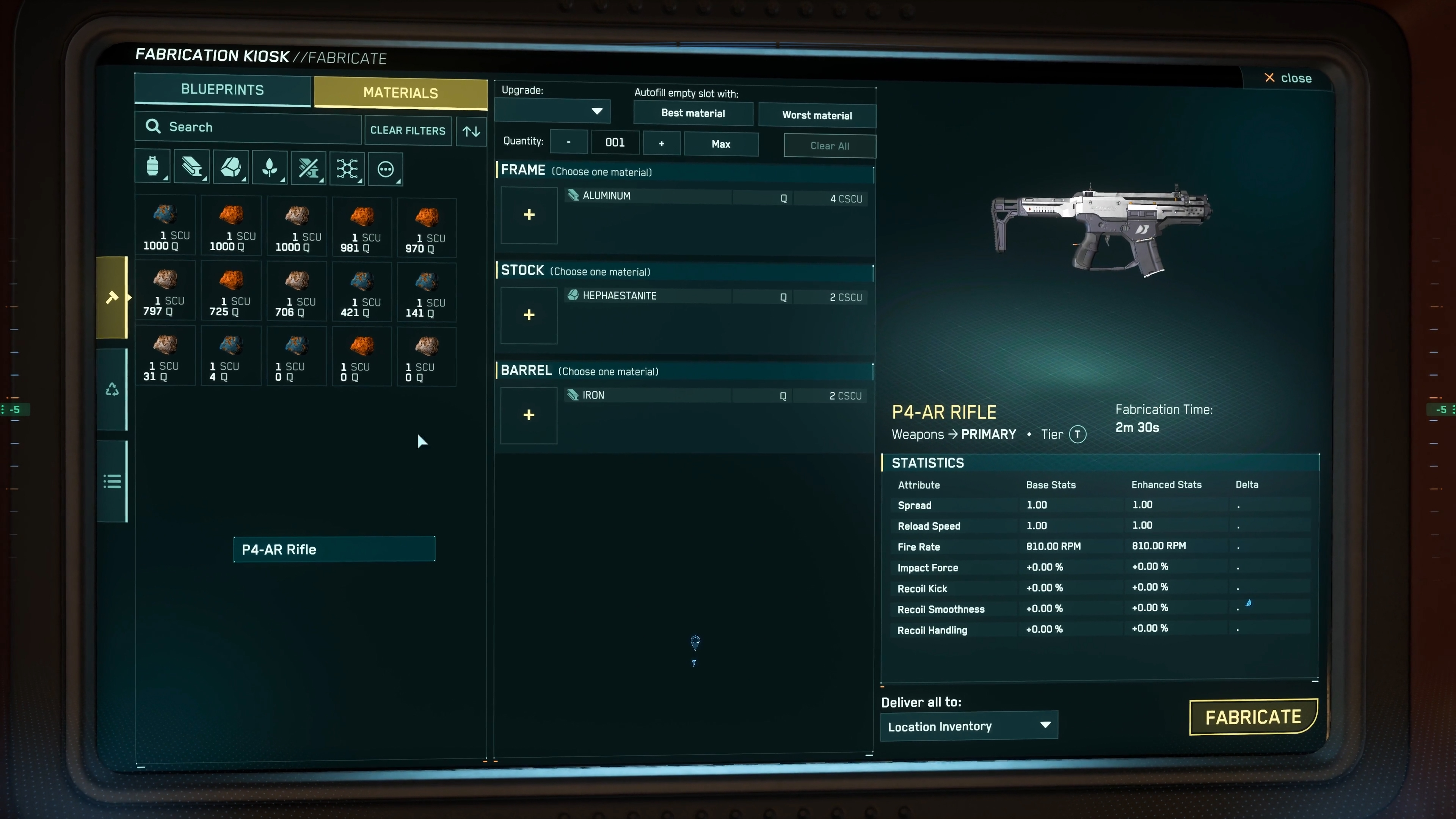
Resources from vehicle and FPS mining carry a quality value between 0 and 1,000. That value helps determine the traits of a crafted item, so two stacks of the same material need not produce the same result. The fabricator’s stat preview is where you can see what your selected inputs do to the equipment you are making.
Each blueprint slot shows which statistics it influences. Assign materials manually when you want control over the combination, or use autofill to let the system select them. Double-clicking a material puts it in the first valid slot, and you can remove an assignment before confirming the job. The interface provides best-material and worst-material choices. Changing the selected quality can raise or lower the displayed statistics; mixing qualities may produce an average. Some slots reject material below their minimum quality requirement; some blueprints can produce negative statistics below a quality threshold. Use the preview to judge that particular recipe rather than assuming every attribute receives an identical improvement.
A limited supply of high-quality material therefore creates a choice between jobs. You may want it for a weapon you regularly carry, while a less demanding replacement can use another stack. The recipe’s preview shows where those better inputs make a difference before you commit them.
What the October refinery capacity change adds
The 1 October Alpha 4.10.2 PTU build substantially increased capacity at all refineries. It also made those capacities data-driven, allowing the economy team to adjust them without releasing another patch. For a miner supplying crafting materials, refinery capacity is part of getting a haul through processing before it reaches the fabricator.
As of 9 October, the increased capacity is a 4.10.2 PTU change; Live remains on 4.10.1. More refinery capacity does not improve the quality of your ore. Your blueprint and the quality of the materials assigned to it still govern the fabrication step; no per-station capacity or processing-time change has been announced.
Recover resources from equipment you no longer need
The Item Fabricator’s dismantling function converts eligible equipment back into materials. Items with an associated crafting recipe can be dismantled; the crafting guide describes this as most FPS items from shops, loot and player crafting. Check that the item has an associated recipe rather than rejecting it simply because it is a variant.
Shop and looted equipment return materials at their default quality values. A player-crafted item returns materials at the quality used to make it, but in a reduced quantity. Dismantling therefore lets you recover some of the investment in an item you no longer want; repeatedly crafting and dismantling it will not preserve all your resources.
That spare rifle from a bunker run may be worth keeping for its ingredients. A crafted weapon you have outgrown can surrender some of its better materials to the next build, while ordinary loot supplies the more routine jobs. Check which resources the machine will return before dismantling something you might still want to use.
Run the job and collect the output
- Retrieve and position the fabricator, then open its screen.
- Select an unlocked blueprint and check each material requirement.
- Assign the required materials manually or through autofill. Review the resulting statistics before committing the job.
- Choose local inventory within range or the machine’s cargo grid as the delivery destination, then start fabrication.
- Use the queue screen to follow the jobs. Completed work appears in its history log, and the finished item’s tooltip shows its crafted statistics.
Crafting time varies with the size and quality of the item, and you can set up multiple jobs in the crafting queue. Dismantling has a separate queue, allowing crafting and dismantling jobs to run simultaneously. Queued items can move between pending and in-progress states, and their delivery destinations can be adjusted individually. The selected destination is remembered when you switch blueprints.
You can leave one job running while preparing the next, with dismantling recovering ingredients alongside fabrication. Before confirming a mixed-quality recipe, give the output preview a final look: this is the last chance to keep a prized stack for a different weapon.
If the finished item appears to have ordinary stats
Alpha 4.10.1 has a display issue that can hide a crafted item’s adjusted statistics while it sits unequipped in your inventory. Equip the item, then check its description box again. The missing numbers alone do not mean the fabricator ignored your chosen materials.
Where crafting is heading
The portable fabricator is only the opening stage of a much larger industrial loop. The announced roadmap reaches from FPS equipment to vehicle components and weapons, then to entire ships built through base construction. Those are development plans, not functions you can unlock by feeding more material into today’s machine, and the guide gives no release dates for them.
Blueprints, tiers and a reason to keep improving
Future blueprint rewards are intended to include reputation, NPC shops and physical datapads found in the universe. A datapad would be consumed when used, but could be sold or given to another player beforehand. That would give an expedition or combat crew something useful to bring home even when nobody aboard wants the recipe themselves.
Most crafted items are planned to span tiers one to three, with vehicles extending to five. Higher tiers would offer broader stat ranges and more demanding recipes. Research tasks would raise a blueprint’s tier, while specialist upgrade blueprints would let an existing item move up a tier. Building a higher-tier item outright is intended to be more efficient than repeatedly upgrading it from the bottom.
Optional catalysts are also planned to add benefits to particular jobs. Alongside additional craftable statistics, they could make the choice of inputs more interesting than simply pouring the highest-quality material into every slot. A dedicated blueprint app and folders for different qualities of the same resource are planned to make that growing collection manageable.
Wear, repair and replacement equipment
An industrial economy needs customers who eventually need another rifle, component or suit of armour. The proposed degradation system would reduce an item’s functionality through use, increasing malfunctions as it wears. Repairs would recover some functionality but reduce the maximum that can be restored; physical integrity and damage would also need attention. Recovery or claiming an item would not reset that wear.
Pledge equipment is intended to remain repairable rather than becoming permanently unusable, with a route back to full functionality. The plan treats it as tier-one equipment and excludes it from trading or dismantling. For a unique livery, its owner would receive a cosmetic paint item usable on the same type of equipment; the underlying crafting blueprint would still have to be earned in-game. These are future-system rules, not an extra set of working controls in the current fabricator.
From salvaged metal to a player-run workshop
Salvage is planned to supply refined construction materials, including resources tied to particular wrecks—alien metals from alien ships, for example. Refining would develop beyond a simple ore-to-metal conversion into alloys and composites with primary and secondary inputs. The primary input would determine quality, while the secondary input’s quality would affect how much is needed. Creature harvestables and unlockable recipes for exotic materials are also part of that proposal.
The workshop itself would expand through functional in-vehicle crafting machines connected to cargo grids, plus specialist production for food, water, medical supplies and construction. Hangar-sized fabrication areas are planned for building ships. The intention is to connect miners, salvagers, hauliers and manufacturers through actual supplies moving between them, rather than make every player perform the whole chain alone.
Planned trading support would cover quality materials and crafted goods, with player-operated stores and advertising tied to base building. Higher-quality crafted equipment could also appear as loot on selected NPCs or in crates, returning appropriate-quality materials when dismantled. Container splitting and merging—with averaged quality—would make handling those supplies easier. For now, the useful preparation is learning the existing material and blueprint system; none of these plans guarantees a particular future release.