






















Kruger Intergalactic: From Precision Parts to the L-21 Wolf

Before the Wolf flew under its own name, Kruger spent centuries building the parts that kept other manufacturers flying. The Merlin and Archimedes helped it find a way out of the workshop.
For most of its history, Kruger helped other manufacturers put their names on the finished product. A firing pin, a carefully machined component, a part buried deep inside a capital ship: that was where the company earned its reputation. Then came the Tigerstrike, the little fighters tucked behind a Constellation, and eventually a Wolf with nobody else’s name above the door.
It is an unusually satisfying route into Star Citizen’s shipbuilding industry. Kruger did not begin with a spectacular flagship. It spent centuries learning how to make the things that let everyone else build one. That background gives its small, distinctive aircraft a character of their own, from the exposed engineering of the Merlin to the Wolf’s sweeping, almost vintage profile.
A workshop on Borea
Ozell Kruger founded the business in 2558, working from a rented hangar on Borea in the Magnus system. Military expansion was bringing work to the planet, but a small workshop could not compete directly for the largest contracts. Supplying the companies that won them was a more achievable way in.
Behring and Roberts Space Industries became important customers. Kruger’s work ranged from weapon components to parts for much larger spacecraft, giving it a place inside several industries without requiring a complete ship of its own. The reputation came from precision and reliable delivery rather than a recognisable silhouette on a landing pad.
That distinction matters to the story. A supplier can become indispensable while remaining almost invisible to the person using its work. Long before pilots could choose a Kruger fighter, they could already be relying on its engineering elsewhere in their ship.
Prosperity survived. Staying in Magnus did not.
In 2631, the UEE moved its principal shipbuilding yard to Kilian. Magnus lost much of the industry that had sustained its boom. Kruger expanded into the space and equipment other businesses left behind, apparently proving that it could outlast the downturn.
The harder problem was getting finished parts safely out of the system. As legitimate employment disappeared and criminal activity grew, protecting shipments became an increasingly serious burden. A pirate attack on a convoy of RSI components in 2785 threatened one of Kruger’s most valuable relationships.
The company had publicly committed itself to Magnus. Keeping that promise now risked losing the business that supported it. When Castra II opened to civilian use in 2789, Kruger moved to Sherman, taking advantage of established infrastructure and safer shipping routes. Sherman became its headquarters.
There is an uncomfortable piece of industrial history in that move. Kruger benefited from Magnus when the system was thriving, survived when its neighbours could not, and ultimately left when staying became too dangerous. Its success is easy to admire; the cost to the place it left behind is harder to ignore.
The gun that made pilots learn the name
The Tigerstrike brought Kruger out from behind the component catalogue. Building a complete ballistic Gatling gun was a logical extension of the machinery it already knew, but convincing buyers to trust an unfamiliar weapons brand took more than competent manufacturing.
A deal with Aegis put the Tigerstrike on the Avenger. Military and Advocacy users gave the weapon a much wider audience, and Kruger gained something its anonymous parts could never provide: a product pilots would ask for by name. The relationship with a larger manufacturer had helped it enter a new market without starting from nothing.
Merlin and Archimedes: a small entrance into shipbuilding
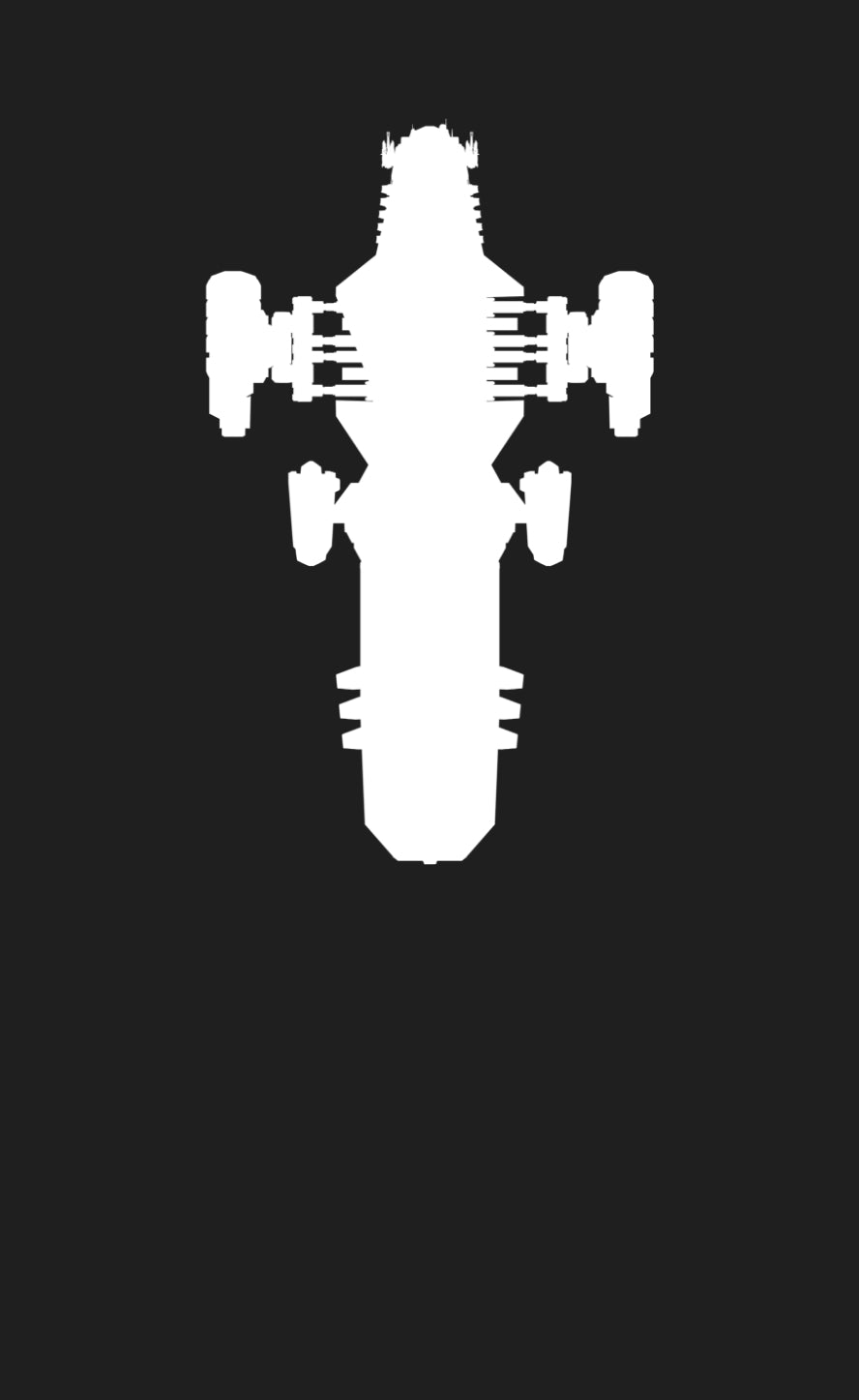
RSI offered a similar route into spacecraft. Kruger won the contract for two short-range ships to accompany the Constellation family: the P-52 Merlin and P-72 Archimedes. Their scale made sense for the partnership. These were compact craft designed around a larger vessel, rather than an attempt to compete with that vessel.
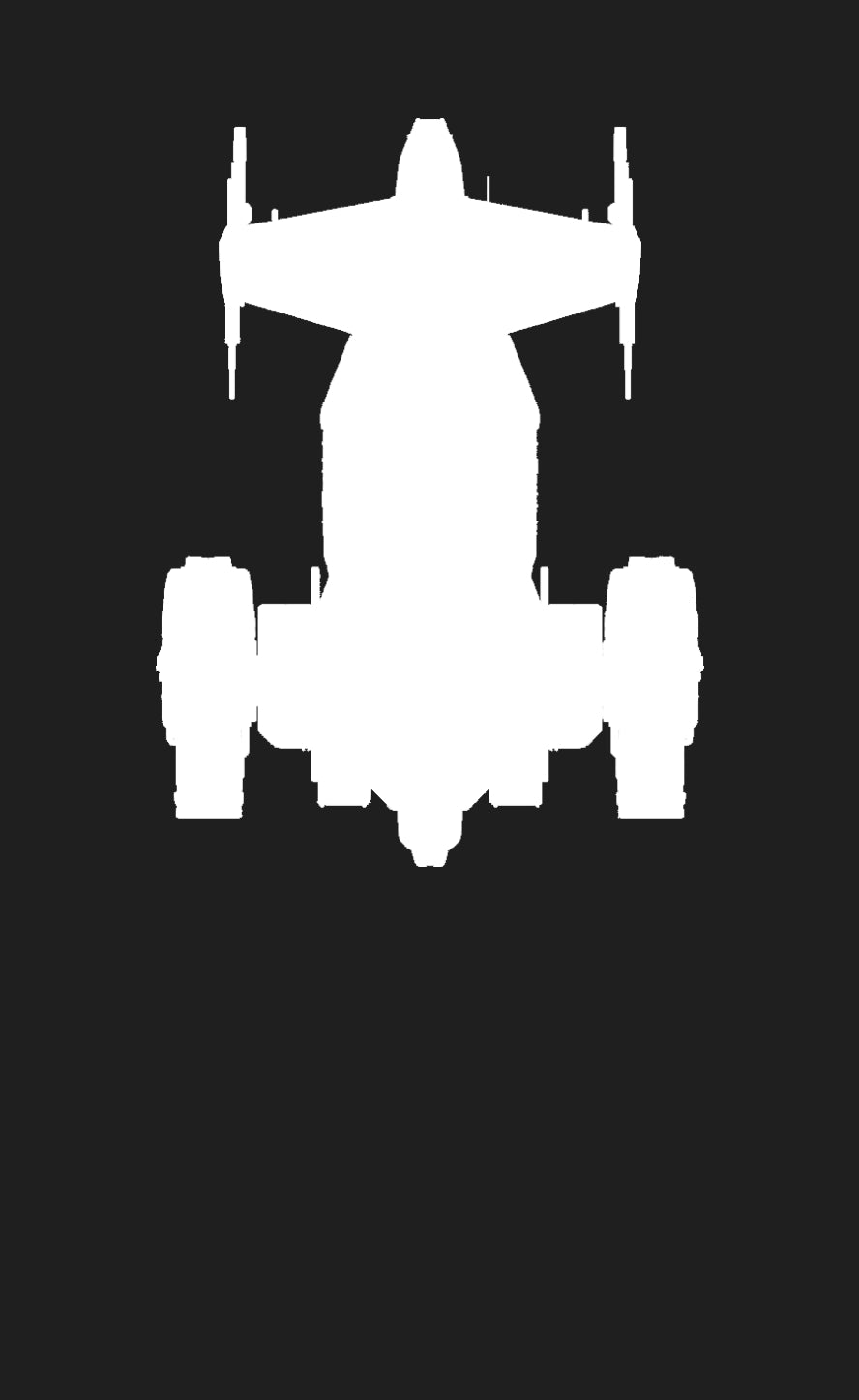
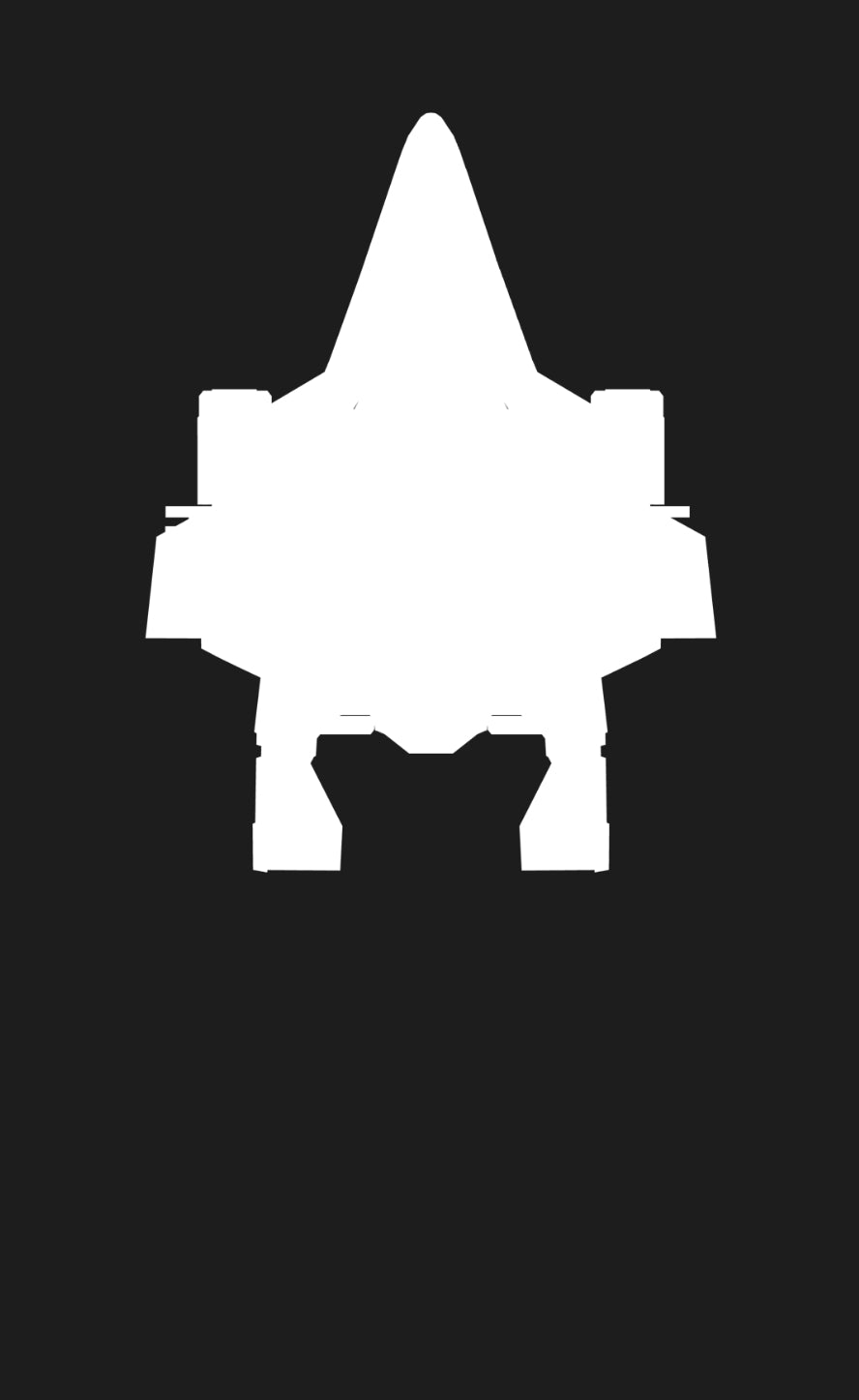
The Merlin’s shape puts much of its mechanical personality on display. Its central gun and narrow cockpit make the whole craft look tightly assembled around the pilot and weapon. The Archimedes takes the family resemblance in a more elegant direction, but both have the appeal of a small machine you can understand at a glance.
They also have a meaningful limitation: neither carries a quantum drive. Flying one is a different proposition from setting off independently in a conventional light fighter. A carrier, suitable transport or local operating area is part of the decision. That dependency belongs in any discussion of the ships, however tempting their size and styling might be.
The Wolf finally leaves the parent ship behind
In 2955, the L-21 Wolf became Kruger’s first independently developed and manufactured ship. Its design had roots in the period when the company was working on the Merlin, but manufacturing difficulties had kept the more ambitious project from production. New techniques eventually made it possible.

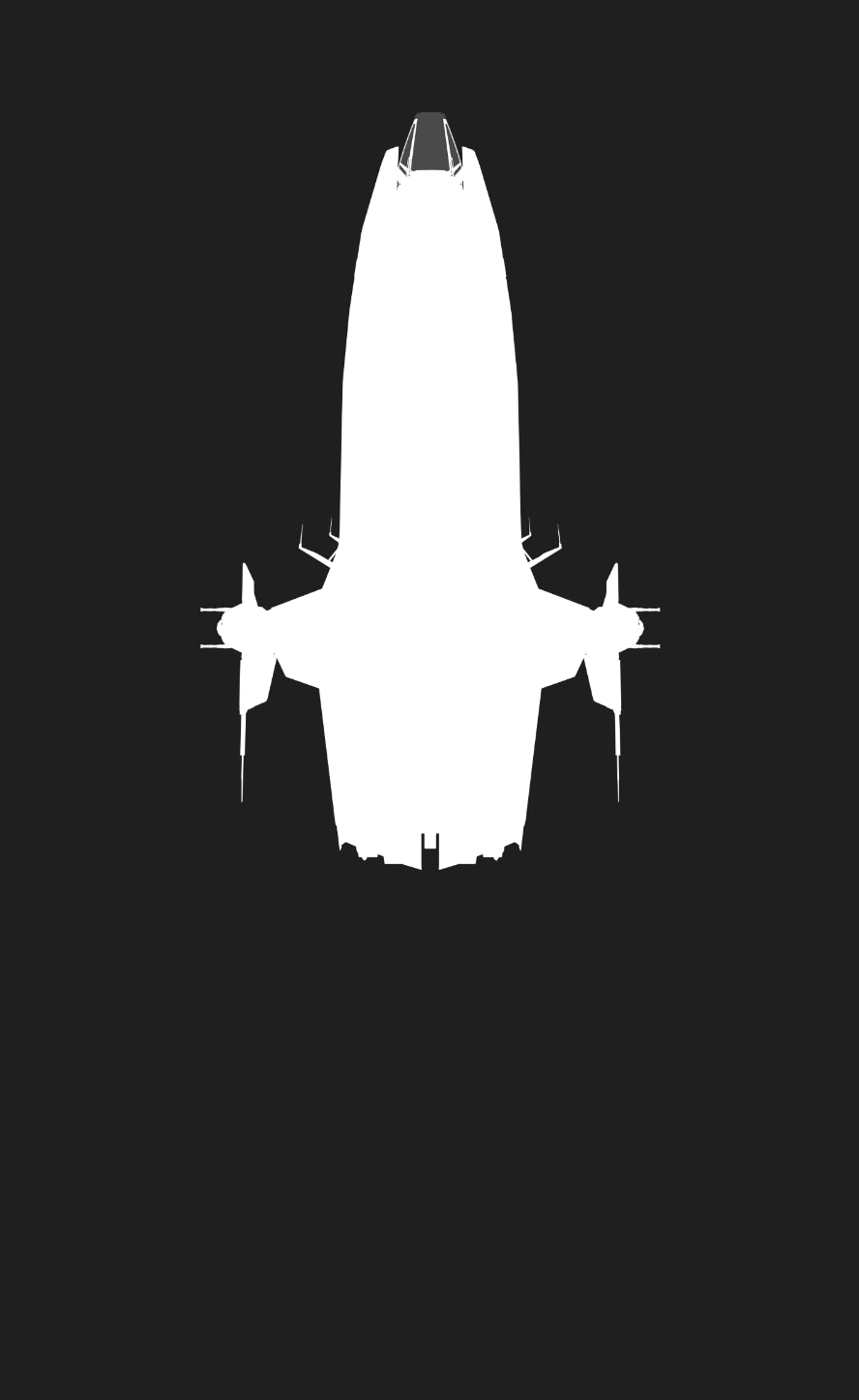
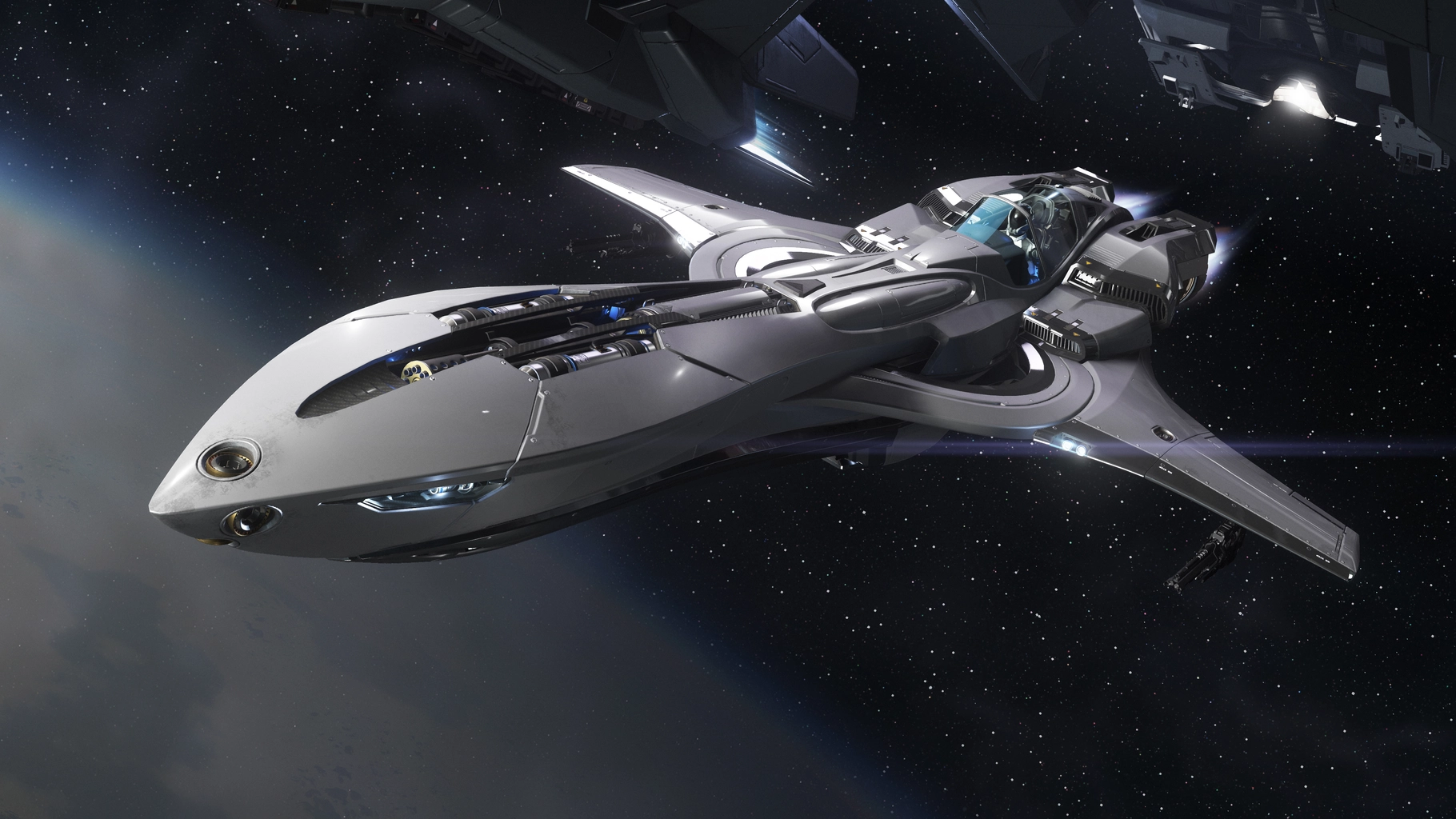
The Wolf is a proper departure from the snubs. It is a single-seat light fighter with its own quantum drive, retractable Size 4 ballistic guns and a long, flowing outline that looks quite unlike the more angular competition. It gives a Kruger pilot the freedom to leave the supporting ship behind without abandoning the manufacturer’s affection for visible machinery and distinctive curves.
That does not make it a replacement for every Merlin or Archimedes. A compact craft that belongs with a larger ship still has a different purpose from an independent fighter. The Wolf broadens what flying Kruger can mean; it does not erase the earlier designs.
The company marked the new era by changing its long-established red and yellow branding to silver and white. The bird of prey remained. Ozell had chosen it because of her interest in falconry, leaving a personal detail from the original workshop attached to a business that had grown far beyond it.
That is what makes Kruger’s history enjoyable: the Wolf feels earned. Between the rented hangar and the independent fighter lie generations of component work, disrupted trade routes, weapons contracts and lessons learned beside larger manufacturers. Its ships may be small, but there is a great deal of industrial history packed into them.