















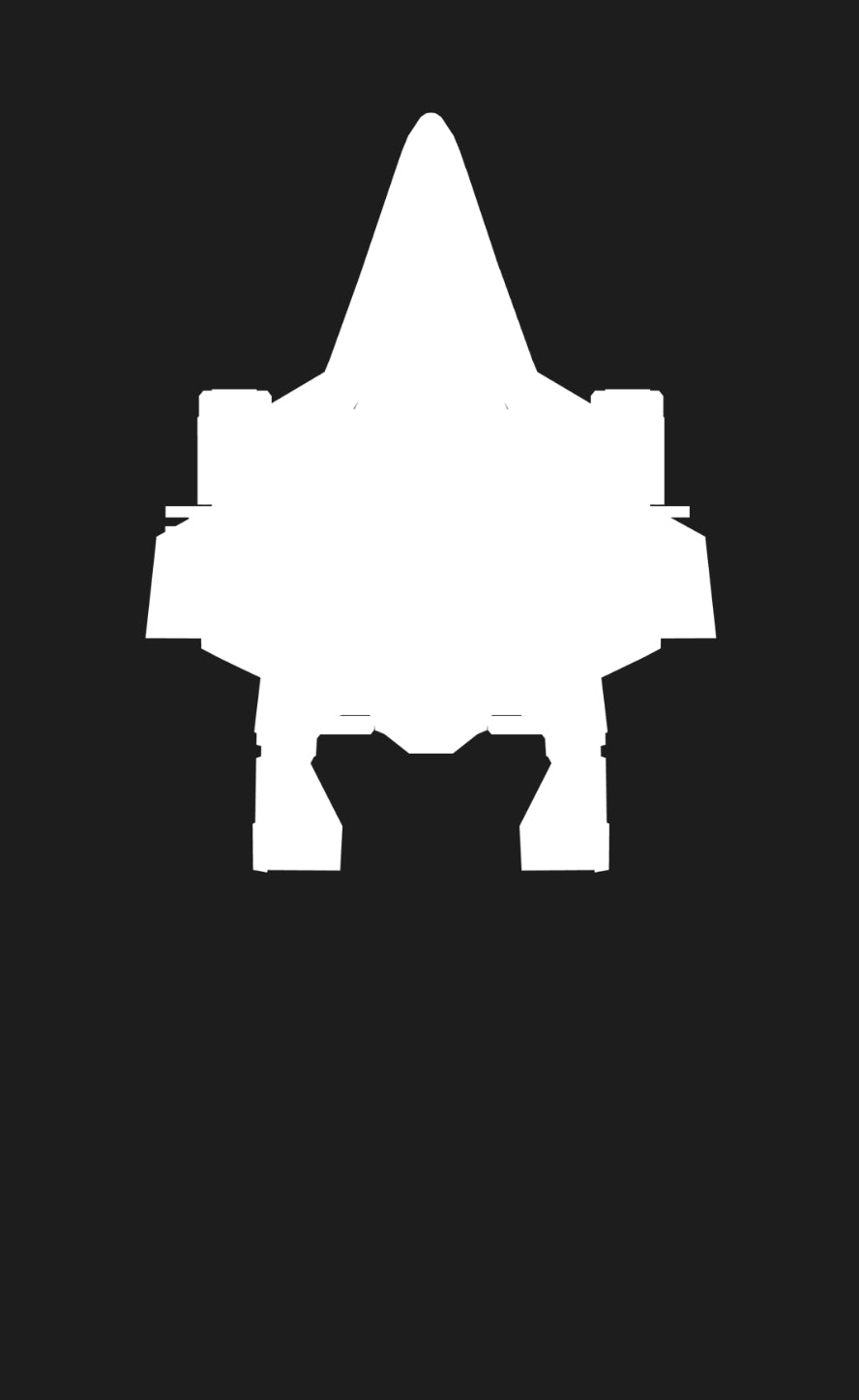
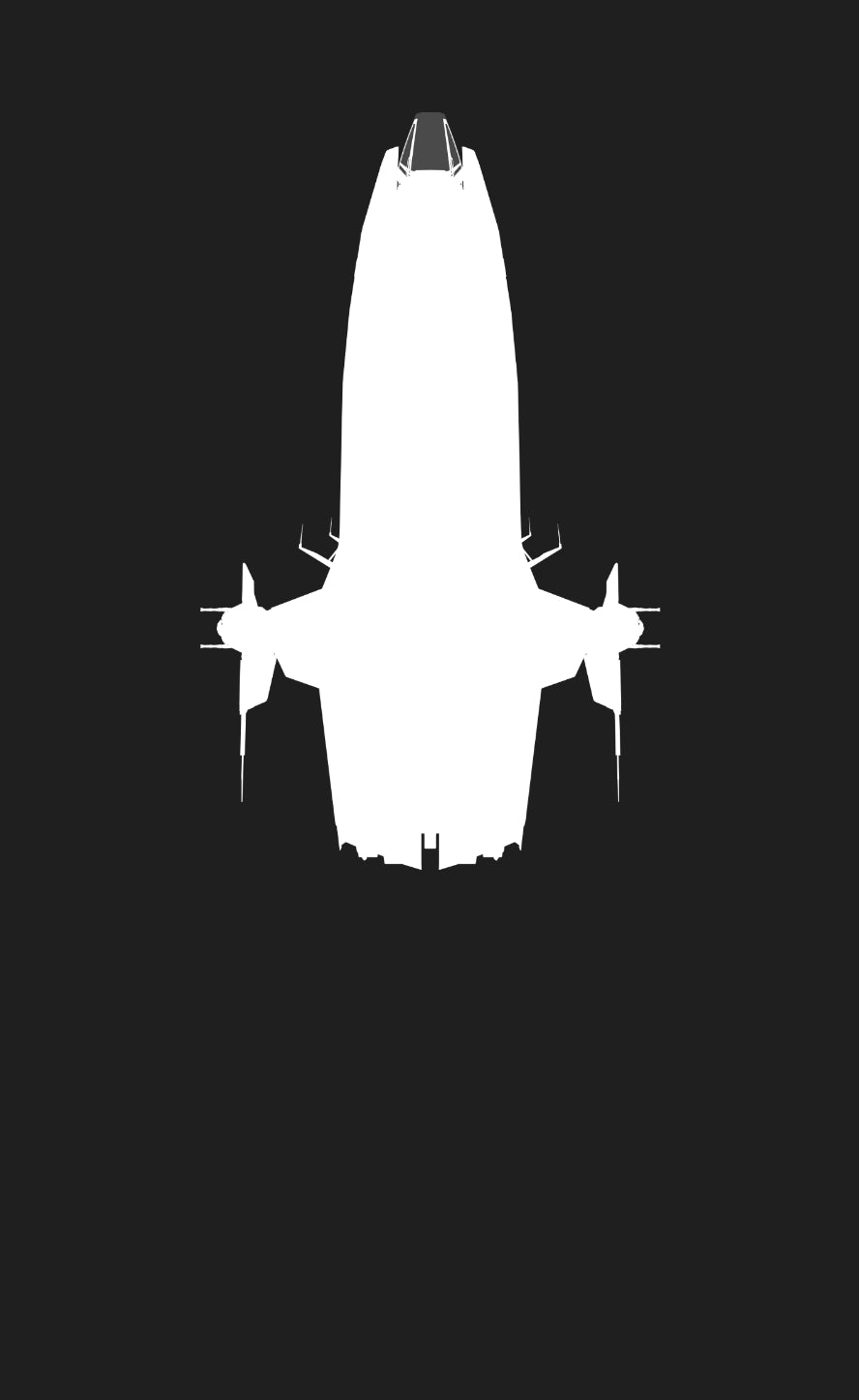




Speed, agility and gun damage
The sharper choice for aggressive pilots who want to control range, make fast attack runs, and leave before return fire starts to add up.







Heavy fighter comparison
The Origin M80 and Mirai Guardian MX bring serious single-seat firepower, but they solve the same problem in opposite ways. One is a fast glass cannon. The other is a tougher missile platform.
Both are single-seat heavy fighters, but they reward different habits. The M80 wants a pilot who uses speed and positioning to avoid a fair fight. The Guardian MX is happier taking a hit, staying on target, and keeping missile pressure on the enemy.
The sharper choice for aggressive pilots who want to control range, make fast attack runs, and leave before return fire starts to add up.
The steadier choice for drawn-out fights, tougher targets, and pilots who value durability and a deep missile load more than outright handling.
The numbers only tell part of the story. What matters is how each ship turns those numbers into a fighting style, and what happens when the fight stops going to plan.
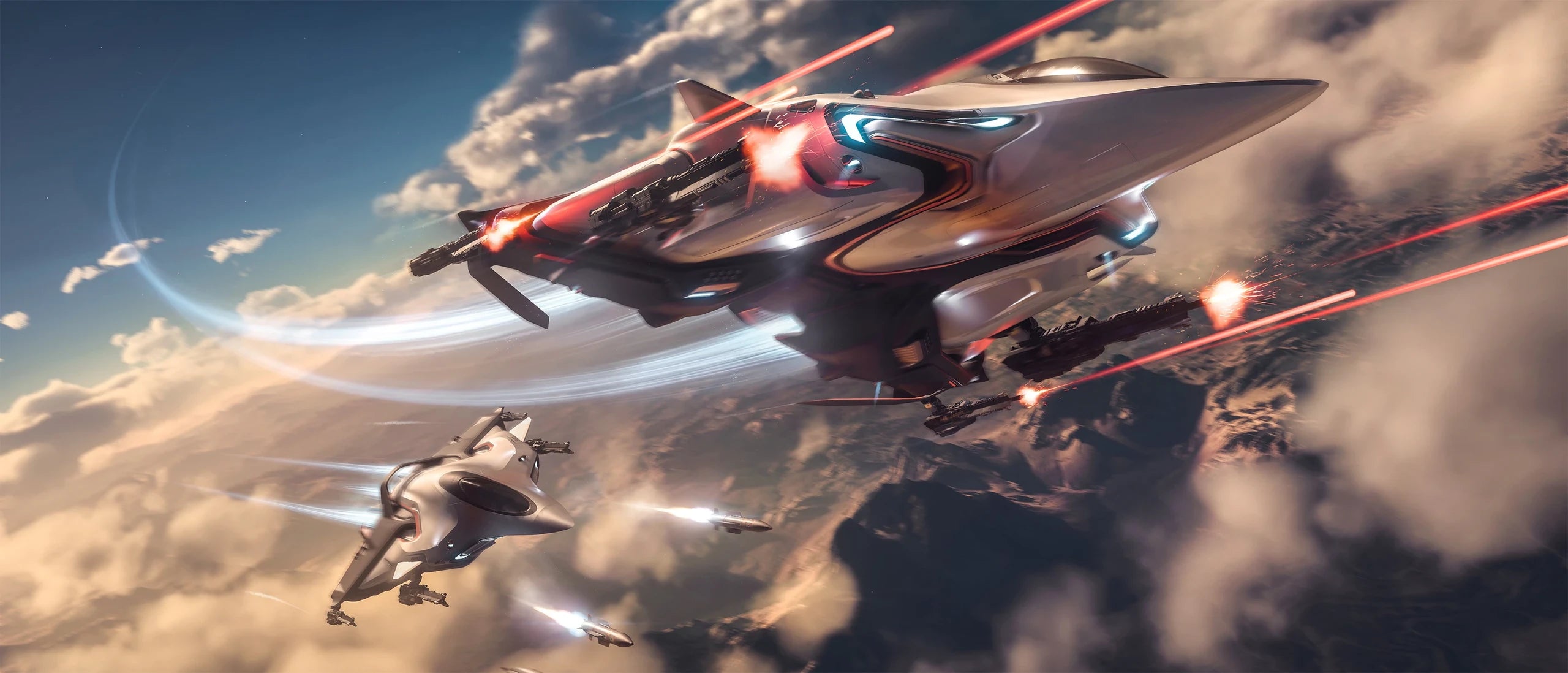
A fast heavy fighter with the instincts of an interceptor.
Two concealed Size 5 guns and two Size 4 guns give the M80 slightly greater gun potential on paper. Its real advantage is how quickly it can bring that firepower into position. It accelerates harder, changes direction more willingly, and gives a skilled pilot more control over when to engage or disengage.
Watch the guns: The M80 cannot afford to trade damage for long. Losing one of its prominent weapon mounts takes a large bite out of the firepower that makes the ship special.
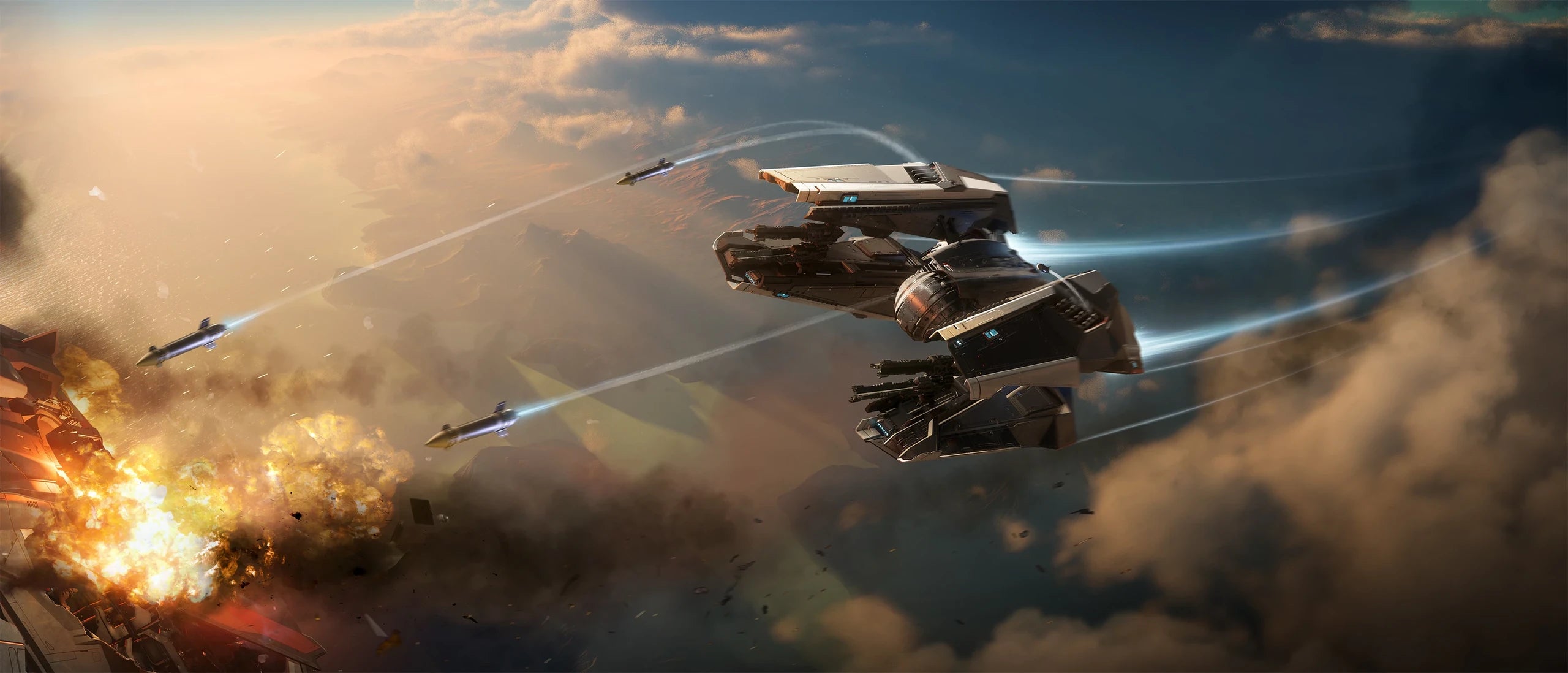
A durable missile-heavy fighter built to stay in the fight.
Four Size 4 guns provide dependable forward firepower, while two bespoke launchers carry twenty-four Size 2 missiles. Increased armor and stronger part durability make the MX more forgiving under fire, but the added mass costs it speed and agility compared with the M80.
Protect the thrusters: The MX can absorb more punishment overall, but damage to its exposed thruster assemblies can make an already heavier ship difficult to control.
No single winner covers every category. This breakdown separates raw capability from practical risk, so the better choice depends on how you fly and what kind of fight you expect.
Two Size 5 and two Size 4 guns give the M80 a slight advantage in forward gun potential. Its speed also helps it create cleaner firing opportunities.
Four Size 4 guns deliver a strong, even battery. It gives up some peak gun potential in exchange for a simpler and more uniform loadout.
The standard arrangement combines four Size 3 missiles with eight Size 1 missiles. It adds flexibility, but missiles are not the center of the ship's combat plan.
Two bespoke wing launchers give the MX much deeper missile reserves. It can pressure targets repeatedly instead of treating missiles as a short opening salvo.
Interceptor-style tuning makes the M80 quicker to accelerate, turn, and reposition. It is better at choosing the range and leaving a bad engagement.
Armor and extra equipment add mass. The MX remains capable for a heavy fighter, but it cannot match the M80's pace or agility.
The M80 has two Size 2 shields, but its best defense is movement. It is less comfortable absorbing repeated hits once shields begin to fail.
Two Size 2 shields, added armor, and increased critical and part durability make the MX the tougher ship in a direct exchange.
Its large external weapon mounts are central to the M80's advantage. Losing a gun can quickly turn a high-damage fighter into a much less threatening one.
The MX can keep fighting through more hull damage, but losing thrusters can severely reduce control and make the ship difficult to bring home.
A bed, personal storage, weapon racks, and 2 SCU of cargo make the M80 better prepared for a pilot operating away from a station.
The MX sacrifices the base Guardian's habitation area to make room for its combat upgrades. It is a focused fighter rather than a place to live.
The best heavy fighter is the one that suits the job and the pilot. These are the situations where each design makes the most sense.
Speed helps the M80 catch, pressure, and disengage from a moving target. Its larger guns reward accurate passes against a single priority ship.
The Guardian MX is more forgiving when several fights happen back to back and its deep missile reserve gives the pilot more options as the patrol develops.
The M80's acceleration and agility provide a better chance to separate enemies, avoid being surrounded, and leave when the numbers become unmanageable.
Missile volume and stronger durability favor the Guardian MX when the job is to stay committed against a larger or harder target.
A confident pilot can extract more from the M80's speed, agility, and slightly stronger gun package, provided they avoid taking unnecessary damage.
Browse current M80 and Guardian MX ships, upgrades, game packages, and related offers. Only products currently available for purchase are shown.


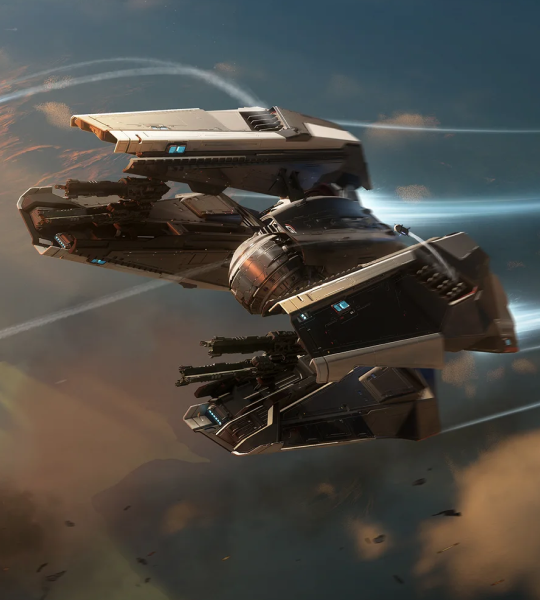


Choose the M80 if you trust your flying and want the speed, agility, and gun power to control each engagement. Choose the Guardian MX if you would rather survive mistakes, carry far more missiles, and keep fighting after taking damage. The M80 has the higher ceiling; the Guardian MX is the more forgiving combat ship.
Star Citizen remains in active development. Weapon balance, component durability, handling, and damage behavior can change between patches. Official imagery and Star Citizen marks belong to Cloud Imperium Rights LLC and Cloud Imperium Rights Ltd.