




























Star Citizen vs Elite Dangerous: Which Should You Play?

Compare the games by what you want to do: galactic exploration, a solo career, cooperative missions or life aboard a working spacecraft.
Choose Elite Dangerous if your priority is travelling through a galaxy-scale setting, developing a pilot’s career and choosing when to encounter other players. Choose Star Citizen if you are more interested in physically inhabiting spacecraft, handling equipment and cargo, and sharing those spaces with a crew—provided you can tolerate an unfinished alpha.
Elite’s Odyssey expansion adds on-foot activity, while later updates bring system colonisation and cooperative Operations. Star Citizen connects flight, ground combat, industry and crafting in its Persistent Universe.
Flight and the role of your ship
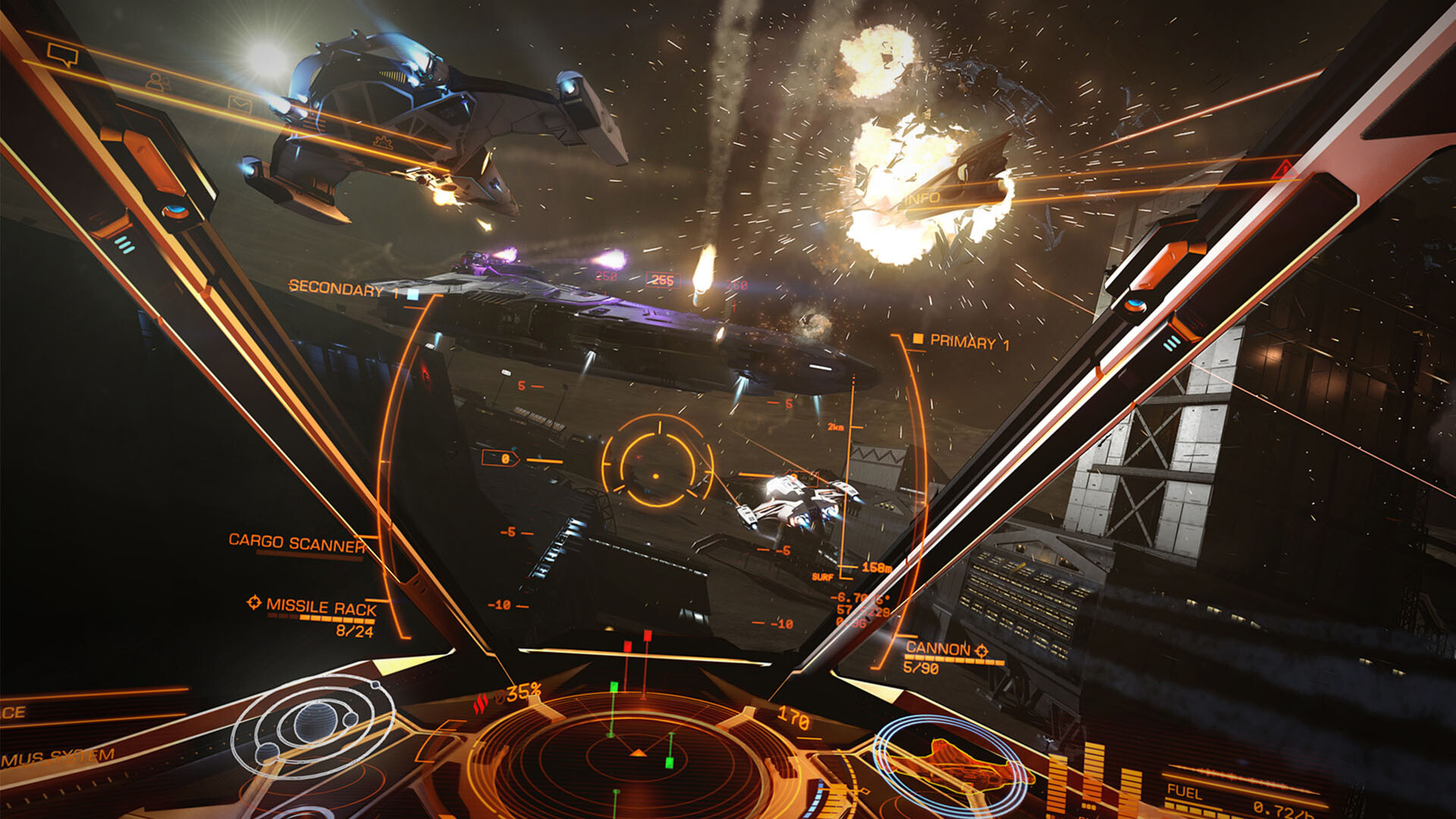
Elite makes the pilot’s seat the centre of a broad career. Outfitting changes what a vessel can carry, reach or fight, and piloting involves managing movement, power and the transition between ordinary flight and faster travel. Its flight-assist system gives beginners help with stabilisation while offering experienced pilots more freedom when disabled. A joystick is an option, not a requirement for getting started.
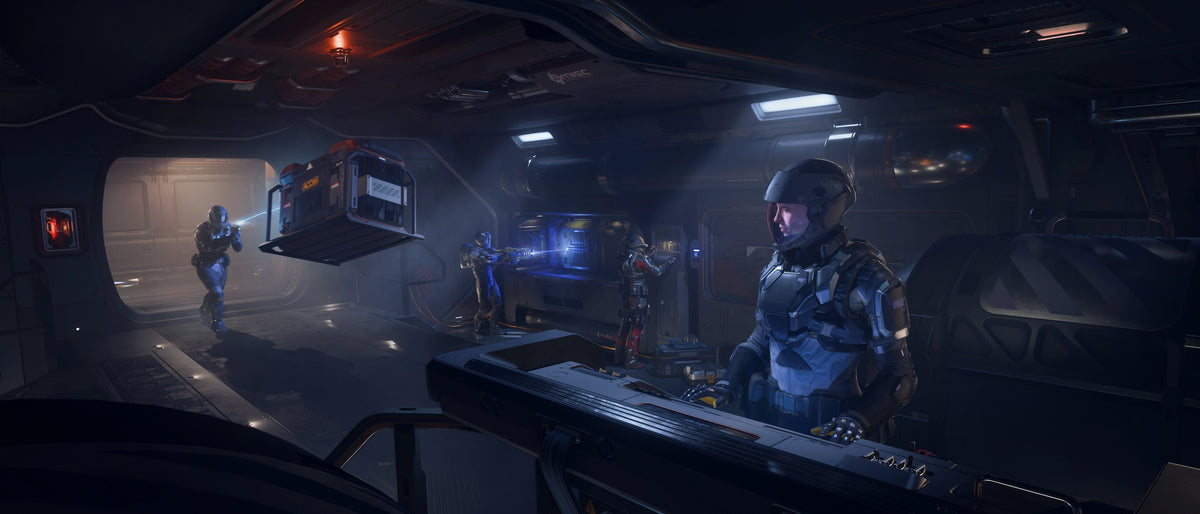
In Star Citizen, the ship is also a place where people work. Crew stations, component access, cargo entrances and the route through the interior can matter as much as the pilot’s weapons. A larger vessel can create additional jobs for friends, but it also adds space and systems for somebody to manage. A solo player should compare ships by the work they can actually operate alone.
Elite is a strong candidate if learning a ship’s handling and refining its build are the main attraction. Star Citizen is particularly appealing when you want that flying to connect directly with activity elsewhere aboard the same vessel.
Exploration: galactic journeys or detailed local places
Elite’s recreation of the Milky Way is its clearest advantage for players who want long-range discovery. Planning a route, finding systems and bodies, surveying them and returning with discoveries can provide a sustained objective. Odyssey adds surface exploration on foot, including biological sampling. Distance and the decision to keep travelling are central to that style of play.
Star Citizen has a much smaller set of developed systems and locations. Cities, stations, outposts and ship interiors reward close inspection and movement between different types of activity. Its exploration-labelled ships should not be read as proof that every proposed scanning, mapping or expedition mechanic is finished.
Elite’s system-colonisation feature, introduced with Trailblazers, also gives organised players a construction and logistics objective. It is a released feature, with subsequent changes to how facilities support a system’s economy. That should be compared with playable Star Citizen activities, rather than with a future base-building presentation as if both were already equivalent.
On-foot activity and ship interiors
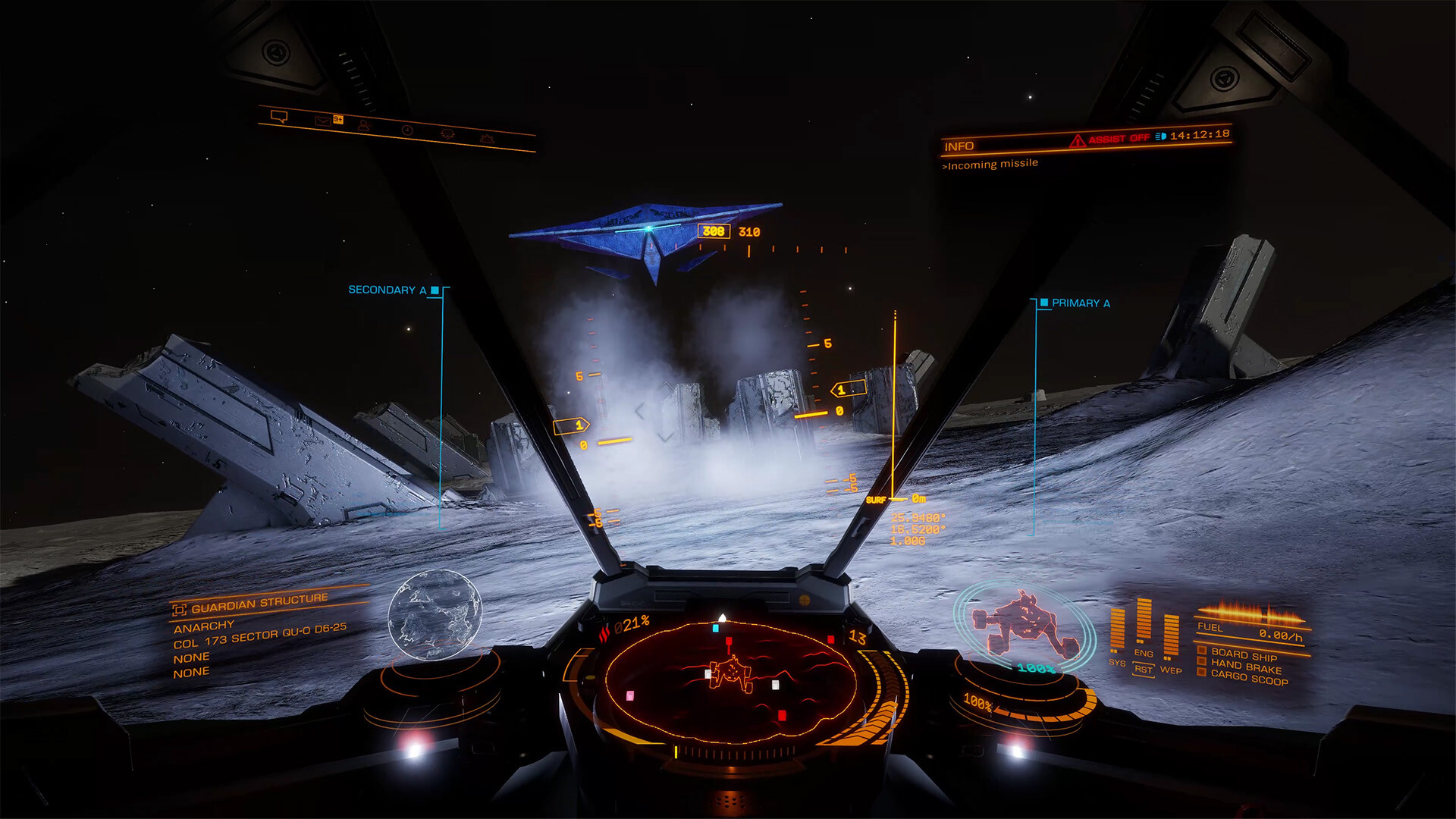
Odyssey is required for Elite’s on-foot gameplay. It adds settlements, social spaces, equipment, missions and ground combat to the base game. Check the edition you are considering: owning Elite Dangerous or Horizons does not automatically mean owning Odyssey.
Star Citizen includes on-foot movement and combat within the same game as flight. Boarding, walking through ships and moving cargo create frequent transitions between the cockpit and the surrounding world. That continuity is a major reason to choose it if your interest is the vessel and crew as a whole.
Frontier’s 2026 Nomad material describes accessible entry points, and creator ObsidianAnt’s Nomad coverage describes a small, limited interior. Those additions are not the same as a general system of fully traversable working interiors across the fleet. Choose around the spaces and functions a particular ship actually provides.
Solo play, crews and organised missions
Elite offers Open Play, Private Groups and Solo. Solo removes encounters with other human commanders from your session while retaining the connected galaxy simulation. It is not an offline campaign. Private Groups let invited players share a session; Open allows encounters with other commanders, including hostile ones.
Star Citizen’s Persistent Universe has no equivalent private Solo mode. You can work alone, but you remain in a shared world. Its separate Arena Commander modes are useful for practising flight or combat; they do not provide a private copy of the Persistent Universe.
For cooperative play, Elite’s July 2026 Operations update adds structured scenarios with optional matchmaking. A lone commander or an existing squad can begin the process, and an Operation Runner takes the team to the scenario. That provides a more direct route into organised activity than assuming every group must assemble for a long journey first.
Star Citizen suits groups that enjoy arranging their own work as well as accepting contracts. The transport, cargo and ground portions can involve the same crew and ship. Forming a party and sharing a mission are separate steps, so use the shared-missions guide before setting off. Crew size should follow the activity, not the maximum number of people a ship can physically hold.
Progression and the time you invest
Elite gives players established routes through credits, ship outfitting, engineering and reputation. Those systems offer long-term goals, but they can also involve repetition when the next improvement needs particular resources or unlocks. Colonisation adds a larger-scale project for players who want to organise sustained hauling and construction.
Star Citizen combines earned currency, reputation, equipment and blueprints with account-owned ships. Its alpha currency and persistence remain subject to change or resets. If keeping years of accumulated progress is essential to your enjoyment, that uncertainty is a substantial disadvantage.
Neither game should be approached as a race to the largest ship. A specialised build or manageable starter can suit a preferred activity better than a vessel whose running requirements dominate the session. In Star Citizen, rentals and in-game ship purchases let you explore alternatives without treating every change of role as a cash purchase.
Hardware, editions and reliability
Compare Elite’s current PC Live game with Star Citizen’s current LIVE build. Elite’s Legacy branch has separate progress and does not receive the continuing Live content. Its console versions belong to that older branch; they are not a route to Odyssey or the current PC feature set. Star Citizen is a Windows PC game.
Frontier lists 12 GB RAM and 75 GB storage in Odyssey’s recommended specification, with an i5-8600 or Ryzen 5 2600 and a GTX 1060 6 GB or RX 580 8 GB. Star Citizen recommends 32 GB RAM and requires 150+ GB of SSD space. Specification figures describe compatibility and capacity; they do not establish the frame rate on your PC. Do not use Elite’s old base-game 25 GB figure to plan a modern Odyssey installation.
Elite is a released game with continuing updates. That makes it a more conventional choice for a lasting career, but it does not make every update trouble-free: Frontier’s 2026 Operations follow-up notes address missing rewards and exploration-data problems. Star Citizen’s alpha status brings broader uncertainty around systems, persistence and session reliability. Check current issues for either game before committing to a long expedition or valuable cargo run.
Choose the activity you want to repeat
Elite is the stronger fit for a player drawn to galactic exploration, a long-term pilot career, or the ability to avoid other players through Solo. Odyssey and Operations broaden the ground and group options, so evaluate the current game rather than its original release alone.
Star Citizen is the stronger fit for a player who wants to move through ships with friends, physically handle the equipment involved in a job and combine flight with on-foot activity. Its unfinished state is part of that decision, especially if you have little time for recovery from faults.
If Star Citizen sounds closer to your interests, read the PC requirements and first-session guide before choosing access. For a new account that needs the game, compare packages containing Star Citizen; standalone ships and unused upgrades do not supply a game licence.

Start Star Citizen with a manageable ship
If you have chosen the PC game, compare packages by included access and the work you want to try. A larger ship is optional, and Squadron 42 access varies by listing.
Compare game packages