





















Aopoa History: From the Xi’an Border to Human Hangars

The story behind the Khartu-al, San’tok.yāi and Nox, from a cold-war scout to some of the ’verse’s most distinctive craft.
Long before Human pilots could take a Khartu-al out of a civilian hangar, UEE reconnaissance crews knew its military ancestor as the Quark. They saw an elusive shape across the border, its manoeuvring thrusters flashing as it slipped away. Aopoa’s introduction to Humanity began with suspicion and pursuit, not a friendly showroom demonstration.
That history gives its ships a particular appeal. A Khartu-al does not look like a familiar Human fighter with a few exotic panels attached. Its moving geometry belongs to another engineering tradition, one that eventually crossed from a cold-war frontier into civilian life.
A House with an imperial privilege
Aopoa is both a Xi’an House and a manufacturer, headquartered on Ka’ua in the Hyoton system. It holds a government-granted monopoly over light-craft manufacture in the Xi’an Empire. That is a specific industrial privilege, not ownership of every Xi’an spacecraft business.
The crest of Imperial House Kr.ē appears in its identity, tying the company visibly to imperial authority. For a Human reader accustomed to competing ship brands, this is an important part of understanding Aopoa: the political structure behind the spacecraft is as unfamiliar as the spacecraft themselves.
The scout on the other side of the border
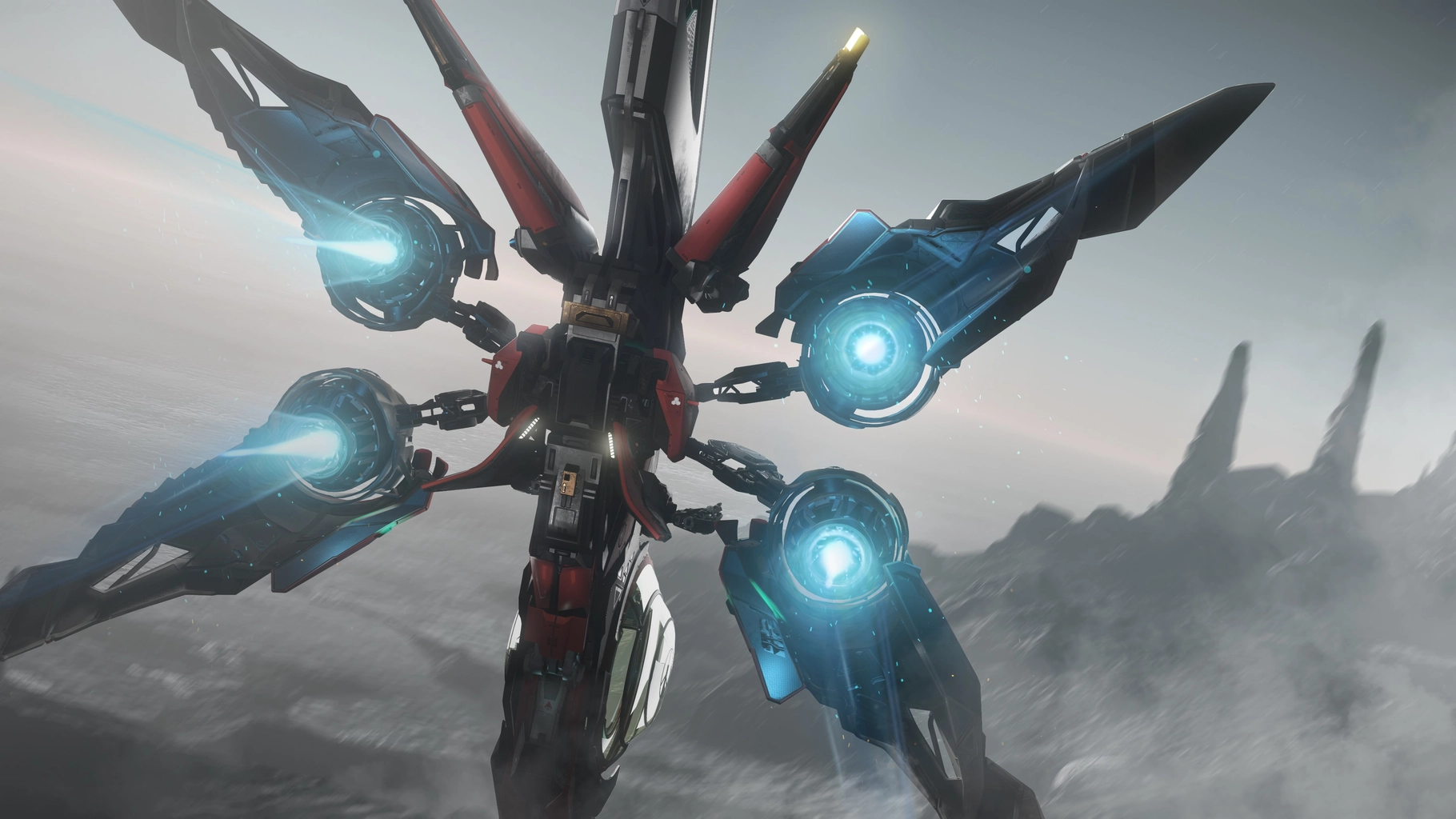
UEE and Xi’an reconnaissance continued to carry deep distrust even after the peace brokered in 2789. In 2896, a UEE squadron recovered an abandoned Quark. Researchers examined its articulating wings and directional thrusters, recognising an Aopoa mark they had previously encountered on Xi’an wreckage.
Aopoa’s 2910 agreement with MISC later opened a very different route for technological exchange. The connection between the recovered scout and the trade agreement remains a matter of in-universe historical speculation; it is not an established explanation for the deal.
There is a satisfying reversal in that journey. A machine once pursued as an intelligence prize eventually became something a civilian pilot could choose to fly. The fascination stayed, while the relationship around it changed.
Khartu-al: adapting the military design
The Human-compatible Khartu-al grew from the Qhire Khartu, a military scout and interceptor. Making it suitable for Human pilots required extensive changes to controls and components. That adaptation is why the familiar “Xi’an Scout” name describes a civilian-accessible descendant, rather than unrestricted access to the original military craft.
Its distinctive thruster arrangement is still the visual centre of the design. In flight, the open framework and changing geometry make it immediately recognisable beside conventional winged fighters. That difference is a large part of the pleasure of choosing an alien ship: the journey to the cockpit already feels less familiar.
San’tok.yāi: another expression of Aopoa combat design
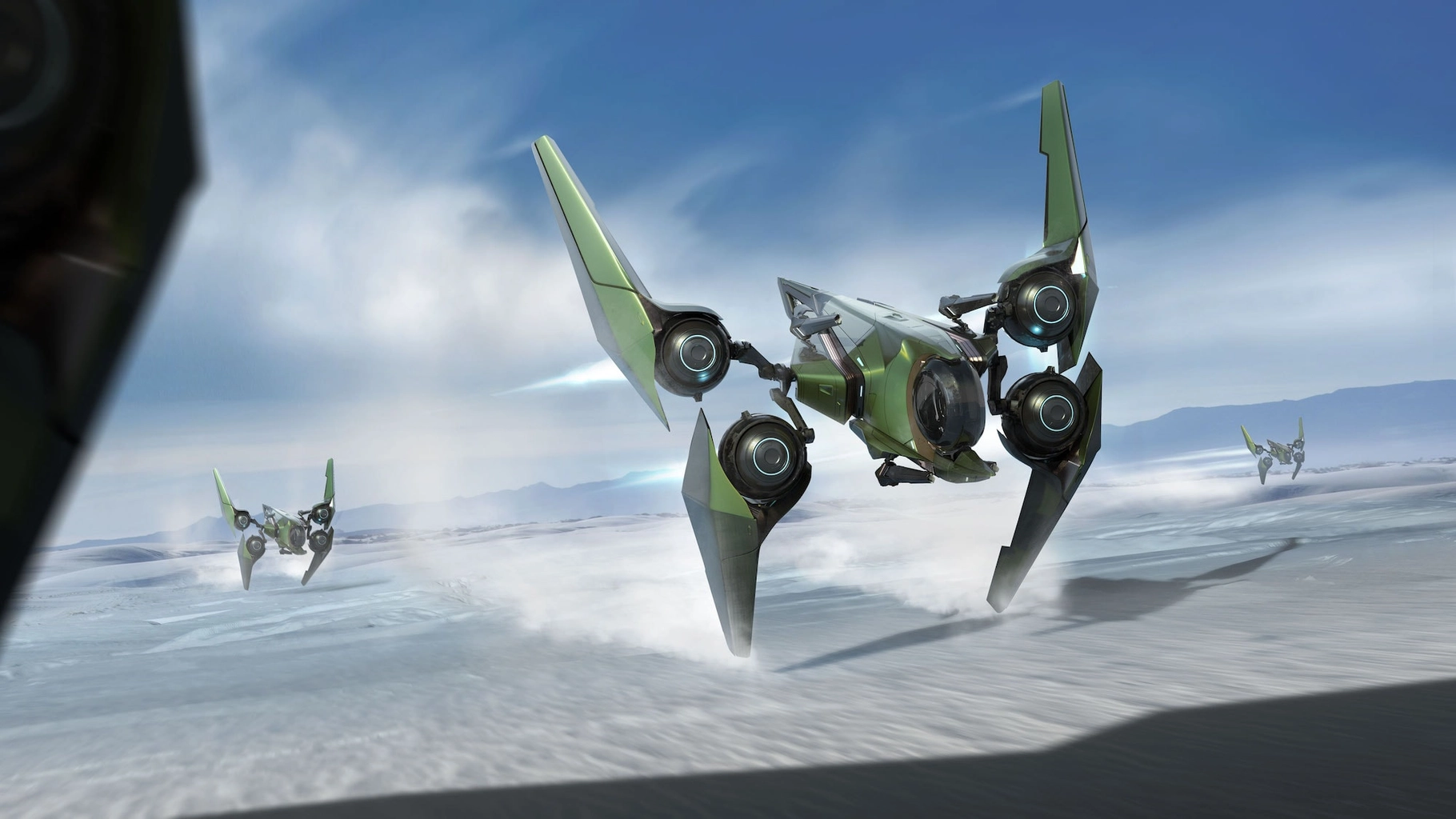
The San’tok.yāi carries the family’s visual language into a medium fighter. Four Size 3 Yeng’tu repeaters and missile racks give it a different armament from the Khartu-al’s two Size 4 guns. Both are single-seat craft, but they should not be collapsed into the same ship with different styling.
The rounded cockpit, separated thrusters and dramatic silhouette make the San’tok.yāi a particularly striking example of Aopoa’s approach. Its role provides another way to enjoy that engineering identity without assuming that “alien” means superior in every combat situation.
Nox: the same fascination close to the ground
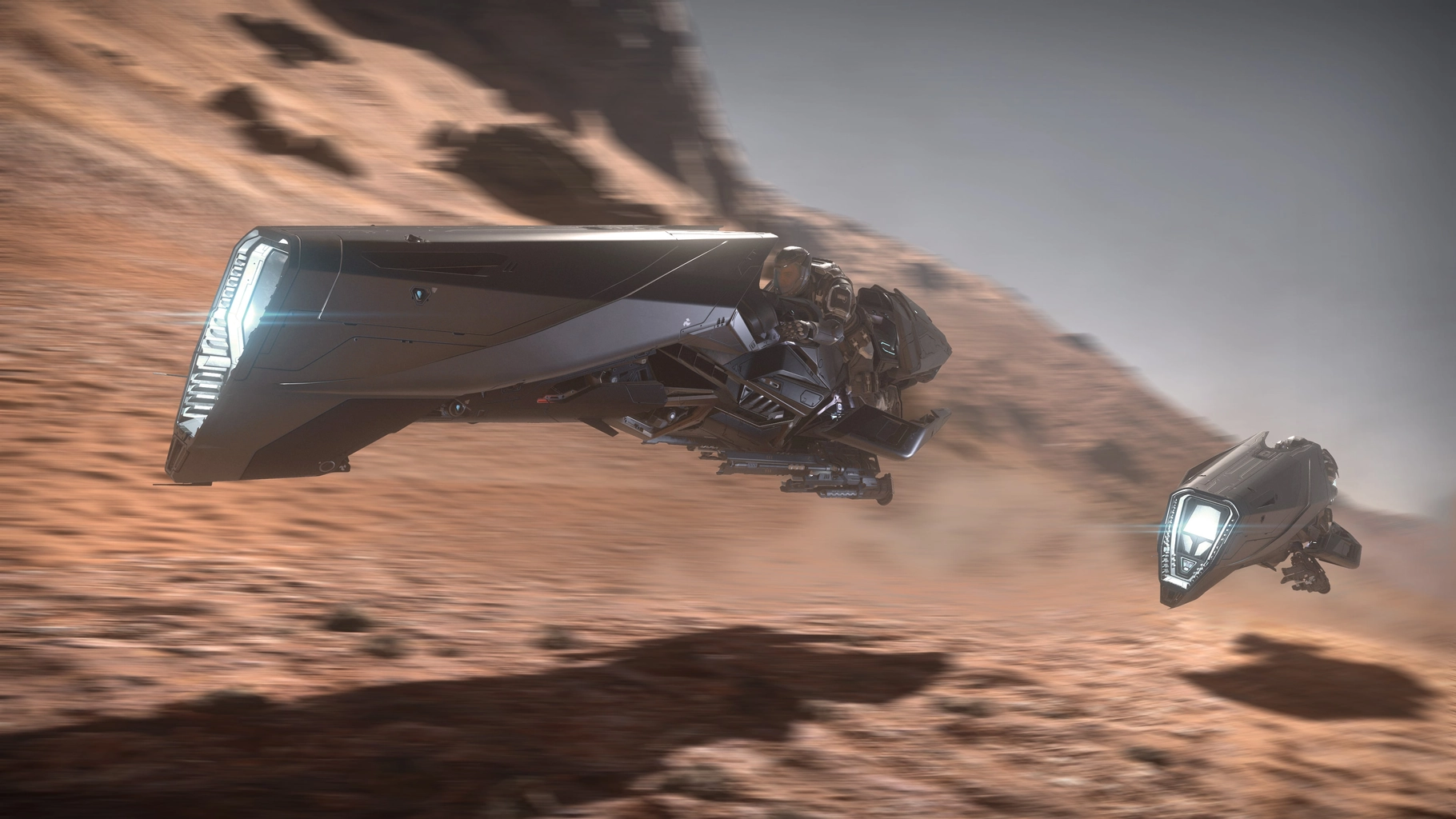
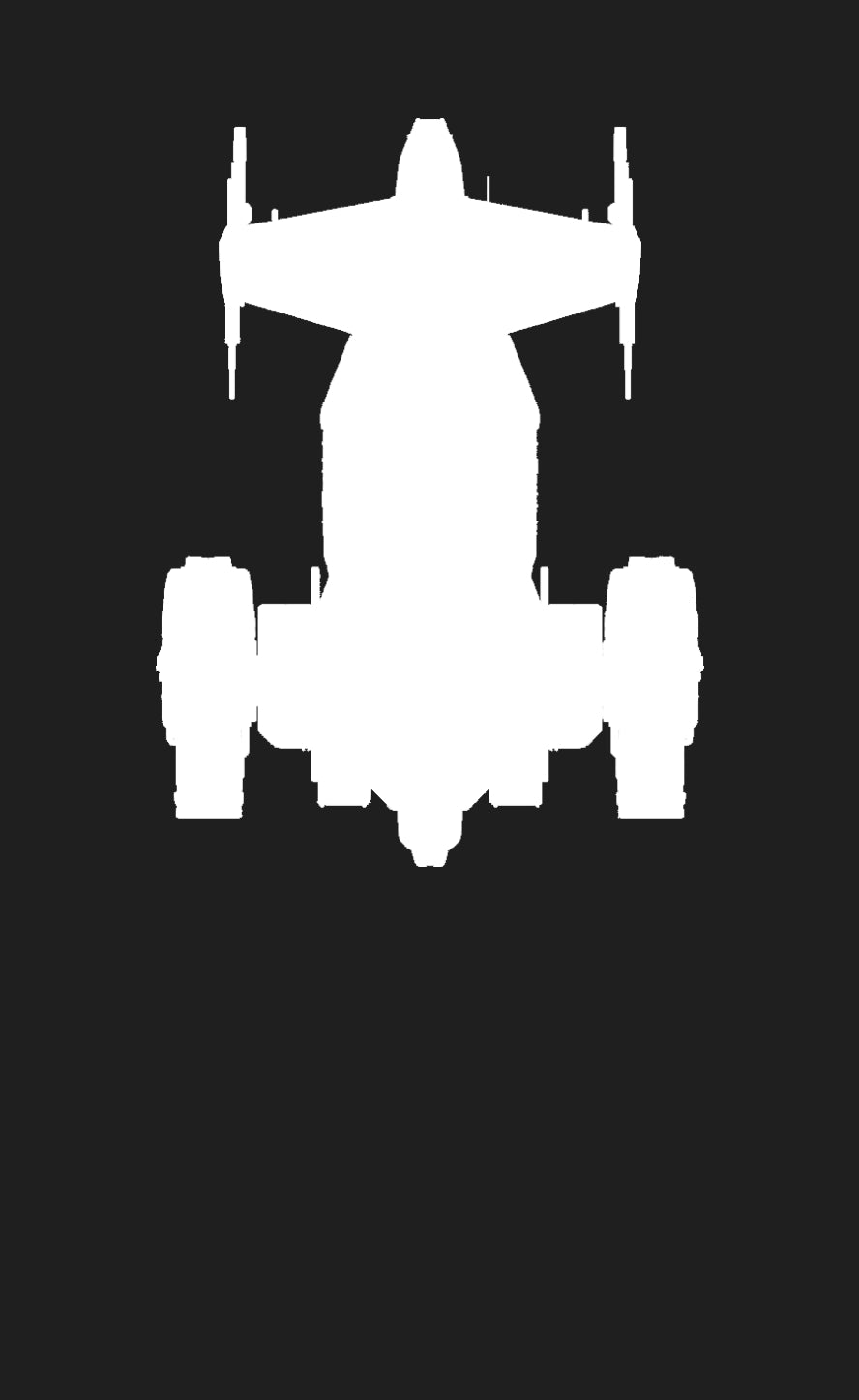
The Nox brings Aopoa’s work down to an open-canopy racer. The Human-adapted model appeared in 2947, offering a machine intended for both planetary surfaces and space. With the rider exposed above the body, it is a far more intimate encounter with the environment than sitting inside a fighter.
It also broadens the company’s character. Aopoa is not interesting only because its military-derived ships look dangerous. A Nox has the appeal of a small, beautifully strange machine built around movement, with very little between its pilot and the scenery.
For a first Aopoa ship, the Khartu-al offers the most direct connection to that scout history. The San’tok.yāi brings the medium-fighter interpretation, while the Nox takes the experience to a very different scale. The shared attraction is not a universal combat advantage. It is the chance to fly something that makes the ’verse feel inhabited by more than one civilisation.