

























Hull E Guide, Specs & Features

What to know
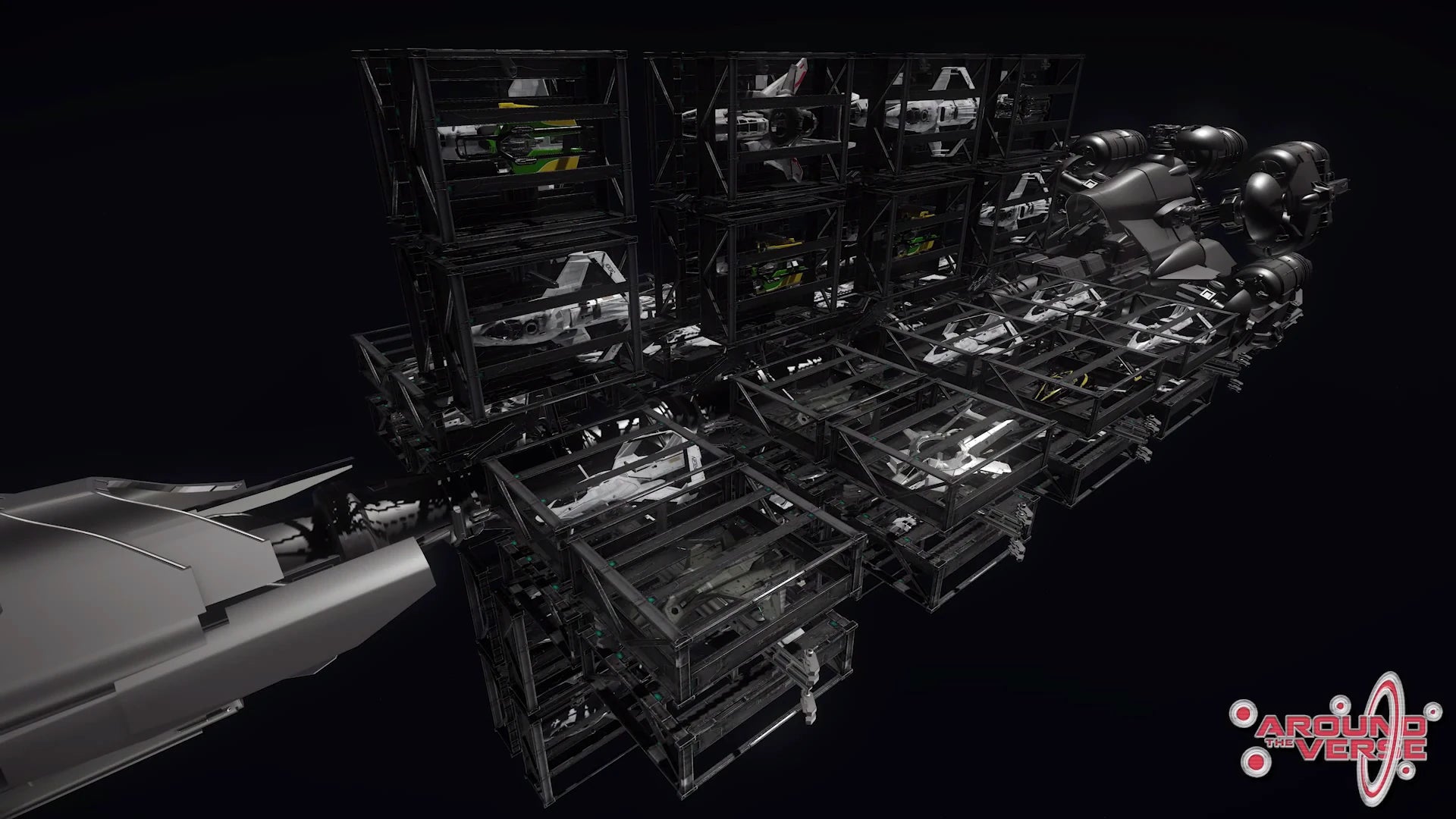
The MISC Hull E is the largest Hull-series freighter, carrying up to 12,288 SCU on a capital external spindle. Its 384 standard containers turn one departure into a major logistics movement that depends on prepared ports, tractor support, protection, and a professional crew.
Hull E specifications
Three hundred and eighty-four containers in one movement
The Hull E is closer to mobile trade infrastructure than a conventional cargo ship. A full load can reshape inventories across an entire route, but only when contracts, loading equipment, escort coverage, and destination capacity are planned before the ship expands its spindle.
The freighter for the largest dependable routes
The Hull E needs trade routes and ports that can handle its 12,288-SCU capacity. It rewards operators who can organize industrial volumes and keep a capital freighter moving through a network built to support it.
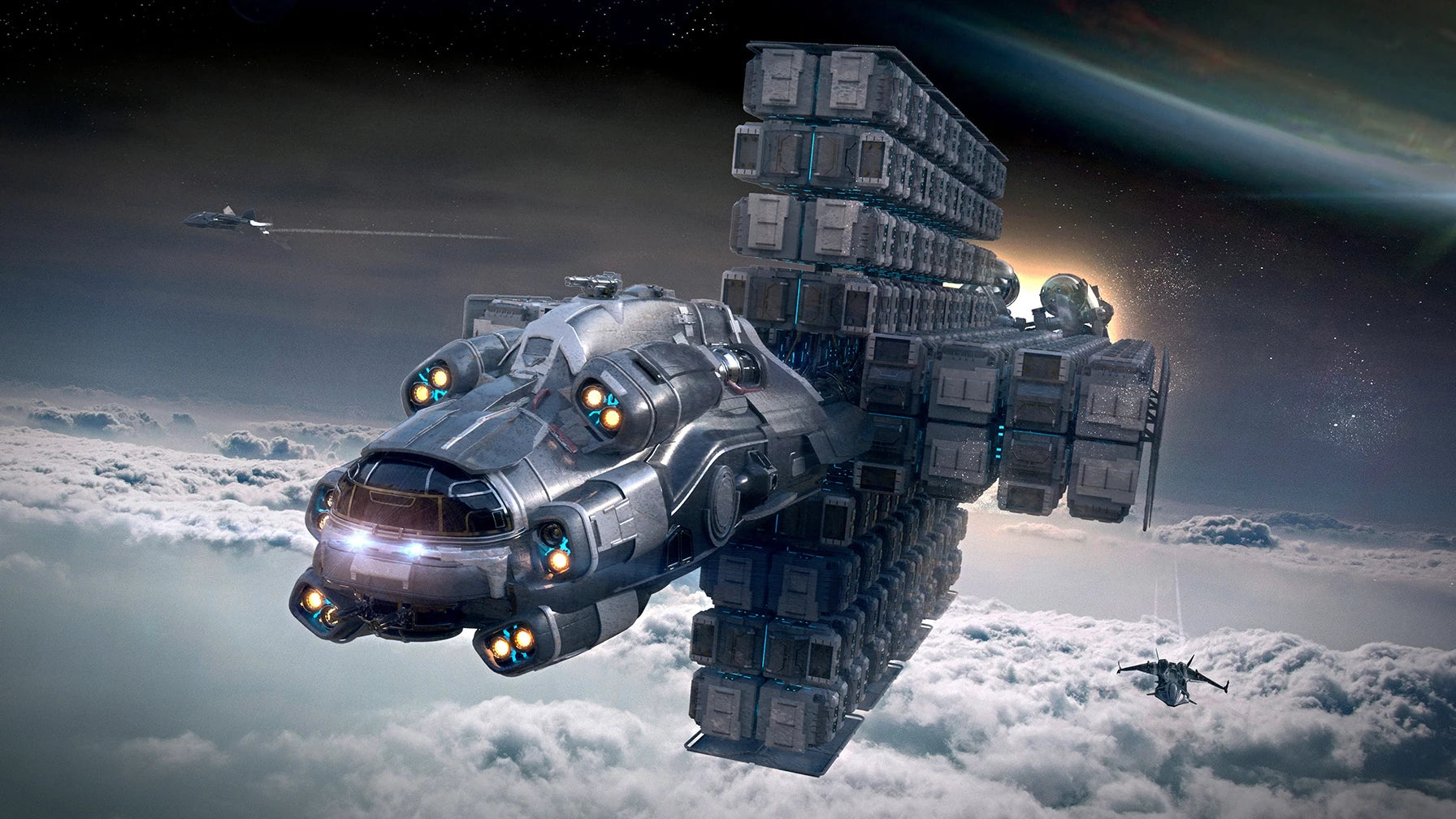
Development note: The Hull E is currently in concept. Because Star Citizen remains in active development, specifications, features, and imagery may change over time.
Hull E's cargo equipment
Cargo aboard the Hull E is planned around the capital-scale external cargo spindle, the doors or tractor equipment used to load it, and the order it must leave the ship.
Remote tractor systems support transfer, but the volume still demands major port equipment and careful load planning.
One loaded Hull E can deliver industrial quantities that smaller freighters would need many trips to match.
Heavy shields and defensive turrets protect the exposed load while the ship crosses long commercial routes.
Door width and internal clearance decide which containers can actually fit.
The right loading equipment turns empty cargo space into a secured shipment.
The Hull E maximum-capacity spindle
At full load, the Hull E carries 384 standard 32-SCU containers outside the main hull.
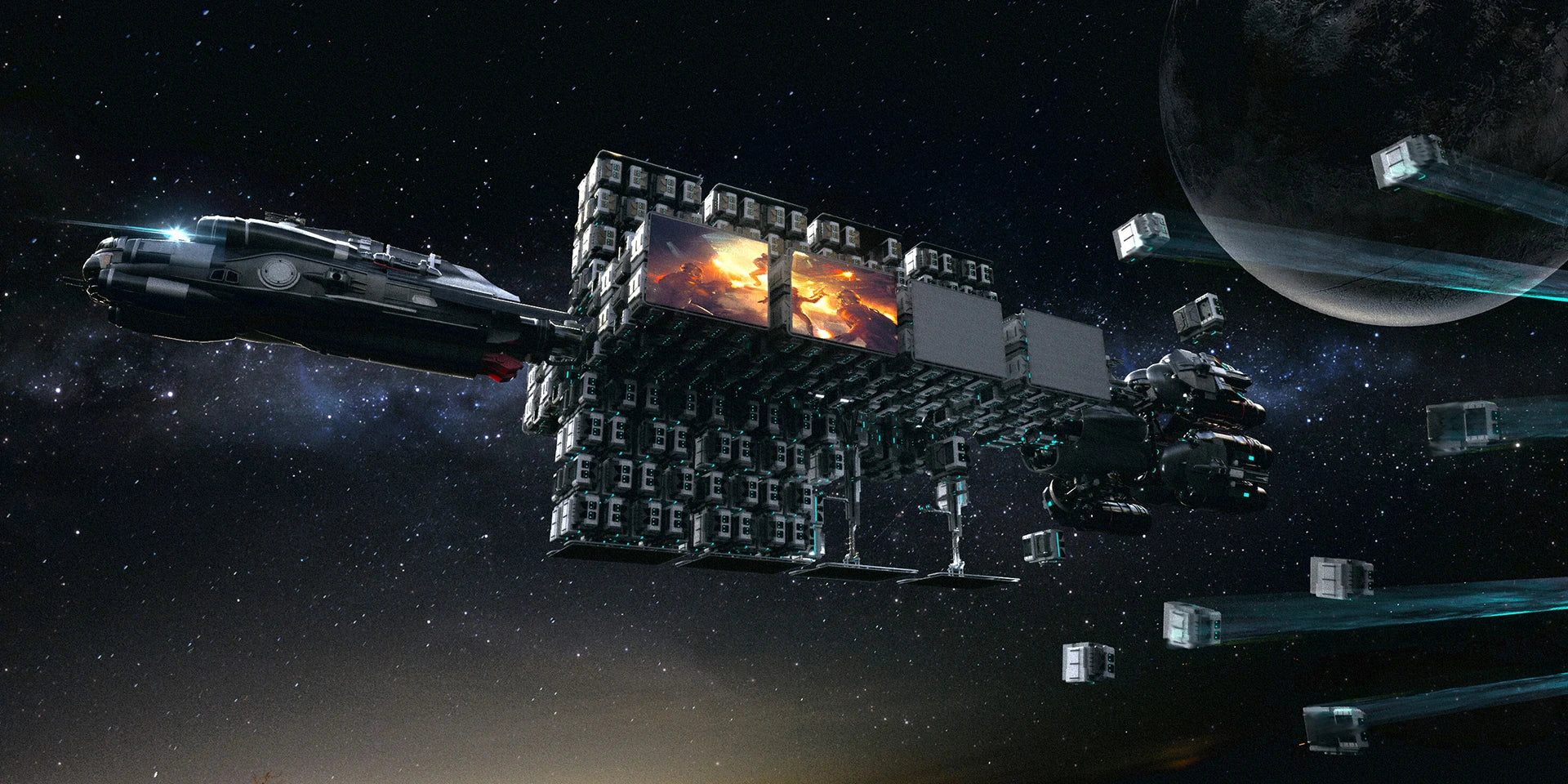
12,288-SCU external spindle
Match the load carried by the capital-scale external cargo spindle to the container sizes and equipment available at both ends of the Hull E's route.
Keep the load carried by the capital-scale external cargo spindle restrained, balanced, and clear of the access the crew still needs.
Arrange the load carried by the capital-scale external cargo spindle in the order the destination can receive it so unloading stays straightforward.
From cargo spindle to customer
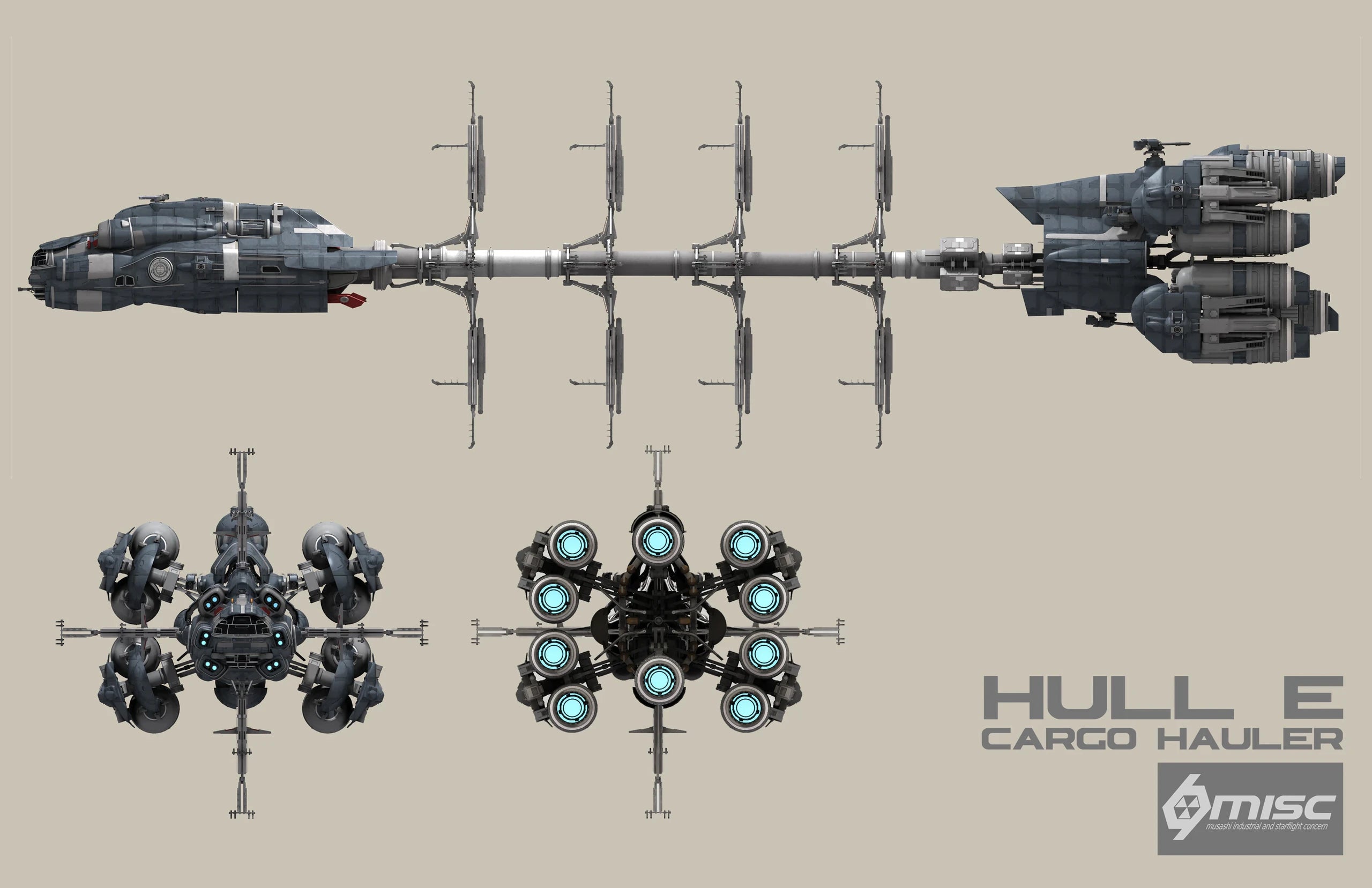
The Hull E carries freight outside its main hull, so the route, load limits, the capital-scale external cargo spindle, and unloading equipment at the destination must be agreed before departure.
-
Book with the Hull E
The crew accepts a load only after its size, mass, route, and receiving equipment suit the Hull E.
-
Keep the first delivery from being buried
The loading plan leaves the Hull E's doors, controls, and first delivery clear.
-
Secure the Hull E's cargo without blocking crew access
For the Hull E, a practical loading plan keeps cargo carried by the capital-scale external cargo spindle secure, accessible, and ready to unload at the destination.
-
Unload the Hull E in delivery order
A blocked or disorganized Hull E cannot accept its next load on time.
Hull E's freight equipment
The Hull E uses its capital-scale external cargo spindle to keep cargo moving from loading and secure transport to delivery at the destination.
Navigation, engineering, cargo control, and defense become distinct jobs at the scale of the Hull E.
The ship needs suitable docks, cargo equipment, security, and customers; it is not intended for improvised frontier unloading.
Loading equipment and internal clearance determine which containers can use the Hull E without blocking crew access.
The crew protects cargo without turning the Hull E's hold into an obstacle course.
Check the loading route before accepting the cargo
Freight stays manageable aboard the Hull E when the crew protects access, balance, and the unloading order.
Load the Hull E in the order the cargo must leave
Loading order, clear access, and destination equipment determine how the Hull E uses the capital-scale external cargo spindle.
Both ports need a clear plan for moving the selected freight into and out of the Hull E.
Inside the Hull E, containers remain secure without blocking the crew or the equipment needed at the next stop.
The Hull E leaves the receiving port ready for another load, after old freight is removed and damaged restraints are replaced.
Find your Hull E
Explore in-stock Hull E ships, upgrades, and game packages available from The Impound.