




























Star Citizen Refinery Guide: Work Orders, Methods and Collecting Your Cargo

The mining run ends at the refinery. The next job is choosing a process, giving it time and bringing the right ship back for the finished cargo.
A full mining ship is a good start, but it is not the end of the run. The refinery sits between the rock you collected and the cargo you eventually take to market. Choose a process, let the order finish, then come back with a ship that can carry the result. That last journey deserves as much thought as the first.
The choice of refining method mainly comes down to how quickly you want the material back and how much you want to retain. There is no single answer for a pilot finishing a short evening, a regular miner leaving orders overnight and a crew feeding a larger industrial operation. The useful question is which process fits the next stage of your work.
Ore, raw construction materials and RMC are different jobs
Mining brings mixed ore to the refinery. Structural salvage also produces raw construction materials that need processing before they become finished construction material. Hull scraping produces recycled material composite, usually shortened to RMC; do not confuse that finished material with the raw output from breaking down a wreck.
The distinction becomes important when unloading. A hold of raw structural salvage is the beginning of a refinery job, whereas RMC has a different route through your operation. Sorting that out before you leave the ship saves an unnecessary trip between the freight terminal and processing centre.
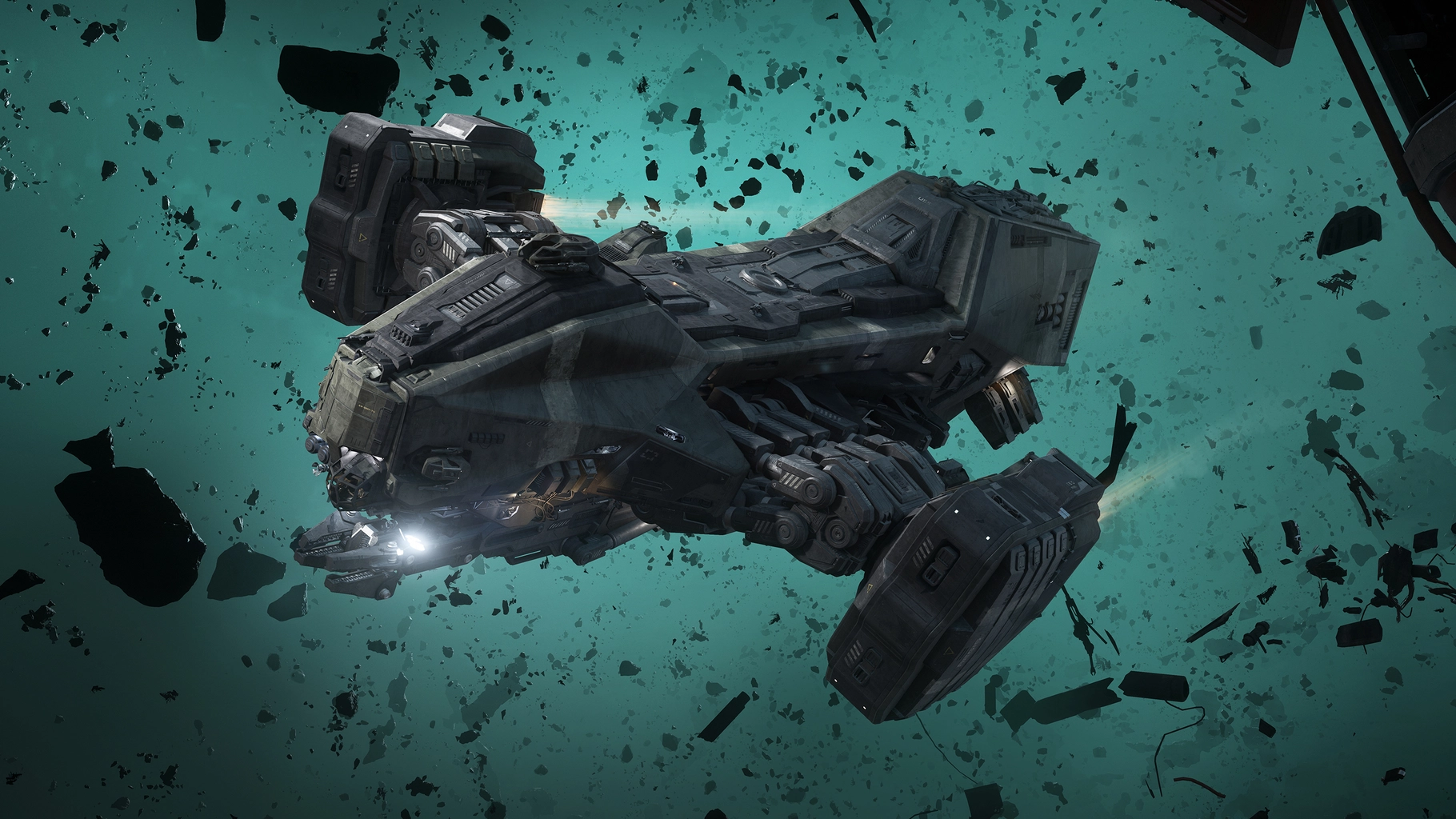
Raw structural materials also differ between salvage ships. Rubble, pieces and heavy salvage are not simply different labels on identical cargo. Their processing behaviour and output differ, so two holds with the same occupied volume need not produce the same finished quantity. Use the material and order details shown at the refinery rather than treating every SCU as interchangeable.
From the landing pad to an active work order
- Arrive at a station with a refinery deck. In Stanton, familiar options include HUR-L1 Green Glade, CRU-L1 Ambitious Dream and ARC-L1 Wide Forest. A station having a cargo terminal does not by itself mean it offers refining.
- Make the material available at that location. Mining bags can be processed from station inventory. For raw structural salvage, the established flow is to unload it through the freight elevator into the station’s warehouse before starting the refinery order.
- Use the processing centre’s refining terminal. Select the available material, inspect the order and choose a method. Pay attention to the actual output estimate and completion time for that batch.
- Confirm the order and return when it is complete. Refining runs in real time while you are logged out. You do not need to stand beside the terminal or keep the game open.
For a regular miner, that creates a pleasant rhythm: bring in a load, send it for processing, then return to the field or finish for the evening. A faster method becomes more attractive when you need the resulting cargo for a journey you are about to make. Waiting makes more sense when there is no reason to move it immediately.
What the nine refining methods trade away
These relative speed and yield categories are a useful starting point, not a promise that every material or station will produce the same result. Dinyx Solventation is the patient option; Cormack and XCR prioritise turnaround at the expense of yield. Gaskin offers speed with a more moderate yield category. The remaining methods sit between those extremes.
| Method | Relative speed | Relative yield |
|---|---|---|
| Cormack Method | High | Low |
| Dinyx Solventation | Very low | High |
| Electrostarolysis | Moderate | Moderate |
| Ferron Exchange | Low | High |
| Gaskin Process | High | Moderate |
| Kazen Winnowing | Moderate | Low |
| Pyrometric Chromalysis | Low | High |
| Thermonatic Deposition | Low | Moderate |
| XCR Reaction | High | Low |
A familiar name is not enough reason to choose a process blindly. Look at the order you are actually creating. Material, quantity and the available options affect the decision, and the community reference currently warns that the generic in-game method tooltips can be inaccurate. An old chart should not overrule the information for the specific batch in front of you.
From the rock face to a sale
The refinery handles one stage of a longer job. Our guide to reading mining rocks covers choosing and extracting the material before you arrive. After processing, the work changes: you are moving freight, with the container, access and handling constraints of a cargo run.
Arrange the collection ship around the order you intend to move, then choose a destination that accepts the processed material. Hand-mined gems follow a different route and can be traded without this ore-refining step. If a trade terminal cannot see your ship, first check that you landed through the proper landing procedure rather than assuming the cargo has vanished.
For that last leg, use our Multi-Tool, MaxLift and ATLS comparison to choose handling equipment and our landing-permission guide for a recognised arrival. The cargo is not sold simply because the refinery order has finished.
The collection trip is part of mining
Once processing finishes, the output needs cargo space. Your mining ship’s ore capacity is not a substitute for a freighter’s cargo grid, so arrange a suitable cargo ship before collecting a large order. Completed work can be loaded into cargo ships; several orders may require more than one trip or vessel.
Think about where the freight goes next as well as how much fits. Our cargo capacity guide explains why container size and access matter alongside the SCU total. A manageable load that you can move and deliver comfortably may suit a solo evening better than emptying every outstanding order at once. For a group, a dedicated hauler can keep the mining crew working while somebody else handles transport. Neither arrangement requires the same number of people every time.
After collection, the cargo still needs a suitable trading destination. A refinery is not automatically the final sales point, and a trade terminal’s available demand matters. Keep the route and destination in mind before filling the ship, particularly if you are combining the output of several mining sessions.
Do refinery orders survive logging out and patches?
Logging out: processing continues in real time. Leaving an order overnight is part of the normal refinery workflow.
A game update: treat this separately. Previous release notes have explicitly excluded in-progress refinery jobs from long-term persistence. Read the incoming patch’s persistence notice before leaving a valuable backlog across a release; do not assume that surviving an ordinary logout means an order will survive a patch.
That is the practical balance of refining. You are exchanging immediate access to the material for a processing result, then taking responsibility for moving that result. A good routine leaves room for all three stages—collection, processing and transport—without turning every return to the station into an unexpected logistics problem.
For help choosing the work you want to do around that routine, our Star Citizen career guide covers the broader industrial paths. If you are choosing a miner, compare the Golem, Prospector and MOLE for solo work and shared sessions.