



















Quantum Snare vs Dampener: Choosing an Interdiction Ship

Mantis, Cutlass Blue, Antares, Guardian QI or Raven EX? The right ship depends on whether you need to catch a traveller, hold an opponent or disable their systems.
A ship about to lose a fight often has one obvious way out: quantum travel. A dampener takes that escape route away while the target remains inside its field. A snare goes further, interrupting a quantum journey and bringing the encounter to you. That difference divides Star Citizen’s interdiction ships into a dedicated interceptor and a much broader group of ships built to keep an opponent nearby.
There are five flyable ships to consider in Alpha 4.10.1: the RSI Mantis, Drake Cutlass Blue, RSI Scorpius Antares, Mirai Guardian QI and Aegis Sabre Raven EX. They range from a specialist support craft to fighters that put the dampener and weapons in one pilot’s hands. The Zeus MR adds another option on paper, but remains a concept rather than a ship you can take out tonight.
Snare, dampener and EMP: what each one actually does
A quantum snare catches ships travelling through its affected area in quantum. A quantum dampener prevents nearby ships from starting a quantum jump. Neither automatically stops ordinary flight, so a target can still try to leave the field under conventional power.
An EMP attacks electronic systems under the applicable combat conditions. It is useful for disruption, but it is not a substitute for a snare or dampener. That distinction is especially important with the Sabre family: the original Raven’s EMP equipment and the Raven EX’s quantum dampener belong to different roles.
The Mantis combines snaring and dampening in its Quantum Enforcement Device. The other flyable ships in this comparison carry dampeners without snares. Owning a Guardian QI or Cutlass Blue therefore does not give a pilot the ability to pull passing traffic out of quantum.
| Ship | Quantum equipment | EMP | Who operates it? |
|---|---|---|---|
| Mantis | Snare and dampener | No | One pilot |
| Cutlass Blue | Dampener | No | Pilot; a second player can crew the turret |
| Scorpius Antares | Dampener | Yes | Pilot plus electronic-warfare operator |
| Guardian QI | Dampener | No | One pilot |
| Sabre Raven EX | Dampener | No | One pilot |
| Zeus MR | Dampener planned; no snare | Planned | Three-person design; concept |
RSI Mantis: the ship for catching quantum traffic
The Mantis is the specialist here. If the goal is to create an encounter along a quantum route, its snare supplies something none of the other flyable ships in this list offers. That is a strong reason for an organised group to have one, even when its other pilots would rather fly more heavily armed ships.
It is not a freighter or a boarding transport. The Mantis has no cargo capacity, so recovering a load after a stop calls for another vessel. Its field also affects friendly ships and the Mantis itself. A squadron that needs to leave must account for its own active enforcement field, rather than assuming every friendly quantum drive gets an exemption.
For a lone pilot, those limitations narrow its appeal. You can operate the device yourself, but catching a target and overpowering it are separate problems. With escorts, the Mantis can concentrate on maintaining the encounter while other ships provide the firepower. That is where its specialised design makes the most sense.
/source.webp)
Cutlass Blue: room behind the cockpit

The Cutlass Blue brings the dampener into a larger, more versatile hull. Its prisoner-pod layout gives it a clear law-enforcement identity, while a crewed turret lets a second player contribute firepower. Unlike the dedicated single-seat fighters, there is an interior behind the flight deck for the rest of the operation.
That makes it attractive to players who want their interdiction ship to do more than keep a target inside a field. It is still only a dampener-equipped ship, however: it must reach an existing encounter rather than snare passing quantum traffic. The prisoner fittings also should not be confused with a promise that every proposed live-capture and prisoner-delivery mechanic is available now.
Compared with the Guardian QI or Raven EX, the Blue gives up the concentrated single-seat fighter approach for a ship that can accommodate another active crew member and a more specialised interior. For two friends who enjoy working from the same hull, that can be the more enjoyable arrangement.
Scorpius Antares: a real job for the second seat
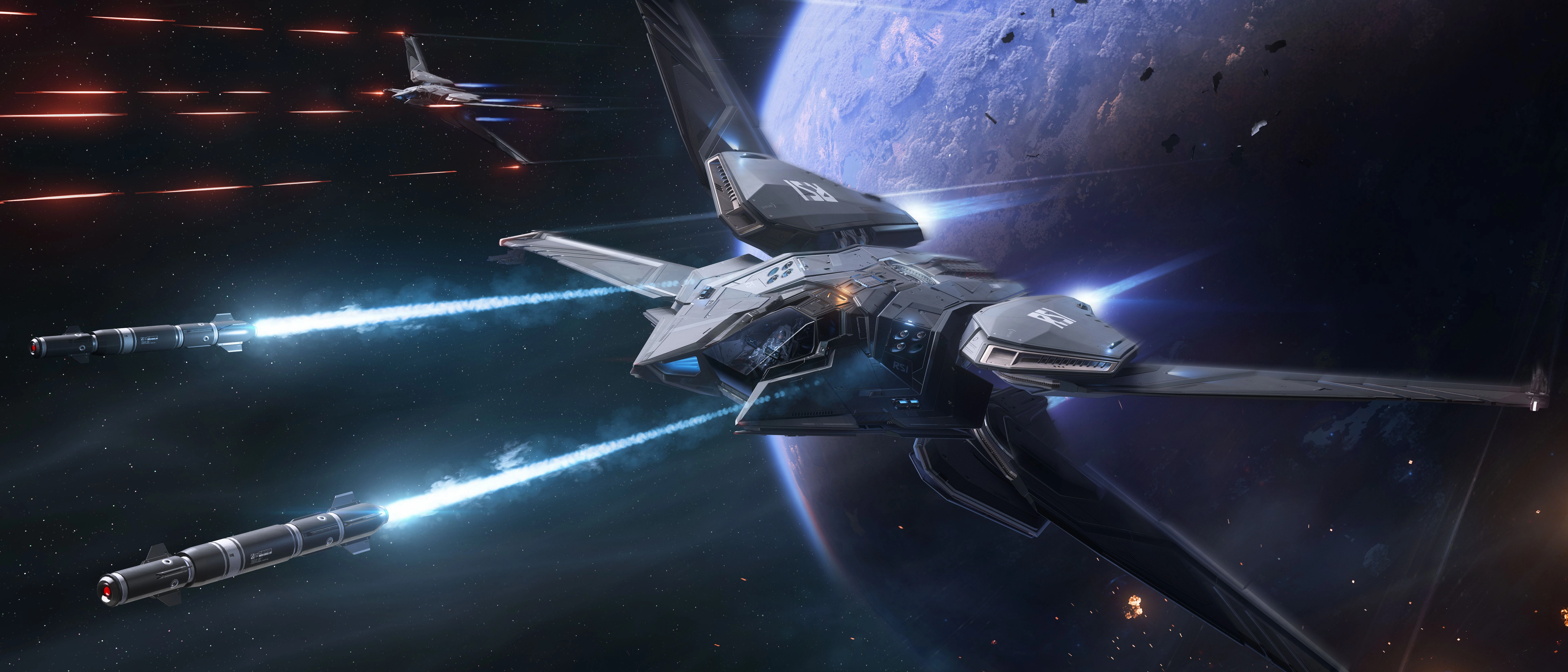
The Antares exchanges the standard Scorpius’s turret arrangement for an EMP and quantum dampener. Its co-pilot operates the electronic-warfare equipment while the pilot handles flying and the forward weapons. It is a deliberately shared combat role, not simply a regular Scorpius with some free equipment attached.
That combination is the Antares’ attraction. The dampener can deny a quantum exit, while the EMP adds a separate means of disrupting the opponent. Two players can work the engagement together without splitting across two ships. The cost is dependence on the operator: a solo pilot does not get the same complete package available from a Guardian QI or Raven EX.
For a pair who like coordinating their actions in combat, the Antares has much more character than a spare seat whose occupant waits for something to happen. For someone who usually logs in alone, it is a less convenient choice than the single-pilot alternatives.
Guardian QI: heavy guns, one pilot

The Guardian QI puts its quantum dampener under the pilot’s control alongside the Guardian’s two Size 5 guns. It is the obvious candidate for someone who wants heavy-fighter armament and quantum denial without arranging a second crew member. The weapons give it a clear attraction against larger or more heavily protected opponents.
The dampener draws substantial power, and the QI’s supporting equipment adds weight. It also increases the ship’s emissions when active. Those are meaningful compromises alongside the firepower; the interdiction hardware is part of the ship’s load, not a passive bonus that asks nothing of it.
It has no snare and no prisoner pods. Its strength is reaching a fight and making departure harder for the other ship while retaining serious pilot-controlled weapons. For a solo hunter, that is a more self-contained proposition than bringing a Mantis and hoping its support role will cover every other part of the encounter.
The QI also changes the Guardian’s missile arrangement: four Size 4 dual racks replace the base ship’s quad racks. At launch, the family measured 25 metres long, 16.5 metres wide and 9 metres high. The two Size 5 cannons are the headline attraction, but the dampener, missile trade and extra equipment distinguish the QI from simply fitting the base Guardian with a different loadout.
Sabre Raven EX: the lighter solo hunter
/85/sc-aegissabreravenex-kf02.webp)
The Raven EX combines a dampener with four configurable Size 3 gun hardpoints. It brings the broad Raven silhouette into a different hunting role from the original EMP-equipped ship, and it does so without asking for a co-pilot.
Its position between the standard Sabre and original Raven is part of the appeal. The EX trades some of the Sabre’s agility for speed, while carrying more armour and less emission reduction than the original Raven. That makes it a distinct variant rather than simply a route to the same rare ship under another name.
Against the Guardian QI, the choice is between a Sabre-family fighter with four smaller guns and a heavier design carrying two Size 5 weapons. We would favour the EX for a player drawn to the Sabre’s fighter role and the Guardian QI when heavy armament is the priority. Our Raven EX feature explores its design and equipment in more detail.
Zeus MR: worth following, still a future option
The Zeus MR is planned around a dampener, EMP, prisoner accommodation and a three-person crew. That could make it a useful home for a small bounty-hunting group, with more space and supporting facilities than the dedicated fighters. It is not a snare ship, and its concept status means those plans cannot be treated as a current alternative to the flyable fleet.
Before you buy for interdiction: current device faults
Alpha 4.10.1’s known-issues list includes quantum-device activation failures with no workaround, plus a separate missing-console-controls issue for which another quantum jump is suggested. The loaner matrix also still lists a Guardian QI for affected Mantis owners. These are live limitations to take seriously when choosing a ship specifically for its interdiction equipment.
With those issues in mind, the role comparison remains clear: Mantis for a snare-supported group, Cutlass Blue for a larger shared utility hull, Antares for a two-person electronic-warfare team, and Guardian QI or Raven EX for a solo combat pilot. More players can add escorts, boarding capability or cargo recovery around any of them. The field starts or prolongs the encounter; the ships around it determine what you can do with it.