


























Razor vs LX vs EX: Racing, Straight-Line Speed or Stealth?

Mirai’s smallest specialist takes three forms, from the racing original to an Advocacy-inspired covert variant.
The Razor is a tiny ship with very little interest in being practical. There is one seat, no cargo hold and a long, low airframe built around going quickly. For a pilot who already has a dependable daily ship, that single-mindedness is much of the appeal. Sometimes the next hangar slot should be for something you simply want to fly.
The standard Razor, LX and EX share their basic proportions, but the badges point towards different priorities: racing, straight-line performance and a lower signature. They are three versions of a specialist, not three steps up a universal upgrade ladder.
The original Razor

The standard model is the natural place to begin if you want a Razor for racing. Its composite airframe and Xi’an-influenced engineering belong to a design conceived around competition, rather than a touring ship adapted for an occasional event. The original design brief emphasised endurance racing, giving the family an identity beyond a short sprint.
That history helps explain the attraction without settling a modern leaderboard. Race routes, atmosphere, handling changes and the pilot all affect results. A manufacturer’s description cannot tell you which variant will put in the best time on every course in the current build.
LX: built for the straight
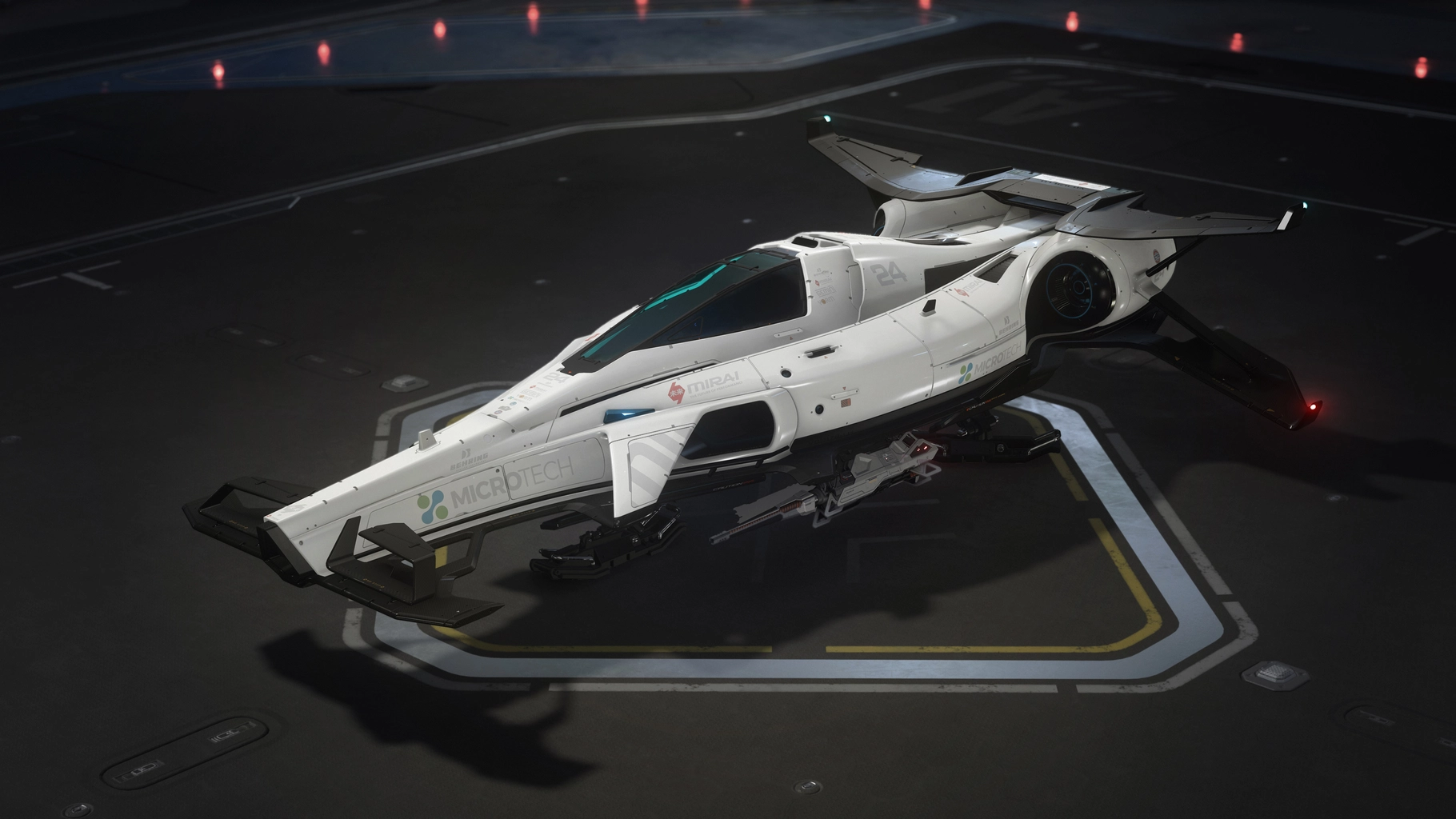
The LX pushes the Razor towards straight-shot racing with a heavily tuned engine. Its design trades manoeuvrability for speed, so the interesting question is where you want that extra emphasis. A long run with room to accelerate is a different proposition from a course that keeps asking you to change direction.
We would choose the LX for that specific character, not on the assumption that its badge guarantees a faster lap everywhere. You can love the idea of a dedicated sprinter while recognising that a race is more than its fastest straight.
EX: the quiet one

The EX has a rather different backstory. It was developed for UEE Advocacy surveillance and extraction work using signature-reducing materials, then adapted for civilian customers after it was not adopted widely. The dark finish suits that identity beautifully: this is the Razor for someone more interested in arriving discreetly than wearing bright racing colours.
A reduced signature is not invisibility, and the EX remains a small, single-seat craft. Its surveillance origins do not supply a passenger cabin, prisoner compartment or a guaranteed safe escape. Nor should the store’s stealth-fighter category persuade you to treat it as a substitute for a dedicated combat ship.
The shared hardware: all three current vehicle pages list a single pilot, zero SCU, dimensions of 12.5 × 9 × 3 metres, two Size 2 gun mounts and two Size 1 missile racks. They also list quantum drives. The family’s differences are therefore about purpose and tuning, rather than adding a hold or another crew station.
Pick the version you actually want to fly
Our starting recommendation is the standard Razor for someone who wants to explore the family’s racing identity. Move towards the LX when straight-line specialisation is the attraction, or the EX when its low-profile role and appearance are what brought you here.
There is no need to force a practical justification onto every small ship. A Razor can be the craft you take out because you enjoy a focused cockpit and a narrow, purposeful silhouette. Just buy that experience with clear expectations: it will not carry your cargo, take a friend along or replace the everyday utility of a starter with an interior.