













Star Citizen Cargo Physics: How the 4.10.2 PTU Netcode Changes Loose Objects

Loose crates could become easier to handle in the 4.10.2 PTU, as a new system tackles the sliding, bouncing and sudden snaps that disrupt a loading job.
A loose crate that slides away or snaps back can turn a straightforward loading job into a struggle with the box itself. Star Citizen’s physics networking overhaul tackles the disagreement behind that movement: your client and the server can have different information about what just happened to an object. Alpha 4.10.2 is testing a new way to bring those accounts back together, with cargo boxes among the loose objects that stand to benefit. The change remains on the PTU; ships and vehicles still use the previous system.
When you bump a crate before the server catches up
Under the previous approach, the client treated the server’s version of an object as wholly right or wholly wrong. One bad state could then lead to lasting desynchronisation, rubber-banding or apparently unexplained sliding and bouncing. That helps explain how a brief disagreement could become a persistent nuisance while moving cargo.
The replacement gives incoming server information a trust score. If you have just bumped a crate, your client knows about the contact before that action has reached the server. Trust in the incoming state is reduced while that information is missing. Older server information also receives less trust. This lets the correction account for a recent local action instead of treating an outdated position as an unquestionable answer.
How the new system brings a crate back into sync
Corrections now favour small changes to velocity. Rather than immediately relocating the object, the system adjusts its movement to reconcile the disagreement. A teleport remains available as a last resort, but only after a sweep check confirms that the destination is clear. The intention is to bring movement back into agreement without repeatedly snapping the box to a new position.
The tolerances also scale with current latency and the object’s size, replacing fixed values. Connection delay and scale now influence how the correction is handled, so a single fixed allowance no longer has to serve every object under every network condition. That is an adjustment to the synchronisation rules, not a reduction in the connection’s latency.
Better-behaved cargo won’t fix ship desync
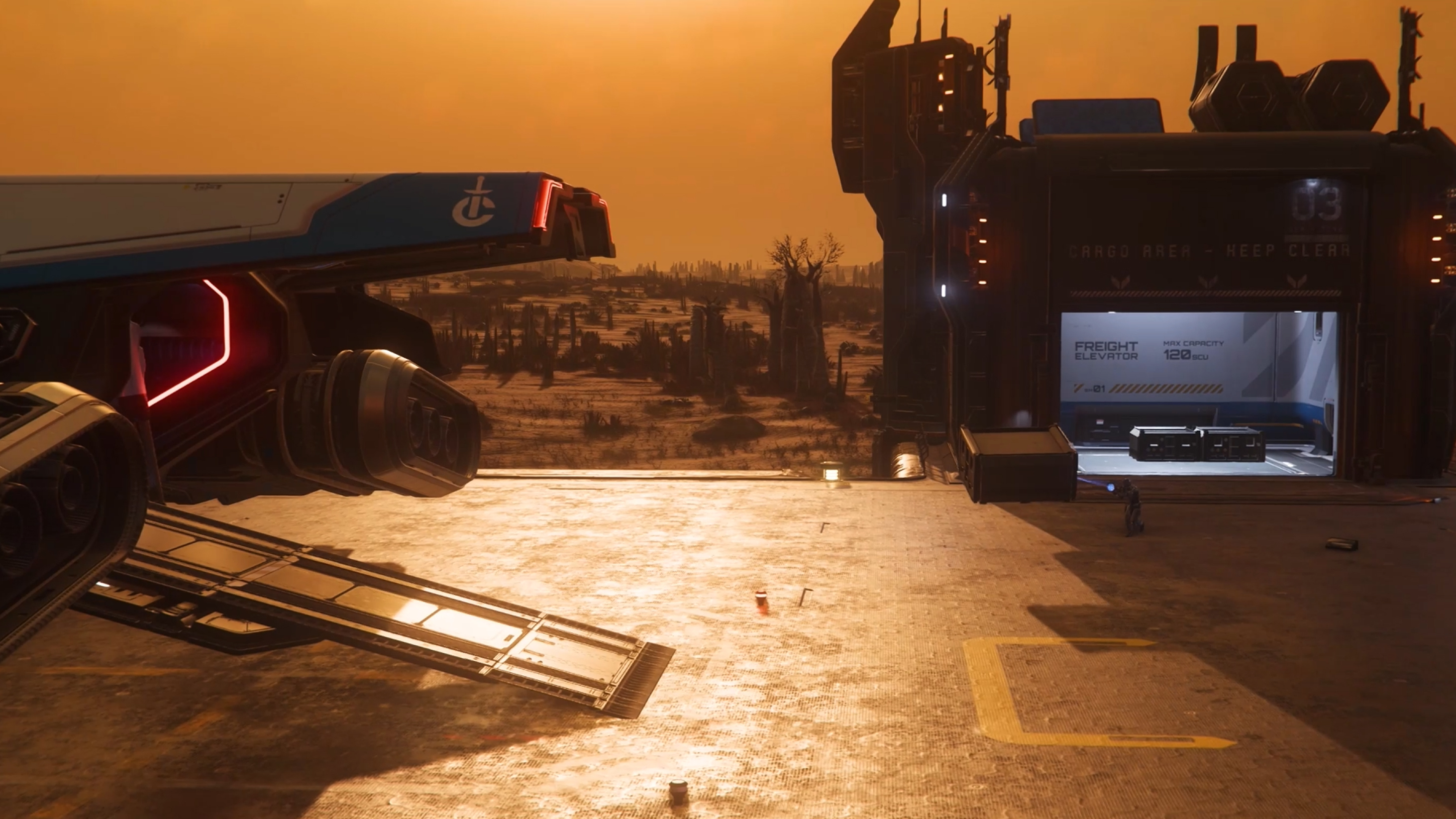
For a hauler wrestling a loose crate across a hangar, smoother corrections could make loading less frustrating. That is where this work starts: objects moving freely under the game’s physics simulation, rather than ships or characters.
Cargo boxes fall into that group of “rigid bodies”. When a box moves, the new system weighs the server’s information against recent movement on your client before deciding how to correct it. The aim is to keep the two in sync without the abrupt snaps that can interrupt a loading job.
Your ship and any vehicles aboard still use the previous system. Bringing these changes to them is being considered, but there is no announced date. A smoother-moving crate is therefore no promise that a nearby ship will stop rubber-banding.
Characters need further work too: the game has to keep track of their poses as well as where they are. The developer wants to revisit character synchronisation later; this cargo physics change does not include it.
For haulers, the intended benefit is less disruptive movement as loose cargo is handled. Container fit, the route through a hold and how a load is arranged remain separate questions; our cargo capacity, containers and access guide covers those choices.
A tall stack can still become unstable
Better synchronisation does not remove the physics problem of balancing one loose object on another. As more masses are stacked, small inaccuracies in the calculations that keep their surfaces apart can build up until the pile becomes unstable. Real-time physics engines make trade-offs in those calculations, and networking can amplify the problem.
That leaves an important limit for cargo handling: the new corrections may reduce the snapping and sliding caused by client-server disagreement, but they are not a guarantee that a tall pile of loose crates will stay settled.
Where the overhaul stands in 4.10.2 testing
The detailed change arrived in the 5 October PTU notes for build 12858901. On 6 October, developer mkale-CIG said the improvements remained on track for the 4.10.2 Live release. The 7 October RC2 build, 12878398, continues to list the Physics Networking Overhaul as a testing focus. RC2 is available to all PTU waves on the US channel, with Long Term Persistence enabled.
The new system is enabled through a CVAR, with the intention of leaving it active unless testing uncovers a catastrophic problem. For now, access to these changes means playing the PTU build; the 4.10.2 Live release remains a target.