


























cargo
MISC Hull B - Size Up, Load Up

The MISC Hull B has arrived, and it fills a gap cargo operators have been waiting on for a long time. Sitting between the entry-level Hull A and the large-scale Hull C, this 512 SCU medium freighter brings telescopic spindle loading, dual tractor beams, and full crew habitability to haulers ready to take on serious contracts — all from a ship that fits a medium hangar.
SHIP SPOTLIGHT
The Mid-Tier Freighter Built for Serious Cargo Operators
There has always been a gap in the cargo hauling career path. The Hull A gets new operators onto the shipping lanes without overwhelming them, and the Hull C represents a full commitment to large-scale interstellar freight. But for haulers who have outgrown the entry tier and aren't yet ready to wrestle with the complexity of a Hull C run, the middle ground has been conspicuously empty. The MISC Hull B fills that gap — and from the look of it, fills it well.
Now available in the Star Citizen universe, the Hull B is a premium medium freighter designed for serious cargo operators who want genuine capacity without sacrificing accessibility. At 512 SCU, it opens the door to a wide range of hauling contracts that simply aren't viable in smaller ships, while keeping the ship firmly within a medium-hangar classification that makes it practical across far more locations than its larger counterparts.
SHIP SPECIFICATIONS
Length
46m / 71m Expanded
Width
17m
Height
8m / 9m Expanded
Crew
2
Cargo Capacity
512 SCU
Weapons
2x S3 Pilot Controlled
1x Remote Turret (2x S3)
2x Missile Launchers (2x S3)
1x Remote Turret (2x S3)
2x Missile Launchers (2x S3)

WHERE IT SITS IN THE HULL SERIES
The Hull series has always been about giving cargo operators a clear progression path. The Hull A is the entry point — approachable, manageable, and forgiving for new haulers. The Hull C, by contrast, is serious interstellar freight requiring a more deliberate and complex workflow. The Hull B deliberately positions itself closer to the Hull A in terms of day-to-day flow and mechanics. It doesn't demand the same level of setup or operational complexity as the Hull C, but it delivers meaningfully more capacity and capability than anything at the entry tier.
For players working their way up through hauling contracts, the Hull B is the natural next step. Up to 512 SCU per run opens up a broader variety of missions, allowing operators to take on larger and more lucrative contracts while still operating a ship that remains accessible and manageable.
For players working their way up through hauling contracts, the Hull B is the natural next step. Up to 512 SCU per run opens up a broader variety of missions, allowing operators to take on larger and more lucrative contracts while still operating a ship that remains accessible and manageable.

A MISC SHIP THROUGH AND THROUGH
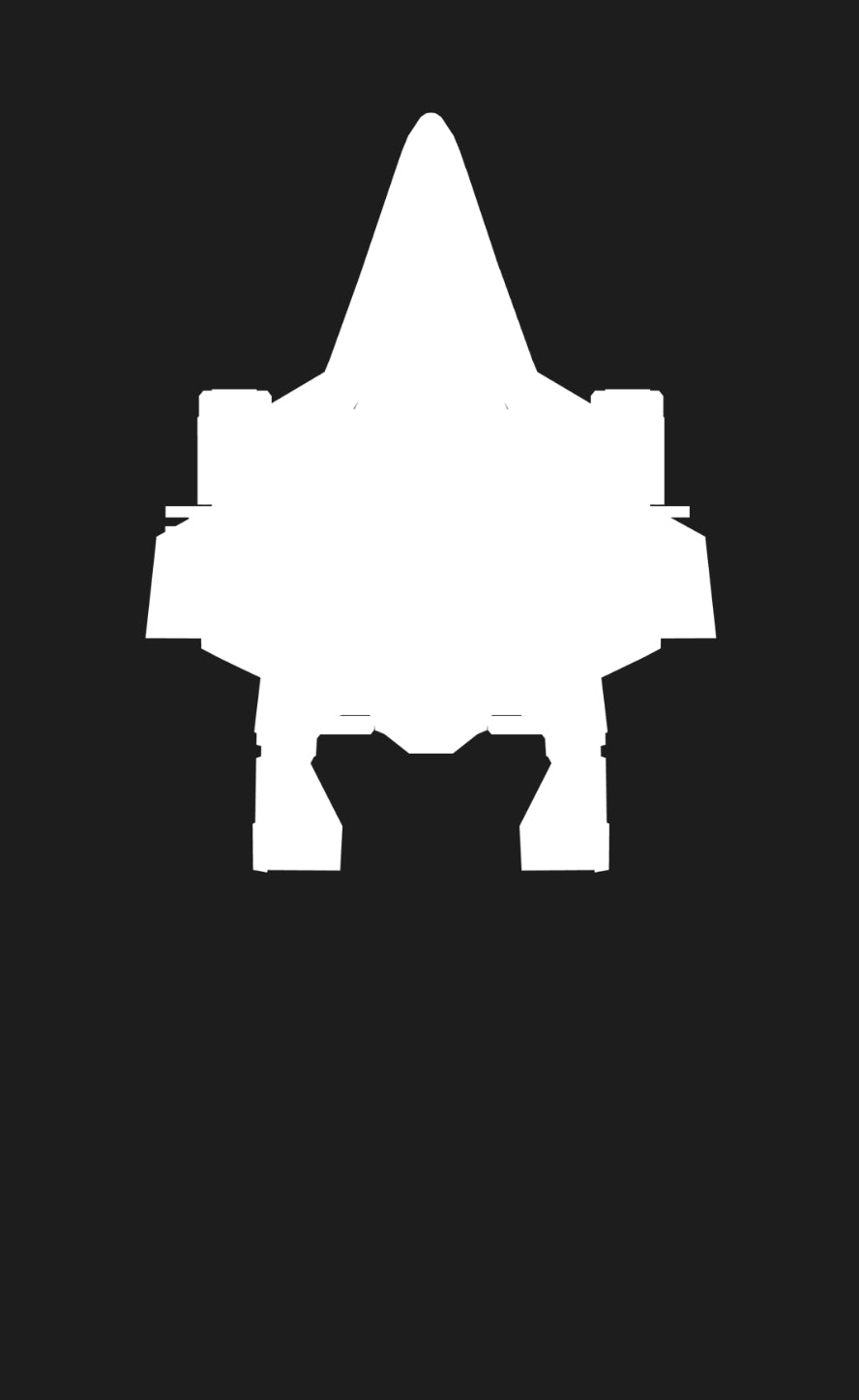
The Hull B is unmistakably a MISC product. The manufacturer is known for its clean, high-end industrial aesthetic — large, smooth panelled forms with a futuristic interpretation of mid-century design sensibility. The Hull B carries that language confidently, with heavy-duty landing gear that telegraphs exactly how much weight this ship is built to bear, a prominent remote turret sitting atop a nicely ribbed section of hull, and a rear spoiler detail that keeps the profile clean. In its retracted state, the ship has an almost deceptively compact quality — almost like a shuttle — until the massive rear engines remind you there is considerably more going on here.
The bridge received particular attention. MISC dashboards have been a point of discussion among the community, with some previous ships pushing the size a little further than was comfortable. The Hull B addresses this directly, with the pilot and co-pilot seats pushed further forward to improve forward visibility and give the cockpit a more ergonomic feel without sacrificing the characteristic MISC interior character.
The bridge received particular attention. MISC dashboards have been a point of discussion among the community, with some previous ships pushing the size a little further than was comfortable. The Hull B addresses this directly, with the pilot and co-pilot seats pushed further forward to improve forward visibility and give the cockpit a more ergonomic feel without sacrificing the characteristic MISC interior character.

THE SPINDLE SYSTEM AND HOW IT EVOLVED
Like all Hull series ships, the Hull B is built around a telescopic central spindle that allows the ship to compact its profile during travel and extend outward to carry its full cargo complement. In its retracted state the ship measures 46 metres in length, expanding to 71 metres when the spindle is deployed. The engineering behind fitting the full spindle and cargo grid into that collapsed form is considerable — and the visual difference between the two states is dramatic.
The current X-pattern spindle arrangement is the result of a significant design revision. The original concept called for a cross-pattern layout similar to other ships in the series, but as cargo systems evolved and the stated capacity firmed up, it became clear that landing on a cross arrangement would require landing gear of comically impractical length. The team went back to concept, explored multiple iterations, and landed on rotating the arrangement 45 degrees into the X-pattern seen today. The result looks excellent in both states and, critically, preserves the Hull B's ability to land fully loaded on a planet surface — making it the largest ship in the Hull series capable of doing so.
The current X-pattern spindle arrangement is the result of a significant design revision. The original concept called for a cross-pattern layout similar to other ships in the series, but as cargo systems evolved and the stated capacity firmed up, it became clear that landing on a cross arrangement would require landing gear of comically impractical length. The team went back to concept, explored multiple iterations, and landed on rotating the arrangement 45 degrees into the X-pattern seen today. The result looks excellent in both states and, critically, preserves the Hull B's ability to land fully loaded on a planet surface — making it the largest ship in the Hull series capable of doing so.
FLIGHT NOTE — Flight characteristics shift depending on spindle state. When the spindle extends, thruster positions change relative to the centre of mass, altering angular rotational rates. Cargo load, position, and type all further influence handling — operators will feel a tangible difference between flying empty and flying heavy.
CARGO OPERATIONS
The Hull B's external cargo setup is its defining operational feature. Rather than threading cargo through interior bays and restricted doorways, everything loads and unloads from the outside via tractor beams. The co-pilot has access to two front-facing remote tractor beam turrets, and both the pilot and co-pilot seats are planned to have tractor beam control — though a known bug currently prevents pilot-side control, which the team is working to resolve. The largest containers the spindle supports are 32 SCU crates, and cargo can also be loaded manually with handheld tractor beams for operators running without a co-pilot.
The speed advantage of external cargo loading is real and significant. There is no threading large containers through tight corridors, no slow hangar juggling — you arrive, you load, you leave. That same efficiency applies to unloading, which is worth bearing in mind: the exposure of external cargo means a well-organised hostile crew can strip it just as quickly. Operating the Hull B demands a degree of situational awareness that internal cargo ships don't require.
The ship currently supports loading from both hangars and external freight elevators. Docking port access is planned for a future update — the port exists on the ship but has been disabled at launch pending a fix for location priority between docking collars and hangars at stations that offer both options.
The speed advantage of external cargo loading is real and significant. There is no threading large containers through tight corridors, no slow hangar juggling — you arrive, you load, you leave. That same efficiency applies to unloading, which is worth bearing in mind: the exposure of external cargo means a well-organised hostile crew can strip it just as quickly. Operating the Hull B demands a degree of situational awareness that internal cargo ships don't require.
The ship currently supports loading from both hangars and external freight elevators. Docking port access is planned for a future update — the port exists on the ship but has been disabled at launch pending a fix for location priority between docking collars and hangars at stations that offer both options.
SIZE, ACCESS, AND HANGAR CLASSIFICATION
One of the Hull B's most practical advantages is its medium hangar classification. Despite carrying a cargo capacity comparable to ships like the Caterpillar — which requires a large hangar — the Hull B fits into medium hangars regardless of its spindle state. That means a considerably larger number of landing locations are accessible to Hull B operators throughout the verse, which matters when planning trade routes and sourcing cargo. The hangar assignment accounts for the space needed around the ship during loading, so even though the retracted ship technically fits a smaller berth, the medium classification has been maintained to ensure a practical loading experience.

INTERIOR AND CREW FACILITIES
For a medium freighter, the Hull B is well-appointed inside. Entry leads through a prep area with suit lockers, a weapon locker, and a bench — everything needed before heading out into the verse. A personnel lift leads to the engineering bay, which houses the major ship components, the engineering screen, and the prominent mechanism responsible for extending and retracting the cargo grid. The main corridor provides access to a mess hall with a two-seat table and kitchenette, a habitation area with a bunk bed, desk, fridge, shelving, and wall space, and full bathroom facilities. The Hull B is built for extended operations away from station, and the interior reflects that commitment.


ARMAMENT
The Hull B is not defenceless. Pilots have control over two size-three weapons and a pair of bespoke missile launchers each carrying two size-three missiles. The co-pilot, when crewed, takes exclusive control of the remote turret mounted on top of the ship — also equipped with two size-three weapons. It is not a combat vessel, but it is not entirely at the mercy of hostile encounters either.

THE HAULER'S CHOICE
The Hull B occupies a position in the cargo career that a lot of operators have been waiting to fill. It is capable, accessible, and practical — a ship that respects the time of players who want to haul seriously without immediately committing to the full operational weight of the Hull C. With a larger-than-average quantum fuel tank for a ship of its size, solid habitability, and a loading system built for speed, it makes a compelling case as the go-to mid-tier freighter in the verse.