





















Anvil
Anvil Odin - The Allfather of War

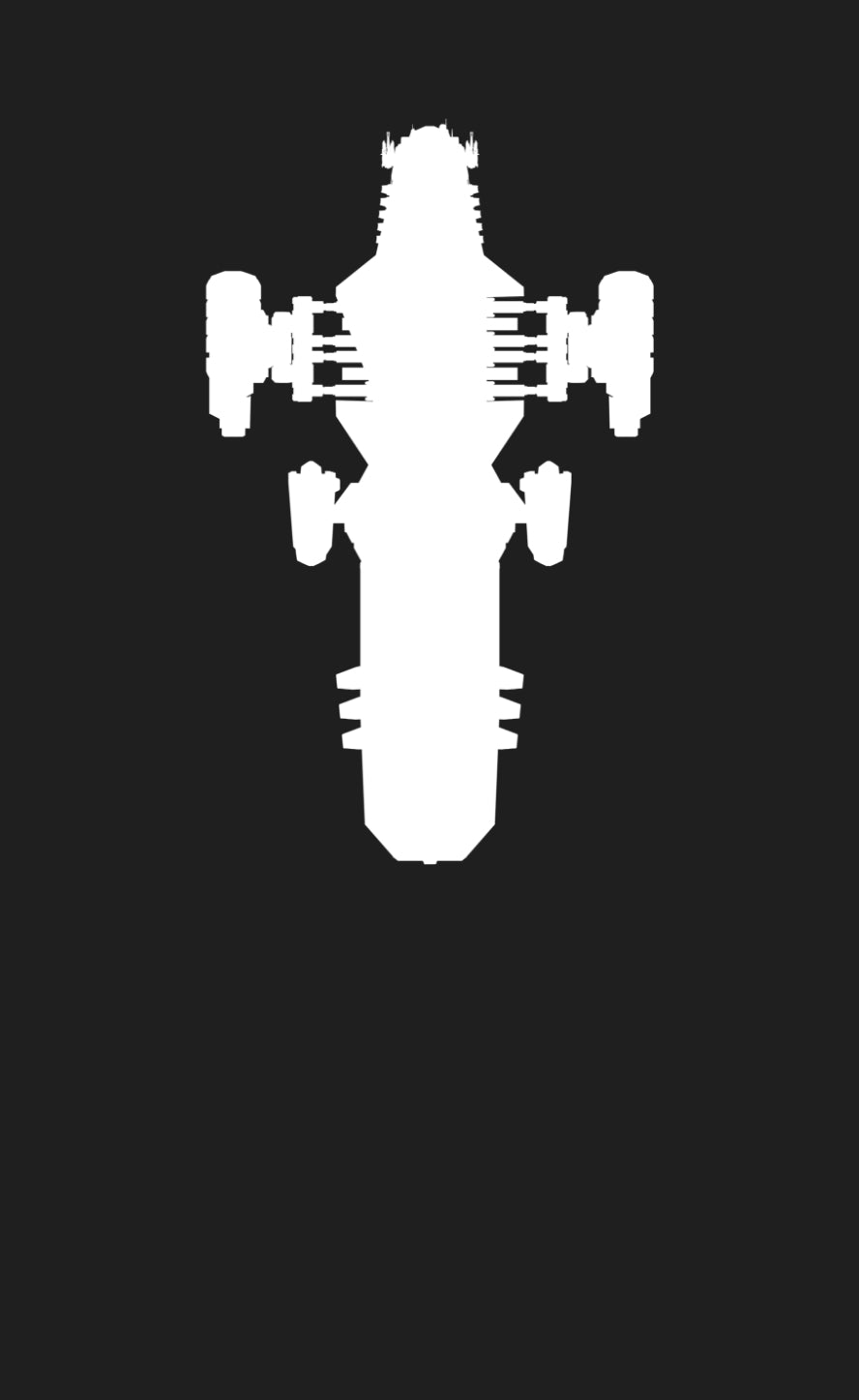
Star Citizen's largest and final concept ship has arrived. The Anvil Odin Battlecruiser stretches 752 metres, carries 23 operable turrets, a twelve-emitter bow beam, 20 Size 12 torpedo tubes, seven hangars, and an interior that requires its own tram system. This is where coordinated multi-crew capital ship gameplay begins in earnest.
SHIP SPOTLIGHT
THE ALLFATHER OF WAR
Nothing in Star Citizen has ever been this large. At 752 metres from bow to stern, the Anvil Odin Battlecruiser is Star Citizen's biggest player-ownable ship — and by a significant margin. It carries more firepower than anything else in the game, more crew stations than most organisations can fill, and an interior so vast that it requires its own tram system simply to get from one end to the other. The Odin does not arrive as part of the normal ship cadence. It arrives as a statement about where Star Citizen is going.
Named for the ancient Human god of war, the Odin combines capital-scale destructive capacity with the speed and responsiveness of a cruiser frame — a battlecruiser in the truest naval sense of the word. It is designed to dismantle carriers, annihilate fleets, and tear fortified vessels apart with a bow weapon that fires across twelve emitters simultaneously. Opposing ships do not simply fight an Odin. They try to survive long enough to think of a plan.
CIG have described this as the last concept-only ship they will ever produce. If this is where the concept era ends, it ends at 752 metres, with 23 turrets, 20 torpedo tubes, a front-facing beam of indeterminate power, and enough cargo space to outlast a campaign. The Odin is not built to survive wars. It is built to decide them.

TECHNICAL SPECIFICATIONS
LENGTH
752m
WIDTH
222m
HEIGHT
213m
CREW
33 – 65+
CARGO
6,000 SCU main hold
2,000 SCU cargo lift
TURRETS
15 manned + 8 remote
TORPEDO TUBES
20× S12 40 queued ready
AUTO DEFENCES
~43 PDTs & flak
THE BATTLECRUISER CLASS
In naval parlance, a battlecruiser carries the weaponry of a battleship in a cruiser's frame — maximum firepower, maximum speed, with the understanding that something has to give. In the verse, the Odin resolves that trade with Anvil's characteristic refusal to accept compromise. The weapons come from the capital ship tier. The hull is built to move it across the universe quickly enough to matter.
The visual design reflects centuries of naval tradition reinterpreted through the lens of contemporary military engineering. Early iterations explored grouping the Odin's weapons the way a World War II battleship would — centrally, in towers — but the practical demands of operating those weapons in three-dimensional space pushed the team toward a different reference: modern stealth warships. The Zumwalt-class destroyers from the US Navy, Sweden's Visby-class corvettes, and other angular contemporary combat vessels informed the Odin's silhouette, while the conning tower — a feature of naval design that largely disappeared after the Second World War — was deliberately brought back. The result is a ship that looks like it has already won whatever engagement it is about to enter.
The weapons are retractable. Two distinct visual states exist: the clean, angular profile of a ship in transit, and the fully deployed combat configuration, where entire weapon systems emerge from the hull simultaneously. It is, by the team's own description, a moment in itself. When the Odin opens up, it is time to run — or it is already too late.
The visual design reflects centuries of naval tradition reinterpreted through the lens of contemporary military engineering. Early iterations explored grouping the Odin's weapons the way a World War II battleship would — centrally, in towers — but the practical demands of operating those weapons in three-dimensional space pushed the team toward a different reference: modern stealth warships. The Zumwalt-class destroyers from the US Navy, Sweden's Visby-class corvettes, and other angular contemporary combat vessels informed the Odin's silhouette, while the conning tower — a feature of naval design that largely disappeared after the Second World War — was deliberately brought back. The result is a ship that looks like it has already won whatever engagement it is about to enter.
The weapons are retractable. Two distinct visual states exist: the clean, angular profile of a ship in transit, and the fully deployed combat configuration, where entire weapon systems emerge from the hull simultaneously. It is, by the team's own description, a moment in itself. When the Odin opens up, it is time to run — or it is already too late.

ARMAMENT
The Odin's weapons loadout is the most extensive ever confirmed for a player-ownable ship in Star Citizen. All weapons are custom-built for the Odin's systems — the size classes involved exceed anything commercially available in the verse. There is no local shop selling a Size 12 cannon. This is the scale we are dealing with.
The primary turrets are two triple Size 12 ballistic cannon manned turrets — each mounting three S12 guns. For context, the largest weapons on the Javelin run to Size 9. The largest gun on an Idris is a Size 10 railgun. The Odin has six Size 12 barrels split across two turrets. Each of those turrets alone would be a significant armament fit on a lesser capital ship.
Three single Size 10 manned turrets and eight single Size 10 remote turrets follow. Eight double Size 8 manned turrets provide sustained fire coverage across wider arcs, complemented by two quad Size 8 laser cannon pilot-controlled weapons. Across all positions, the Odin carries 23 operable turrets — 15 manned and 8 remote. The remote turrets have a dedicated control center with individual operator seats, separate from the main bridge.
The bow weapon stands apart from everything else on the ship. Twelve emitters — six on each side of the bow — combine into a single capital-scale beam. Its effective size has not been formally rated; the team described it simply as the entire front of the ship firing at once. The emitters open when the weapon activates, serving simultaneously as heat radiators for a system that would otherwise overheat under sustained fire, and as targetable subcomponents for attackers attempting to strip the Odin's offensive capability. When the bow weapon fires, capital ships die.
The PDT and flak defensive suite runs to approximately 43 automated point defence systems, clustered into visible banks across the hull specifically so that attackers can identify and engage them during a systematic assault. CIG were deliberate about this: taking down an Odin should require peeling back its defences layer by layer — PDTs first, then shield emitters, then the heavier systems — before boarding or destruction becomes viable.
The primary turrets are two triple Size 12 ballistic cannon manned turrets — each mounting three S12 guns. For context, the largest weapons on the Javelin run to Size 9. The largest gun on an Idris is a Size 10 railgun. The Odin has six Size 12 barrels split across two turrets. Each of those turrets alone would be a significant armament fit on a lesser capital ship.
Three single Size 10 manned turrets and eight single Size 10 remote turrets follow. Eight double Size 8 manned turrets provide sustained fire coverage across wider arcs, complemented by two quad Size 8 laser cannon pilot-controlled weapons. Across all positions, the Odin carries 23 operable turrets — 15 manned and 8 remote. The remote turrets have a dedicated control center with individual operator seats, separate from the main bridge.
The bow weapon stands apart from everything else on the ship. Twelve emitters — six on each side of the bow — combine into a single capital-scale beam. Its effective size has not been formally rated; the team described it simply as the entire front of the ship firing at once. The emitters open when the weapon activates, serving simultaneously as heat radiators for a system that would otherwise overheat under sustained fire, and as targetable subcomponents for attackers attempting to strip the Odin's offensive capability. When the bow weapon fires, capital ships die.
The PDT and flak defensive suite runs to approximately 43 automated point defence systems, clustered into visible banks across the hull specifically so that attackers can identify and engage them during a systematic assault. CIG were deliberate about this: taking down an Odin should require peeling back its defences layer by layer — PDTs first, then shield emitters, then the heavier systems — before boarding or destruction becomes viable.
THE TORPEDO SYSTEM
Twenty Size 12 torpedo launch tubes are positioned just forward of the conning tower. Forty torpedoes sit queued and ready to fire. When the queue is exhausted, a conveyor belt running through the main hangar connects to the torpedo control room continuously — crew members take torpedoes from the 6,000 SCU cargo hold, load them onto the belt, and they travel up to the tube loading room to be manually loaded and fired. A fully crewed Odin can sustain torpedo fire for as long as the cargo hold has torpedoes in it. That capacity is limited only by how much the ship can carry into the engagement.

HANGAR CAPABILITIES
The Odin carries seven hangars. Six small metric hangars — three per side — open from the flanks, sized to the metric-small standard, meaning any ship that qualifies for that designation can use them. Hornets, Cutlasses, and ships of comparable size fit comfortably, and the Pitbull's design brief was specifically written to qualify for metric-small. The number of Pitbulls an Odin can carry has already generated discussion; the team left the calculation to the community.
A central medium hangar sits at the rear of the ship — approximately 68 metres wide, 100 metres deep, and 44 metres tall. The six small hangars and the medium hangar are all part of the same interconnected environment. Ships can enter from the rear of the ship while others depart from the small hangar doors simultaneously, without queuing for a single bay opening. The design intent was to allow a full fighter recall under fire — pilots flying in from the rear in a continuous stream, getting into ready positions, being resupplied, and launching again — rather than competing for a single door.
A cargo elevator at the rear of the medium hangar holds 2,000 SCU — as much cargo capacity as the entire Drake Ironclad — and connects the hangar level to the main 6,000 SCU hold above. The medium hangar also includes a prep area behind each small hangar bay with blast shields that rotate up to protect ground crews during active flight operations. The space is large enough to support full loadout swaps — changing from energy to ballistic configurations between sorties — not just simple rearming.
Ship Hangar Services are integrated across the hangar system, allowing the Odin to repair, refuel, and rearm every ship it carries without returning to a station. For a vessel designed to operate as a self-sustaining forward base throughout extended campaigns, this makes the Odin's fighter wing genuinely independent.
A central medium hangar sits at the rear of the ship — approximately 68 metres wide, 100 metres deep, and 44 metres tall. The six small hangars and the medium hangar are all part of the same interconnected environment. Ships can enter from the rear of the ship while others depart from the small hangar doors simultaneously, without queuing for a single bay opening. The design intent was to allow a full fighter recall under fire — pilots flying in from the rear in a continuous stream, getting into ready positions, being resupplied, and launching again — rather than competing for a single door.
A cargo elevator at the rear of the medium hangar holds 2,000 SCU — as much cargo capacity as the entire Drake Ironclad — and connects the hangar level to the main 6,000 SCU hold above. The medium hangar also includes a prep area behind each small hangar bay with blast shields that rotate up to protect ground crews during active flight operations. The space is large enough to support full loadout swaps — changing from energy to ballistic configurations between sorties — not just simple rearming.
Ship Hangar Services are integrated across the hangar system, allowing the Odin to repair, refuel, and rearm every ship it carries without returning to a station. For a vessel designed to operate as a self-sustaining forward base throughout extended campaigns, this makes the Odin's fighter wing genuinely independent.

NAVIGATING 752 METRES
The Odin has its own internal tram system. This is not a convenience — it is a necessity. A ship over 750 metres long cannot be crewed effectively if reaching a turret position requires a five-minute sprint. The tram runs in a constant loop through six stops connecting the major crew positions: docking collar foyers, the forward manned turrets, the underside turret, the rear manned turrets, and connection points to the main elevator thoroughfare. Additional stops will be added as the interior is completed. The tram runs continuously regardless of crew use, similar to the transit system at New Babbage's microTech.
Multiple elevator banks serve vertical movement throughout the ship, with redundancy built in — the Idris's single elevator bottleneck was specifically studied and improved upon. When power is drawn away from non-essential systems during combat, the tram may stop. Exterior walkways provide the contingency route. These are trenched channels along the outer hull — open to space through grating so crew feel exposed, but shielded from debris and stray fire. Engineering crews and repair personnel use them regularly. They also represent an alternate infiltration path for any boarding party that reaches the exterior.
The interior rooms currently concepted include: a Parliament — a circular briefing hall inspired by the Anvil design language, where the captain coordinates the crew before engagement; a tactical map room for fleet management; an armored bridge positioned high in the conning tower with blast shielding that can be raised without losing situational awareness; a remote turret control center where the eight remote turret operators sit together under a dedicated command presence; and a torpedo loading room connected to the conveyor belt below. The captain's station on the bridge includes a privacy field — a zone of silence deployable for confidential conversations without leaving the command position during combat.
Still in concept: a hospital, engineering sections, executive quarters, an armory, additional crew quarters, a mess, and what the team describe as a "self-sustaining cantina" — the exact specifications of which remain subject to change, but appear to involve growing food aboard the ship. The Odin's habitable interior already exceeds the total habitable area of Portal, one of the larger space stations currently in-game.
Multiple elevator banks serve vertical movement throughout the ship, with redundancy built in — the Idris's single elevator bottleneck was specifically studied and improved upon. When power is drawn away from non-essential systems during combat, the tram may stop. Exterior walkways provide the contingency route. These are trenched channels along the outer hull — open to space through grating so crew feel exposed, but shielded from debris and stray fire. Engineering crews and repair personnel use them regularly. They also represent an alternate infiltration path for any boarding party that reaches the exterior.
The interior rooms currently concepted include: a Parliament — a circular briefing hall inspired by the Anvil design language, where the captain coordinates the crew before engagement; a tactical map room for fleet management; an armored bridge positioned high in the conning tower with blast shielding that can be raised without losing situational awareness; a remote turret control center where the eight remote turret operators sit together under a dedicated command presence; and a torpedo loading room connected to the conveyor belt below. The captain's station on the bridge includes a privacy field — a zone of silence deployable for confidential conversations without leaving the command position during combat.
Still in concept: a hospital, engineering sections, executive quarters, an armory, additional crew quarters, a mess, and what the team describe as a "self-sustaining cantina" — the exact specifications of which remain subject to change, but appear to involve growing food aboard the ship. The Odin's habitable interior already exceeds the total habitable area of Portal, one of the larger space stations currently in-game.

CREW AND COORDINATION
The minimum crew to man every operator station on the Odin is 33. That is not the full crew — that is the barebones number before anyone is feeding torpedoes, managing hangar operations, staffing engineering, or running medical. The full operational crew figure sits at 65 and above. One pilot can technically fly the ship. They will have access to some weapons and the ability to cover ground. What they will not have is anything approaching the Odin's actual capability.
The team's comparison throughout the reveal was to MMO raid leadership. Running an Odin is the 40-man raid of Star Citizen — not because the game imposes it as a structured event, but because the ship creates the conditions for it to emerge naturally. Someone has to coordinate the 15 manned turret operators. Someone has to manage the eight remote turret control room. Someone has to direct the torpedo crew. Someone has to oversee hangar operations and fighter recall. The ship rewards players who enjoy the coordination role — the person who does not output the highest individual firepower but makes the whole formation work.
The multi-engine configuration carries tactical implications beyond propulsion. Multiple engines must be destroyed to immobilise the Odin — a single hit will not stop it. Adversaries who want to prevent the ship from repositioning or escaping will need to systematically disable the drive systems, which runs in parallel with stripping the PDT coverage and knocking down shield emitters. Attacking an Odin at full operational capacity without a coordinated strike force of your own is not an engagement — it is an execution.
The Odin arrives as both a statement of where multi-crew gameplay is heading and a target for the community's most organised players. It is the ship that requires orgs to function at their most coordinated — and the ship that, when they do, becomes the most dangerous thing in whatever system it enters.
The team's comparison throughout the reveal was to MMO raid leadership. Running an Odin is the 40-man raid of Star Citizen — not because the game imposes it as a structured event, but because the ship creates the conditions for it to emerge naturally. Someone has to coordinate the 15 manned turret operators. Someone has to manage the eight remote turret control room. Someone has to direct the torpedo crew. Someone has to oversee hangar operations and fighter recall. The ship rewards players who enjoy the coordination role — the person who does not output the highest individual firepower but makes the whole formation work.
The multi-engine configuration carries tactical implications beyond propulsion. Multiple engines must be destroyed to immobilise the Odin — a single hit will not stop it. Adversaries who want to prevent the ship from repositioning or escaping will need to systematically disable the drive systems, which runs in parallel with stripping the PDT coverage and knocking down shield emitters. Attacking an Odin at full operational capacity without a coordinated strike force of your own is not an engagement — it is an execution.
The Odin arrives as both a statement of where multi-crew gameplay is heading and a target for the community's most organised players. It is the ship that requires orgs to function at their most coordinated — and the ship that, when they do, becomes the most dangerous thing in whatever system it enters.

THE ODIN FOUNDERS CLUB
The Odin's initial concept availability at DefenseCon 2956 was restricted to members of the Odin Founders Club — players who submitted their stories about coordination and cooperation in Star Citizen ahead of the reveal. Those Founders Club members receive five exclusive paints with their pledge, paints CIG have confirmed will never be made available through any other promotion. The current availability at robertsspaceindustries.com reflects this initial Founders Club release. Future availability outside this window has not been confirmed.
The Odin is also the last concept ship CIG will ever sell. The concept era of Star Citizen — ships revealed and pledged years before reaching flight-ready status — ends with this reveal. It ends with the largest ship the game has ever seen, a fitting full stop on a chapter of the project's history.
The Odin is also the last concept ship CIG will ever sell. The concept era of Star Citizen — ships revealed and pledged years before reaching flight-ready status — ends with this reveal. It ends with the largest ship the game has ever seen, a fitting full stop on a chapter of the project's history.