
















Star Citizen Monthly Report March 2026: Alpha 4.7, Mission System v2, Kraken, Railen, Crafting

A full Impound-style recap of Star Citizen’s March 2026 Monthly Report, covering Alpha 4.7 work, crafting, mission systems, server meshing, ships like the Kraken and Railen, and more.
March was one of those all-hands months across the Persistent Universe, with CIG putting the final polish on Alpha 4.7: Welcome to the Rock while also laying tracks for 4.8 and beyond. The result is a report packed with progress across AI, missions, ships, economy, online tech, and a fair bit of creature work too. In other words: the machine room was loud, busy, and very much on.
A few major threads run through nearly every team update. Alpha 4.7’s release drove bug fixing and content support throughout the month, Mission System v2 continued to gather momentum, several long-running ships moved through key gates, and the broader economy and item systems kept shifting toward a more material- and ownership-driven future. That's the sort of background work that rarely gets parade music, but it is what keeps the 'verse from flying apart at the seams.
AI Content
The AI team spent March fixing bugs for Alpha 4.7 and supporting future mission content. Among the 4.7 fixes was an issue that caused station NPCs to sit offset from their benches, which is the kind of thing that makes a station look less like a living hub and more like a very strange theatre rehearsal.
Support work also went into upcoming missions, including placeholder script recordings and comm-call setup. That gives directors and designers a clearer sense of the intended player experience while letting writers hear the scripts in context and revise them where needed.
Beyond that, AI continued building behaviors for new initiatives still waiting in the wings.
AI (Features & Tech)
AI Features & Tech tackled several issues for Alpha 4.7, including problems caused by inclusions after breaching, civilians getting stuck in a cower state, and combat NPCs failing to properly de-escalate after leaving combat.
The team also implemented multiple crash fixes and updated navigation-link generation so it connects more closely to individual navmesh edges. NPC behavior for moving through manually controlled doors was improved, along with general pathing checks so AI can better determine whether a target location is actually traversable.
Creature work continued too. The apex valakkar is now limited to its arena, emerges after a set amount of time, and requests a despawn if it is not damaged enough within another set time window. The kopion now uses upgraded motive patterns that include pack-like growling and circling during attacks, and the juvenile valakkar can use that same pattern. For Star Paws, the team improved motive behavior parameter usability and fixed numerous general PU crashes.
Animation
The Animation team spent March on snake- and worm-type enemies, creating new behavior animations for them. The Facial Animation team also began processing content captured during February’s performance-capture shoot.
That work includes material for Alpha 4.8’s new mission, where players will meet two new characters, along with a news broadcast for Levski.
Art (Characters)
Character Art continued work on projects for Alpha 4.8 and ongoing in-game assets. The team also kept advancing new gang outfits and supporting Star Wear.
Meanwhile, Concept Art dedicated the month to exploring new heavy combat armors.
Art (Ships)
Ship work moved along on several fronts. In the UK, the Gatac Railen advanced toward its greybox gate review at the end of March, with parts of the ship brought up to later pipeline standards to help define the look and feel of larger Gatac-style spaces.
The Greycat UTV finished testing and is now awaiting release into the PU. The MISC Hull B reached its combined LOD0 and final gate review, a combined step caused by some teams joining certain aspects later even though the rest of the work was already ready for the later stage.
The Drake Ironclad, Ironclad Assault, and Command Module all progressed through LOD0. A full lighting and detail pass began across all three to unify the visuals, while work also returned to the Caterpillar to prepare it for the Command Module.
Several developers moved back onto the RSI Galaxy after helping elsewhere. As with other ships in pre-production, they revisited the original layout to improve flow and make better use of the expanding asset library while preserving the ship’s intended role. That included reworking the front half of the lower deck so it feels less isolated and no longer leads into a dead end, along with updating other areas to current metrics using suitable assets from other RSI ships.
Five unannounced vehicles also advanced. The first passed both whitebox and greybox reviews and is heading toward LOD0 shortly, having grown from a relatively simple concept into something more complex. The second neared LOD0, with interior work progressing while UI began required updates. The third passed greybox and is nearing its LOD0 review at the start of April, with cockpit tweaks made to improve visibility and refine control-stick inputs. The fourth completed its greybox gate review after feedback implementation; the delay slightly slowed progress but should strengthen the final result. The UK team’s fifth unannounced ship moved toward whitebox and is proving especially complex in terms of animations and states.
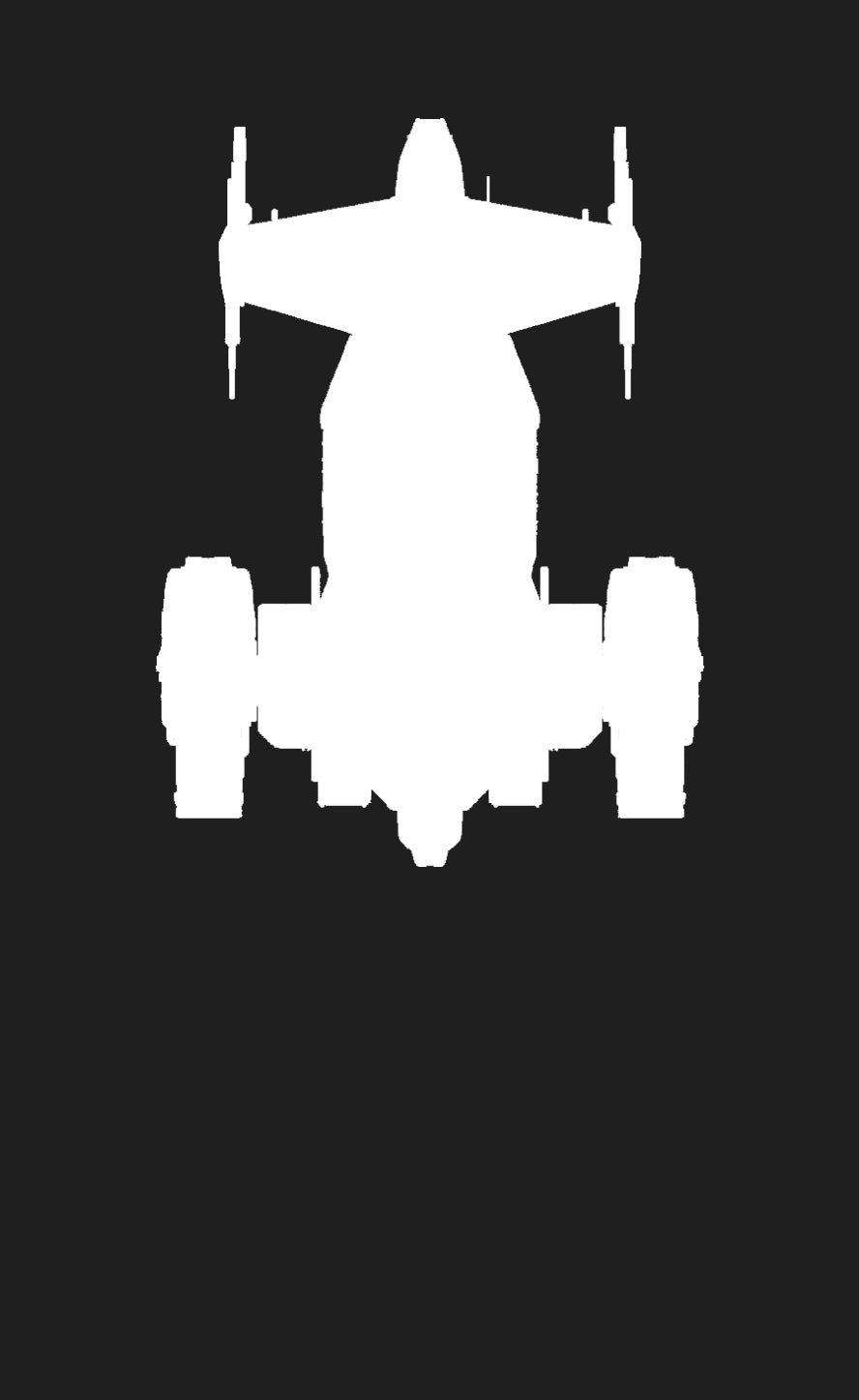
In North America, work continued on the Drake Kraken. It passed its whitebox gate review, a major milestone for what CIG says will be the largest player-flyable ship on release. The team then focused on hero rooms like engineering, the ship’s core traversal routes, and the implementation of new bespoke manned turrets and weapons.
Alongside final support for the RSI Aurora Mk II’s release, another unannounced vehicle continued through greybox. Minor changes improved rear-half traversal flow, and additional windows were added throughout.
Audio
Audio delivered its work for Alpha 4.7, building what the team describes as an engaging sound experience for the new dungeon content. They highlighted both the “rock-cracking” sound design and a broader push toward richer ambient audio, while also saying more composed music will make its way into the game than in previous years.
The new Claw Salamander enemies received a unique language to add more threat and identity to NPC encounters, and the team then began designing additional language packs for future builds.
Vehicle Audio developers also appeared on Star Citizen Live to discuss the steadily improving vehicle soundscape. With more ships and vehicles approaching, the team says it is continuing to raise the level of care put into the flight experience.
Core Gameplay
Core Gameplay spent part of March advancing hacking, including item polish, tutorial improvements, and ensuring the UI remains correctly aligned to the player.
Weapon handling also received quality-of-life updates. After using a MedPen, players now switch back to the previously held weapon, and when equipping a new knife from the ground, the character will store the currently held weapon or item unless it cannot be stored.
Crafting received a substantial share of attention following its Alpha 4.7 debut. New work included minimum quality requirements for blueprint aspects, dismantling for items that were not originally crafted, default blueprint entitlement definitions, HUD notifications when a blueprint is received, material and quality information on the tractor-beam display, and stacking for resource containers with the same quality. Players can now also see both owned and unowned blueprints in the Crafting UI.
The team added paging support to the crafting machine instead of infinite scrolling for better performance, introduced new resource thumbnails for the crafting machine, freight elevator, and inventory, and standardized resource and quality tracking across freight elevators and inventories.
Engineering updates included collapsing headers for the diagnostics MFD, specific warnings in the notifications panel, and color ranges for damaged components on the engineering screen.
Refueling changed in a more practical direction. Any ship can now initiate docking, meaning a refueling ship such as the Starfarer can begin the procedure and back up to the target ship. Auto-docking triggers when the two ships are close enough, and both ships automatically undock when refueling is complete.
Progress continued on Drake’s Command Module, with Resource Network integration added to the hand-off procedure so host and parasite ship connect to the same network. The team also ensured shield faces update correctly when the module is docked and undocked.
The Transport system is now largely feature complete and moving through iteration with Design for workflow, robustness, and scalability improvements. March work included better debug tools for developers and QA, completing the Area18 setup for initial Tech Preview tests, fixing major issues that caused doors to open into the void, and laying the groundwork for self-repair so a bad carriage state can trigger a full network reset.
Mission-side work fixed reward attribution issues and incorrect event-tracker calculations, while implementation began for Mission v2 functionality inside Starchitect, including dynamically creating mission locations without direct designer intervention. The inventory rework also continued, with remaining elements being finalized and bugs addressed from both internal findings and PTU feedback.
Ship hangar servicing reached its first playable gate and was met favorably. Core Gameplay is now preparing it for the content teams. By month’s end, the team was also preparing to move onto social features.
Creature Content
March marked the formation of a new Creature Content team focused on the ongoing development of Star Paws features. Alongside pipeline improvements, the team progressed several new creatures.
Alpha 4.7 already introduced some early results of that pipeline work, including valakkar variants adapted to icy environments. Additional March design work focused on upcoming creatures and planned improvements for existing ones, including mesh updates, behavior work, and more variants.
Economy
The Economy team shifted onto Alpha 4.8 features, which are planned to bring new item crafting, commodity trading, and item recovery systems into the 'verse.
The team stressed that Alpha 4.7’s current crafting implementation is transitional. They said high-end savrilium ore is presently more generous to pull players into the mining and fabrication loop, with the broader goal being a move away from a credits-only mindset and toward progression through systems like crafting and reputation.
Operation Breaker Stations is the clearest example of that shift. Right now, it offers high UEC profit margins to encourage engagement with the new crafting materials, but CIG says its real purpose is as a resource hub. Players pay a buy-in and exchange currency for guaranteed access to high-value material gathering, letting them secure the ingredients needed for high-end personal armor and FPS weapon production.
As the economy stabilizes, shop pricing for crafted goods is expected to reflect the quality of the materials used. CIG says it will monitor mission buy-ins and resource yields so the game can move away from profitable NPC sell loops and toward a gear- and player-centric economy. In the final vision, these locations are meant to be places where high-end crafters turn credits into precisely the materials they need rather than simply grinding for raw UEC profit.
Game Intelligence Development
Game Intelligence Development focused primarily on Mission System v2 design and planning in March. During the first half of the month, the team worked with Mission Designers to refine how the new system should function in practice and how scripting tools should be exposed to designers. They also iterated on a UI prototype for the mission interface.
The team also began work on a new tool intended to support development of the mission system. Investigation and design continued through the month, with architecture refined based on stakeholder feedback.
Level Design (UK & DE)
Level Design spent March working across multiple locations, though the main focus was on Nyx’s social stations and the QV Breaker Station locations that launched in Alpha 4.7.
Elsewhere, the team pushed toward future deliverables including Tactical Strike Groups and the Siege of Orison rework, while also beginning preparations for a major new location. They also fixed legacy bugs in Stanton and Pyro and supported technical initiatives tied to the transport refactor and future Starchitect content.
Mission Design
Mission Design completed the second Nyx mission pack, expanding available player content and moving some factions onto a reputation scope.
The courier system was also brought back for Stanton and Pyro, and new delivery contracts were added to bridge the gap between hauling and courier gameplay. This included modifying rooftop deliveries in New Babbage and ArcCorp to support 1-SCU box drop-offs. Mission support was added to the new QV Breaker Stations as well.
Tactical Strike Groups continued to receive polish alongside refueling and defend-location missions. With recent ship-armor changes, the team also began a major rebalance of ship-based mission combat and explored giving players more information up front about the types of ships they may face so they can select an appropriate loadout.
The new Battaglia missions are also approaching their first playable state, with modular mission parts that can be reused as standalone missions for other factions.
Narrative
Narrative continued supporting a wide range of upcoming operations and missions. Alongside refining the story direction for Tactical Strike Groups, the team developed storylines for several new missions planned for future patches, including one that will bring back an old foe.
The team also prepared for an April capture session that will record the story mission script mentioned in the previous monthly report. That script was revised and refined through placeholder testing to catch issues before final recording.
Narrative additionally began planning an eventual overhaul of item descriptions to support future revisions to inventory and fabrication systems, and continued working with the Starchitect team on how the mission system will evolve once the tool can add more locations to planet surfaces.
Online Technology
Online Technology spent March strengthening the foundation for Server Meshing. A key part of that was Quasi-Dynamic Server Meshing, or QDSM, which distributes areas of the game world across dedicated servers based on load. The Network team completed a second testing round for the initial version, fixed a bug that incorrectly assigned multiple game zones to the same server, and removed a global performance bottleneck that had been causing thread contention.
Stability work resolved several crashes and thread-safety issues in the server management system, including one that could happen when a game server disconnected at exactly the wrong moment. Progress also continued on the next-generation Territory Manager, which divides the universe into regions handled by separate servers, with multiple improvements submitted for review.
The team also continued general bug fixing and maintenance while progressing a technical design document for a new versioning and patching system that will shape how future updates are delivered.
On the Live Tools side, Bootstrap’s user interview phase is nearing completion, and the team is already acting on findings to improve reliability and day-to-day usability. Infrastructure cleanup and configuration improvements also began.
Panic Switch, the error-reporting tool, received bug fixes and improved documentation for advanced users, with ongoing work aimed at better crash-handling resilience and smarter automatic handling of recurring crash patterns.
Hex, the game dashboard, continued its 4.0 modernization. The Blueprint Viewer was delivered, while the new account detail page and further tool integrations continued to progress.
Online Services supported the Mission System in March, fixing a bug where objectives could complete without the mission itself registering as finished. The team also made significant longer-term progress by moving mission completion logic into the backend service so multi-step completion rules become more reliable and futureproof.
The mission system was further expanded to support entity-owned missions, allowing non-player objects to function as mission owners and opening the door to new forms of instanced content. Online Services also continued work on item imprint, the system intended to let players truly own items on their characters and ships, while improving how ownership queries are handled. Lazy inventory creation also advanced, and technical design work was done for regional chats.
R&D
R&D continued work on ground fog and handed a test build to Tech Art for prototyping and feedback. Tooling improvements also moved forward, including adding thread-name gathering to the dump log tool when extracting call stacks from PU crash reports.
The shader compiler server used by the build pipeline was substantially refactored. A proper thread pool was added, and load balancing for remote compile slaves was significantly improved. DXC/Clang-based compiler output is now correctly parsed for error-report generation, a least recently used eviction scheme was added to clear outdated shaders from memory and disk, and processing limits can now terminate compile jobs that exceed runtime or memory thresholds. Altogether, that should improve long-term server stability and reduce resource usage.
Tech Art/Animation
Technical Animation progressed work on characters, creatures, interactables, cloth simulation, and supporting pipeline tools. On the character side, head exports for two new named PU characters moved through the DNA/RigLogic pipeline, while gate-five polish passes were completed for two additional faces nearing final quality.
The team reduced per-character RigLogic memory overhead, directly improving NPC density and performance in busy locations, and resolved a critical DNA compilation blocker that otherwise would have stalled all head-related work in the patch branch.
On armor and weapons, the Super Heavy Combat Armor animation set is being brought over from Squadron 42 to the PU player character, and binocular ADS and zoom-state transitions were finalized.
For interactables, work continued on the flaming-torch held animation, tightening the player interaction cone so usable objects feel more precise and correctly aligned. Food-prop tech animation for Nyx content is also being completed.
StarCloth, CIG’s cloth simulation system, received substantial improvements, including driver mesh validation, engine API alignment, a new bind offset parameter, and simulation pruning optimizations. The reported result is clothing that is both more performant and more physically believable on PU characters.
Pipeline work also included a male-to-female retargeting fix, a character tool featherblend fix, Maya 2026 plugin support, and an in-development dialogue-events cleanup tool for ambient NPC conversation data.
VFX
For Alpha 4.7, VFX focused on finishing Nyx’s QV Breaker Station locations, including the laser room, spacescaping, and hero moments like the laser and asteroid interior.
The Greycat UTV and MISC Hull B also received VFX passes and bug fixing.
Source: RSI LINK