




























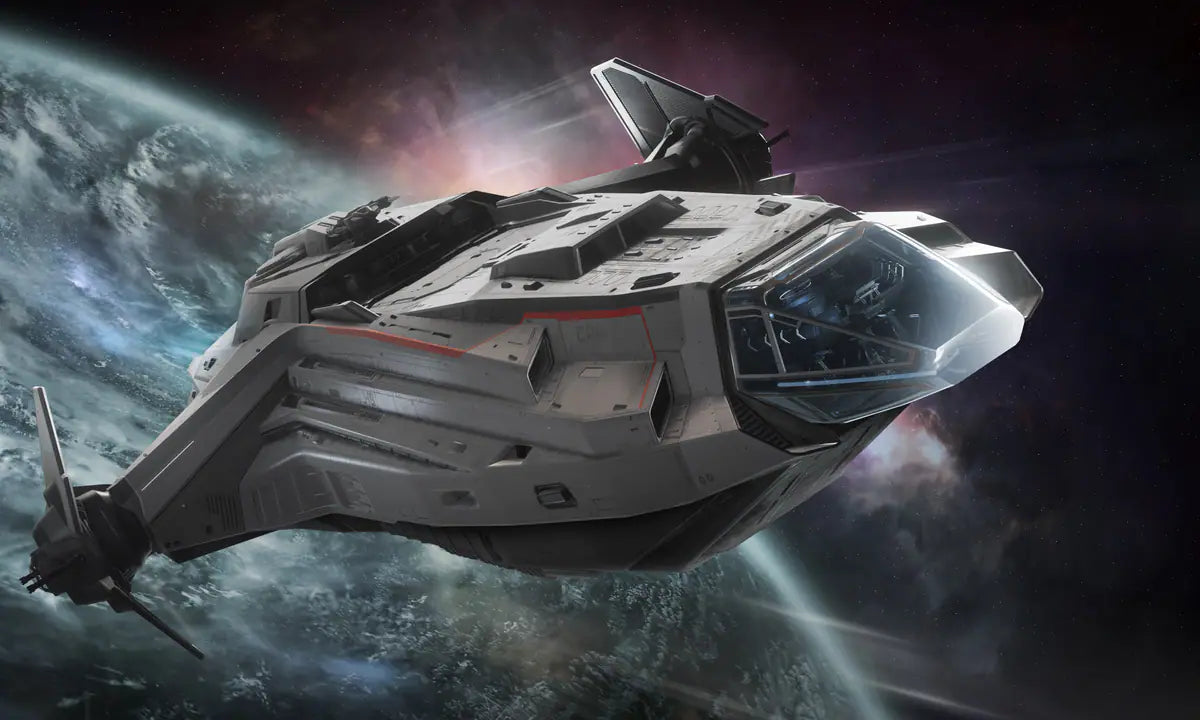
Star Citizen Ship Guide
The right ship for your next chapter.
A quick cargo run, a fight with a friend on the turret, or a mining trip that becomes your regular evening: start with what you enjoy. We'll help you choose a first ship, work out what to get next and compare the ships for each career.
What do you want to do?
Start with the job you enjoy.
The ship comes next.
 01Cargo & tradingContracts, trading & vehicle freight
 02CombatSolo fighters, turret teams & strikes
 03Bounty & interdictionNPC contracts, pursuit & interception
 04MiningSolo miners, MOLE crews & surface mining
 05SalvageSolo scraping & structural salvage
 06Medical & rescuePatient pickup, treatment & rescue teams
 07Player-led expeditionsExplorationSolo journeys & trips with a crew
 08Ground teamsRover carriers, troop drops & ground teams
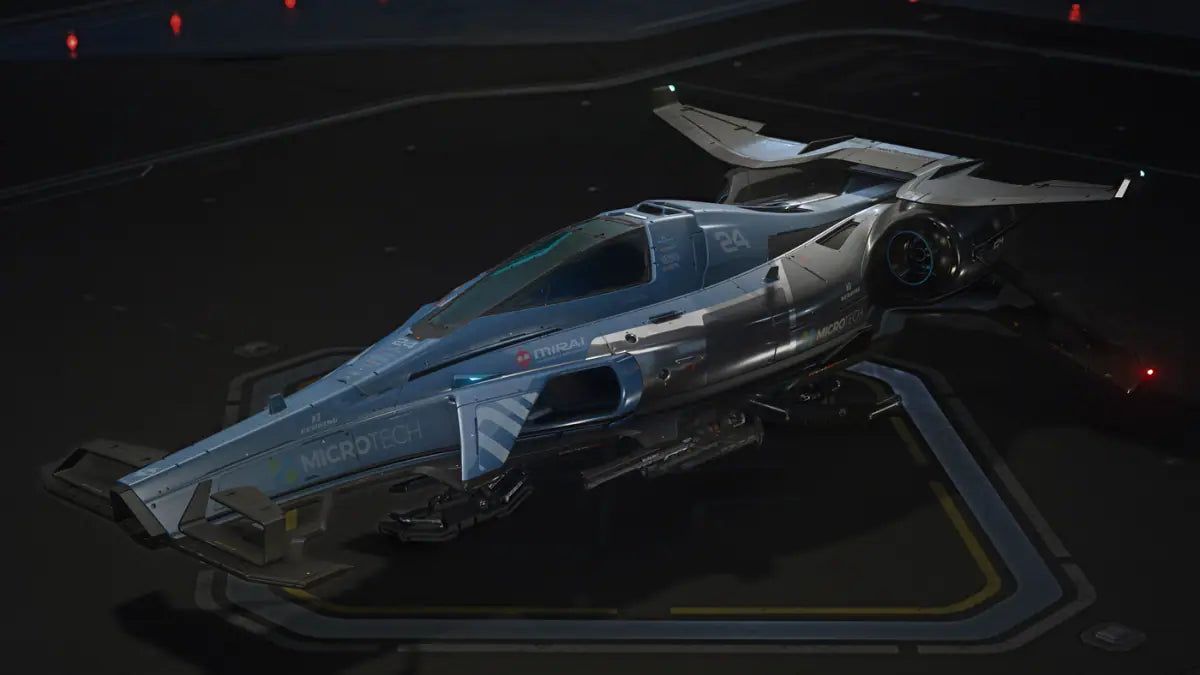 09RacingSpace racing & surface events
 10Fleet supportRefueling, towing & future repair
 11Touring & hostingLuxury & touringPersonal touring, guest cabins & hosting
Careers still in development
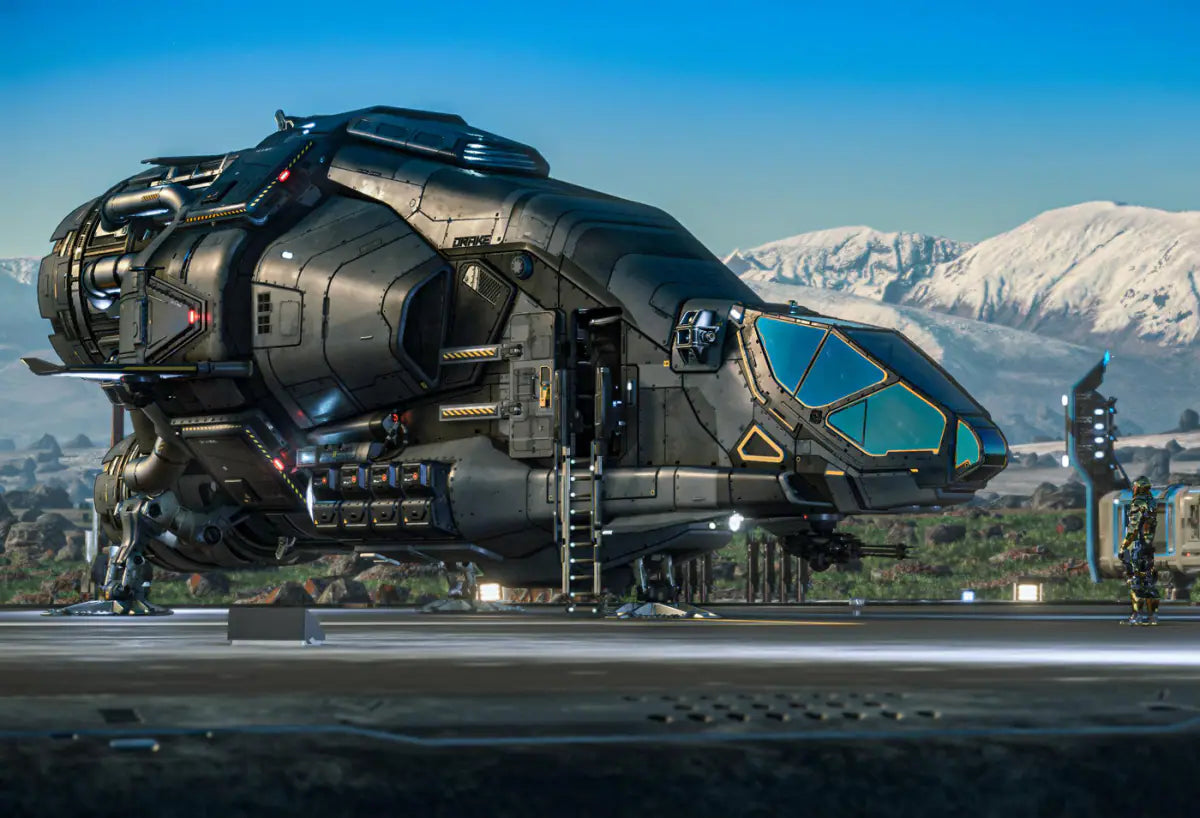 12Careers in developmentData & scienceData, media & science interests
 13Future constructionBuilding & fleetsFuture construction & modular fleets
Budget, Premium and End Game are relative to each activity, not a performance ranking.
Best starter ships in Star Citizen
A first ship, not your last ship.
Try light freight and combat in an Avenger Titan, make everyday trips in a Cutter, or choose an Aurora Mk II with a module for the job you want.
Want to try a ship first?
Narrow it down here, then try your shortlist if you can. Rent or earn a ship in-game where available, or join another owner's crew. Check the equipment included in the offer before buying.
 Flight ready
Avenger Titan
A first ship for mixed missions
Run deliveries, then take a combat contract. A rear cargo bay and pilot-controlled guns let you try both in the same ship.
- Cargo
- 8 SCU
- Operating style
- Solo mixed missions
Keep in mind: The small hold is fine for light freight, but regular hauling will eventually need more room.
Why we picked it
Not sure which career you enjoy yet? The Titan gives you a way to try several. Load a few boxes through the rear ramp, finish the delivery and take a fight on the way home. If combat rarely makes it into your plans, the Cutter is worth a look for its cabin and everyday practicality.
 Flight ready
Cutter
A little ship for everyday trips
The Cutter has a cabin you can walk around in and a rear ramp for loading cargo. It is a handy little ship for deliveries and day-to-day trips.
- Cargo
- 4 SCU
- Operating style
- Solo utility
Keep in mind: For a mix of deliveries and regular combat, look at the Avenger Titan too.
Why we picked it
Collect a delivery, land for a ground mission, then head somewhere new. The Cutter suits an evening with several stops and no grand plan. You have somewhere to stay between jobs, and it can remain your everyday transport after you add a dedicated fighter or miner.
 Flight ready
Aurora Mk II
A starter you can reconfigure
The rear module changes what your Aurora can do: CL focuses on cargo, while DM is built for combat.
- Configuration
- Check included rear module
- Operating style
- Single pilot
Keep in mind: Cargo capacity and equipment depend on the rear module included in the offer.
Why we picked it
A module is a section you can swap to change the ship's equipment. That gives you room to try a different role later without replacing the whole hull. If you'd rather have a fixed setup for both light freight and combat, compare the Avenger Titan.
You can earn more ships in-game as you find out what you enjoy. Your first ship does not need to cover everything you might want to do later.
| Ship | Best reason to choose it | Cargo / configuration |
|---|---|---|
| Avenger Titan | A first ship for mixed missions | 8 SCU |
| Cutter | A little ship for everyday trips | 4 SCU |
| Aurora Mk II | A starter you can reconfigure | Depends on included rear module |
What to buy after your starter
Think about your last few sessions. Did a load refuse to fit? Did a friend spend the trip with nothing to do? Were you borrowing a mining ship every night? Start there. Choose an upgrade that solves the problem you keep running into. Sometimes that means adding a specialist and keeping the everyday ship you already love.
What do you want the upgrade to change?
More freight
C1 Spirit
The C1 adds a rear tractor and more cargo space. If you already need a bigger hold than that, compare larger haulers before making a smaller upgrade.
Explore cargo & tradingA friend flies regularly
Cutlass Black
Let a friend take the turret without giving up a useful solo ship. If both of you only want combat, try a dedicated pilot-and-gunner fighter as well.
Explore combatCombat becomes the hobby
Gladius
Add a fighter alongside the daily ship you like. Learning a dedicated combat ship can be more rewarding than replacing one generalist with another.
Explore combatTake a vehicle along
Nomad
A Nomad can take a ROC ground mining. Check loading and unloading at both ends of the trip, including how you'll bring the vehicle home.
Explore ground teamsTravel with more comfort
400i
Tour the cabin with the people you expect to bring. Choose 400i for the space you will enjoy, or keep a smaller 100i if it already suits your trips.
Explore luxury & touringGet into mining
Prospector
Try a mining session before buying a dedicated miner. Keep a daily ship for other trips; compare salvage instead if working wrecks is what draws you in.
Explore miningStill want a ship that handles a bit of everything? Start with these three. A specialist can sit alongside a daily ship you already enjoy.
Three flexible daily ships
Cutlass Black vs C1 Spirit vs Taurus
Cutlass Black vs C1 Spirit vs Taurus
Cutlass Black / C1 Spirit / Constellation Taurus
| Ship | The deciding difference | Choose it when | Capacity |
|---|---|---|---|
| Cutlass Black | An active gunner role and an adaptable rear bay. | Your plan changes between errands, freight and bringing a friend. | 46 SCU |
| C1 Spirit | A rear tractor and an enclosed cargo bay. | You want help loading cargo more than a combat turret. | 64 SCU |
| Constellation Taurus | More freight space, an elevator hold and pilot-controlled weapons. | You already need more cargo space than the C1 offers. | 174 SCU |
 Flight ready
Cutlass Black
Bring a friend and keep your options open
Carry freight, head out on a ground trip or put a friend on the turret. The Cutlass Black is useful when your plans change from one evening to the next.
- Cargo
- 46 SCU
- Operating style
- Solo; optional gunner
Keep in mind: If you spend nearly every trip doing the same job, compare a specialist for that role.
Why we picked it
Your friend can fight from the turret while the rear bay carries cargo or a vehicle that fits. That is a useful combination for a first shared ship. If your partner prefers loading to shooting, look at the C1 Spirit. If you both just want to fight, try the Hurricane.
 Flight ready
C1 Spirit
Give your cargo more room
A larger hold and a tractor above the rear ramp make the C1 a useful step up from starter-sized deliveries.
- Cargo
- 64 SCU
- Loading
- Rear tractor
Keep in mind: Allow room to land the ship and keep a path to the cargo you need to unload.
Why we picked it
The rear tractor lets you handle your own freight without arranging separate loading equipment at every stop. Want to take an Ursa? Look at the Freelancer MAX. If you're regularly running out of cargo space, compare the Constellation Taurus before making another small upgrade.
 Flight ready
Constellation Taurus
Haul more without giving up other missions
A long hold and a lower tractor turret help with freight, while pilot-controlled weapons let you take suitable combat contracts between runs.
- Cargo
- 174 SCU
- Loading
- Elevator / lower tractor
Keep in mind: The larger hull and cargo elevator take some practice if you're used to a small ship with a ramp.
Why we picked it
The Taurus makes sense when cargo is becoming your main job but you still want to do other things. You can load the elevator with its tractor and handle a suitable fight from the pilot seat. Try it with a full load: reaching the last boxes matters just as much as fitting them aboard.
You do not need to fill every seat for every trip. Check which jobs the pilot can do and which need another player.
Best ships for cargo hauling & trading
Hauling and trading are playable. Unreleased bulk freighters are discussed separately.
Start with the containers and stops on your route. Choose an enclosed bay or an external grid, and look for a tractor if loading slows you down.
Start with goods you can afford to lose and a route you know. Move to a larger hold when you can fill it regularly without using every credit. The Hull C is for compatible bulk-freight routes, not the same stops as an ordinary enclosed hauler.
Choose the vehicle first. A Nomad can carry a ROC, and a Freelancer MAX can carry an Ursa. Bigger loads need their own fit check: ramp height, room to board and space to unload all matter more than the cargo number.
Before you start
Check where you'll deliver and how you'll load the ship. For trading, keep credits for the goods as well as the hauler.
- Cargo capacity doesn't tell you whether a vehicle fits
- SCU is the standard unit of cargo volume. A cargo grid secures containers, but its capacity cannot tell you whether a rover fits through the ramp or has room to unload.
Our recommendations
15 recommendationsCargo & trading: choose the right fit
Cargo & trading: choose the right fit
RAFT / Railen / Constellation Taurus / Freelancer MAX / C2 Hercules / C1 Spirit / Nomad
| Ship | Best suited to | Main trade-off | Key features |
|---|---|---|---|
| RAFT | Work around an open cargo load | Its external cargo layout is not an enclosed vehicle bay. | 192 SCU; External freight |
| Railen | Move large external loads with onboard tractors | The grids are for freight, not an enclosed vehicle bay. Check access to each part of the load. | 640 SCU; External freight |
| Constellation Taurus | Haul more without giving up other missions | The larger hull and cargo elevator take some practice if you're used to a small ship with a ramp. | 174 SCU; Elevator / lower tractor |
| Freelancer MAX | Freight one day, an Ursa the next | It has no onboard loading tractor in this configuration. Arrange equipment for freight stops. | 120 SCU; Internal bay / ramp |
| C2 Hercules | Load from either end | Filling and emptying the bay can take a substantial part of the trip. | 696 SCU; Front and rear ramps |
| C1 Spirit | Give your cargo more room | Allow room to land the ship and keep a path to the cargo you need to unload. | 64 SCU; Rear tractor |
| Nomad | Start trading with a smaller loadStart trading with a smaller loadTake a ROC ground mining | Keep credits for the goods as well as the ship. The small hold limits each run.Keep credits for the goods as well as the ship. The small hold limits each run.The Nomad can carry a ROC, but that does not mean every rover will fit. | 24 SCU; Open rear grid24 SCU; Open rear grid24 SCU; ROC ground miner |
Check vehicle fit separately from cargo capacity.
 Flight ready
Freelancer MAX
Freight one day, an Ursa the next
The widened bay gives the Freelancer MAX room for cargo or an Ursa rover.
- Cargo
- 120 SCU
- Loading
- Internal bay / ramp
Keep in mind: It has no onboard loading tractor in this configuration. Arrange equipment for freight stops.
Why we picked it
This is a useful choice if some evenings involve boxes and others involve ground travel. The rover goes up the ramp into the wider bay, using space that could otherwise carry freight. For cargo-only trips, compare the Zeus Mk II CL and its onboard tractor.
Flight ready
C1 Spirit
Give your cargo more room
A larger hold and a tractor above the rear ramp make the C1 a useful step up from starter-sized deliveries.
- Cargo
- 64 SCU
- Loading
- Rear tractor
Keep in mind: Allow room to land the ship and keep a path to the cargo you need to unload.
Why we picked it
The rear tractor lets you handle your own freight without arranging separate loading equipment at every stop. Want to take an Ursa? Look at the Freelancer MAX. If you're regularly running out of cargo space, compare the Constellation Taurus before making another small upgrade.
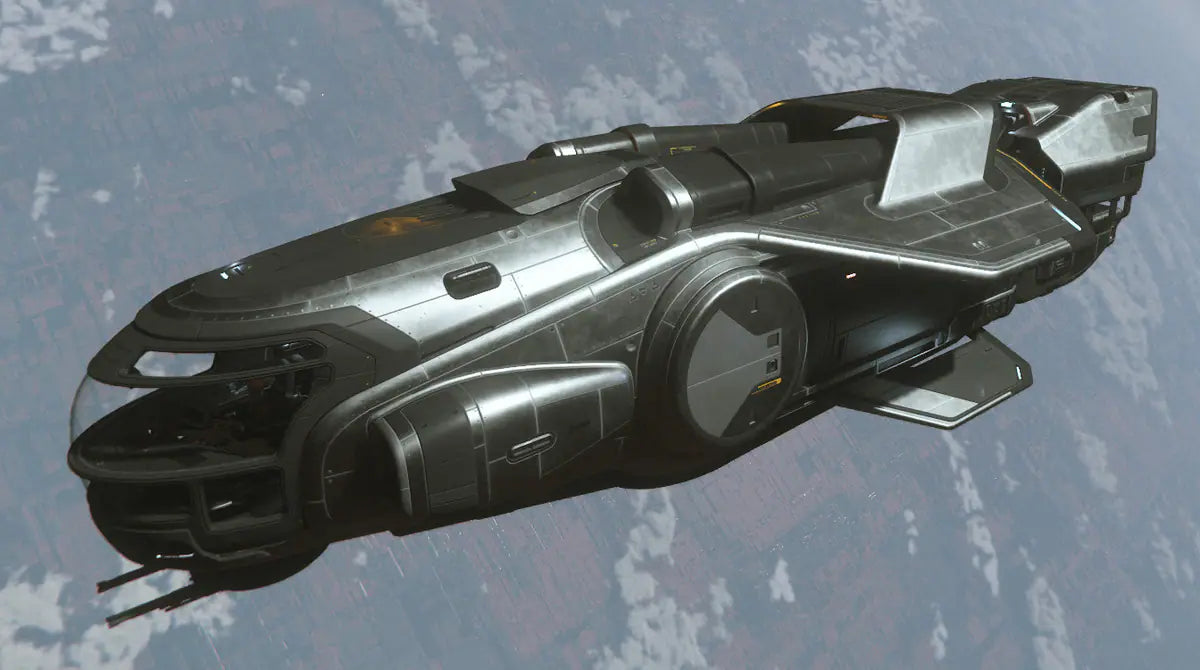 Flight ready
Hull A
Start with a small dedicated hauler
An external cargo grid and a compact cabin give you a straightforward ship for regular freight runs.
- Cargo
- 64 SCU
- Loading
- External grid
Keep in mind: The cargo sits outside. There is no enclosed vehicle bay.
Why we picked it
On the Hull A, you work around the boxes instead of packing them into a room. That can suit short cargo runs alongside an everyday ship you already like. Choose an internal-bay hauler such as the C1 Spirit if you want an enclosed hold and a rear loading tractor.
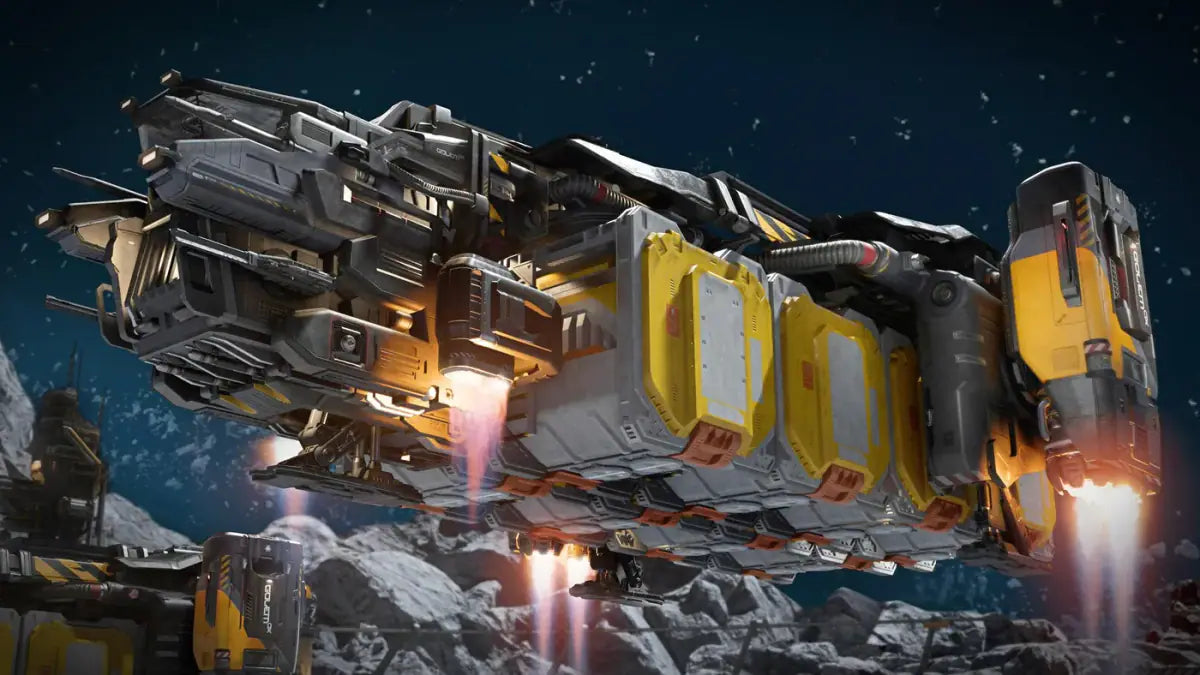 Flight ready
Golem OX
Move small loads with your own tractor
The cargo-focused Golem pairs a modest freight load with a tractor to help move the boxes.
- Cargo
- 64 SCU
- Variant
- Freight, not mining
Keep in mind: OX is the cargo variant. The standard Golem carries mining equipment instead.
Why we picked it
The Golem OX suits short jobs where you want to move your own boxes and keep the load manageable. Its tractor is part of the appeal: loading is something you can handle aboard your own small hauler. The C1 Spirit is a different choice if you want an enclosed bay.
 Flight ready
Nomad
Start trading with a smaller loadStart trading with a smaller loadTake a ROC ground mining
A modest open rear grid lets you begin trading without buying enough stock to fill a large hauler.A modest open rear grid lets you begin trading without buying enough stock to fill a large hauler.Carry a ROC on the open rear bed, fly to a mining area and head out on the surface.
- Cargo
- 24 SCU
- LoadingLoadingCarries
- Open rear gridOpen rear gridROC ground miner
Keep in mind: Keep credits for the goods as well as the ship. The small hold limits each run.Keep credits for the goods as well as the ship. The small hold limits each run.The Nomad can carry a ROC, but that does not mean every rover will fit.
Why we picked it
Buy a load you can afford, move it onto the rear grid and complete the sale. The Nomad keeps that first trading run small. When you regularly need more space, compare the Hull A for external freight or the C1 Spirit for an enclosed hold with a tractor.Buy a load you can afford, move it onto the rear grid and complete the sale. The Nomad keeps that first trading run small. When you regularly need more space, compare the Hull A for external freight or the C1 Spirit for an enclosed hold with a tractor.The Nomad and ROC make a handy solo setup. Land near the area you want to search, unload the miner and bring it back aboard when you're ready to move. Remember that the open bed is also your cargo space, so plan what else needs to come along.
 Flight ready
RAFT
Work around an open cargo load
The RAFT carries freight outside the hull, with access around the containers instead of through an internal hold.
- Cargo
- 192 SCU
- Loading
- External freight
Keep in mind: Its external cargo layout is not an enclosed vehicle bay.
Why we picked it
Choose the RAFT if you prefer working around containers outside the ship to packing an internal hold. It keeps the cargo separate from the living space and makes hauling the clear focus of the trip. For mixed freight and vehicle jobs, the C1 Spirit's enclosed bay gives you more options.
 Flight ready
Hull B
Unfold the grids and load up
Telescopic spindles extend into external cargo grids, giving the Hull B room for larger freight loads.
- Cargo
- 512 SCU
- Loading
- External spindles
Keep in mind: Check clearance with cargo aboard and the facilities on your route, not just the folded ship's size.
Why we picked it
The Hull B is for trips where you know the job is hauling boxes. Its unfolding grids give it a very different loading routine from a ship with an internal bay. If your plans often switch between freight and vehicles, an enclosed hauler is likely to be more useful.
Flight ready
Constellation Taurus
Haul more without giving up other missions
A long hold and a lower tractor turret help with freight, while pilot-controlled weapons let you take suitable combat contracts between runs.
- Cargo
- 174 SCU
- Loading
- Elevator / lower tractor
Keep in mind: The larger hull and cargo elevator take some practice if you're used to a small ship with a ramp.
Why we picked it
The Taurus makes sense when cargo is becoming your main job but you still want to do other things. You can load the elevator with its tractor and handle a suitable fight from the pilot seat. Try it with a full load: reaching the last boxes matters just as much as fitting them aboard.
 Flight ready
Zeus Mk II CL
An enclosed hold with its own tractor
The Zeus CL combines an internal cargo bay with onboard loading equipment in a relatively compact hauler.
- Cargo
- 128 SCU
- Loading
- Internal bay / tractor
Keep in mind: A tightly packed grid can make the last containers difficult to reach.
Why we picked it
You have the tractor aboard, so you can get on with loading when you reach a stop. The question is how well your usual containers fit together. Try filling and emptying the bay before choosing it over the Freelancer MAX or the elevator-loaded Constellation Taurus.
 Flight ready
Starlancer MAX
Take the crew on a freight run
Individual cabins, side access to the forward hold and a separate rear hold give friends room to travel and work together.
- Cargo
- 224 SCU
- Layout
- Separate forward and rear holds
Keep in mind: A vehicle can use space you need for freight. Plan both loads together.
Why we picked it
The individual cabins make this a freight ship your friends can settle into, not just ride along in. Separate holds help you organize supplies and deliveries by where they need to come out. Choose it for hauling together when shared bunks and one crowded bay no longer suit the trip.
 Flight ready
Caterpillar
Split the load between cargo sections
A long, divided hold and side access give the Caterpillar a different way to organize large freight loads.
- Cargo
- 576 SCU
- Layout
- Sectioned internal freight
Keep in mind: Choose for the loading features available now, not promised modular features.
Why we picked it
Think about the part of the load you'll need first. The Caterpillar's separate sections may suit deliveries that are easier to keep apart. The C2 Hercules has a larger continuous bay with ramps at both ends, so try the same loading job in each before deciding.
 Flight ready
Railen
Move large external loads with onboard tractors
Two remote tractor beams help load the Railen's external grids, while retractable armor covers the freight for travel.
- Cargo
- 640 SCU
- Loading
- External freight
Keep in mind: The grids are for freight, not an enclosed vehicle bay. Check access to each part of the load.
Why we picked it
We'd shortlist the Railen for a hauling crew that wants a large external load and its own loading equipment. There are four beds and a mess area for the journeys between jobs. The appeal is practical as well as visual: cargo handling and crew accommodation in one distinctly Xi'an ship.
 Flight ready
Ironclad
Put a huge enclosed hold to work
An opening roof and a loading ramp give the base Ironclad more than one way to fill its large freight bay.
- Cargo
- 2,200 SCU
- Loading
- Ramp / opening roof
Keep in mind: Trading at this scale takes credits for the goods and plenty of loading time.
Why we picked it
Roof access is the feature to try with the loads you already move. It gives you another way into the bay instead of sending everything through the ramp. This is the base cargo model, not the Ironclad Assault. Compare it with the C2 Hercules for your regular freight route.
Flight ready
C2 Hercules
Load from either end
Front and rear ramps open into a large enclosed bay for heavy freight and vehicle transport.
- Cargo
- 696 SCU
- Loading
- Front and rear ramps
Keep in mind: Filling and emptying the bay can take a substantial part of the trip.
Why we picked it
The two ramps are useful when moving bulky equipment through the ship. The same bay can carry freight one day and vehicles the next. Before stepping up to an Ironclad, try a full run in the C2 and see whether you need more space or simply help with loading.
 Flight ready
Hull C
Take on bulk freight
A huge external grid makes the Hull C a dedicated hauler for routes with compatible bulk-freight facilities.
- Cargo
- 4,608 SCU
- Route
- Compatible freight facilities
Keep in mind: It cannot replace an internal-bay hauler for ordinary surface delivery stops.
Why we picked it
Start by finding a route that can load and unload the ship. You'll also need to fund the cargo and prepare for the next run. This is a different kind of hauling from a C2 Hercules carrying vehicles or visiting surface locations, not just the next size up.
Other ships worth considering
Think beyond the size of the hold
Contracts give you a load to deliver. Trading means buying the goods yourself and carrying the risk until they sell. Start with a route you can run comfortably, then choose a ship you can load and unload without dreading every stop. Keep credits aside for the next batch of goods, not just the ship.
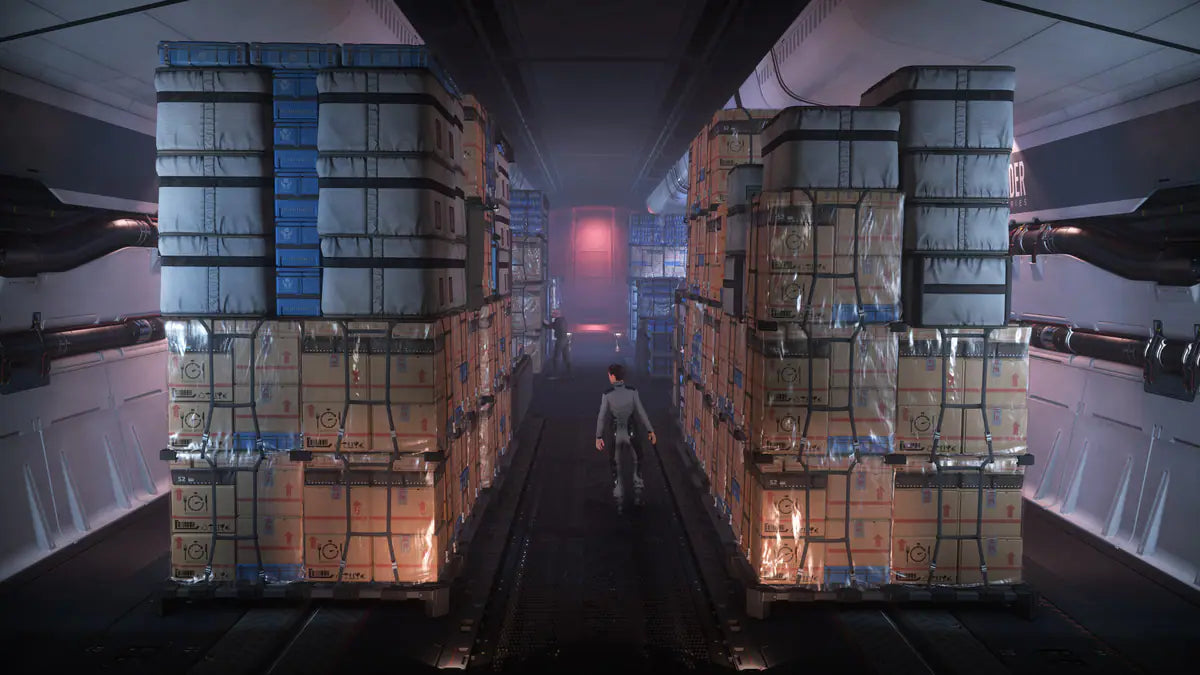
Your next step
Move up when a route you enjoy regularly needs more space. An onboard tractor may help more than a bigger hold if loading is what slows you down. For heavy loads, compare the C2 Hercules and base Ironclad. The Hull C is a separate choice for routes with bulk-freight facilities. Hull D and Hull E are future options, not ships you can use for those runs today.
Compare larger cargo holdsFuture ships across the cargo career
Hull D and Hull E are planned for bulk freight, while Merchantman adds onboard trading. These are freight and trading recommendations, not choices for carrying vehicles.
 Not flight ready
Hull D
Plan for larger bulk loads
The Hull D is intended to carry more external freight on long-distance routes.
- Intended role
- Bulk freight
- Crew plan
- Large logistics operation
Keep in mind: Not flight ready. Check compatible routes and loading services when it arrives.
Why we picked it
If your group enjoys bulk hauling, the Hull D is one to watch as your loads grow. You can learn the facility-based routine in a Hull C while waiting. A smaller ramp-access hauler will still be useful for surface stops and other deliveries.
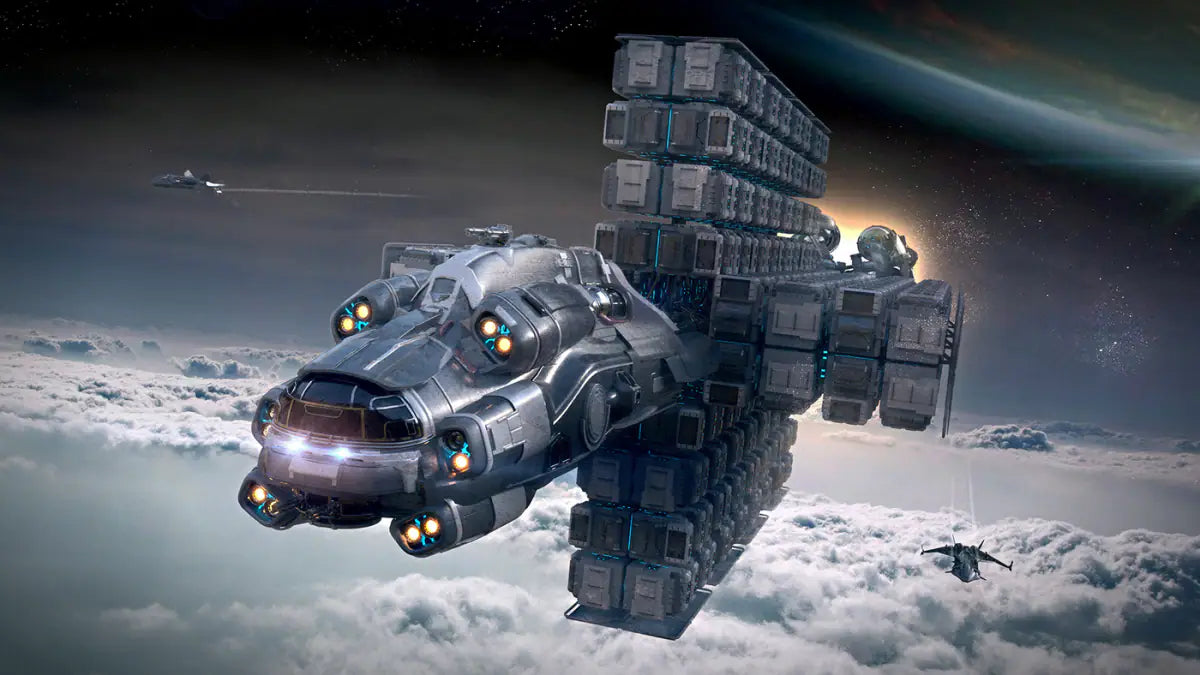 Not flight ready
Hull E
Plan freight on an organization scale
The largest Hull design is intended for enormous loads with a group to fund, move and protect them.
- Intended role
- Organization-scale freight
- Route
- Compatible bulk facilities
Keep in mind: Not flight ready. Planned capacity does not guarantee suitable or profitable routes.
Why we picked it
The Hull E is a future project for people who want to run a major freight operation together. Work out who enjoys trading, flying and escorting before planning around it. Smaller haulers will still have jobs that do not need such a large load.
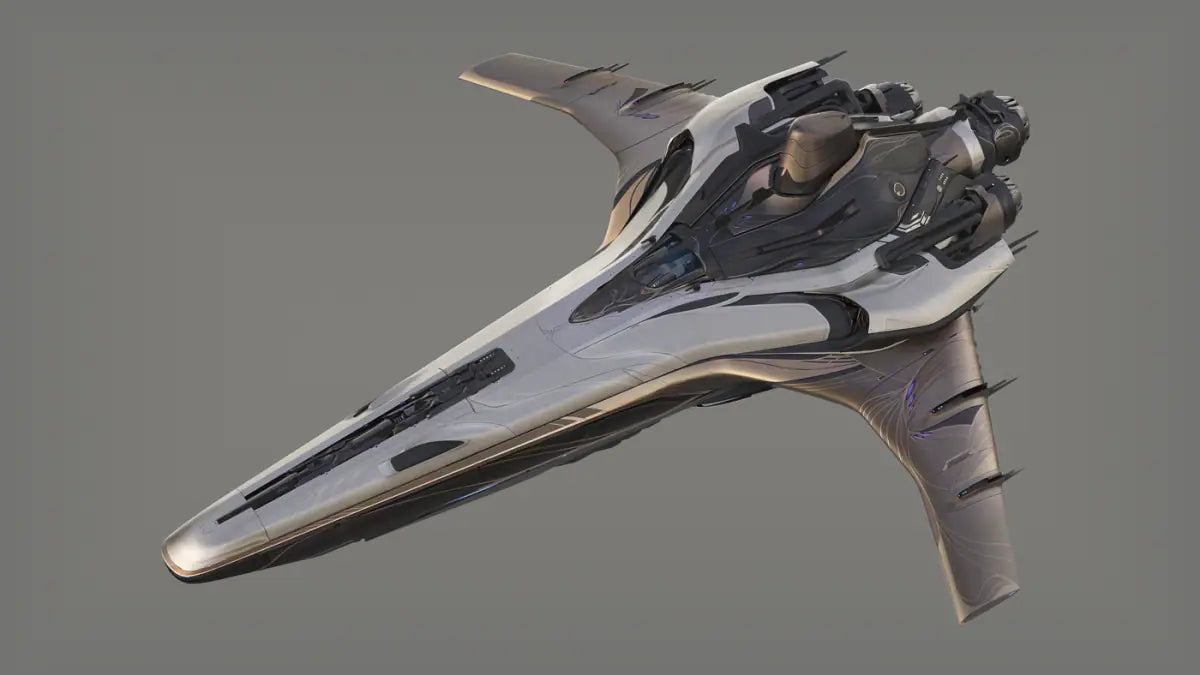 Not flight ready
Merchantman
Take a marketplace with you
The Banu Merchantman is planned to combine freight transport with an onboard marketplace.
- Intended role
- Freight / onboard trade
- Intended use
- Future commercial systems
Keep in mind: Not flight ready. Its planned shops are not a current source of retail income.
Why we picked it
Selling to visitors aboard your own ship is a different idea from delivering boxes to a terminal. If that interests your group, think about the stock, customers and crew you would need. The shops and trading systems still need to arrive before you can run that business.
Should I buy the ship with the most SCU?
Only if you can use the space. Compare how long a full trip takes, which loads you can afford and whether the destination accepts your ship and cargo. A smaller hauler you can keep moving can be a better fit than a large one you struggle to fill.
Best combat ships for different kinds of fights
For current combat missions and player-organized fights. Balance and loadouts change by patch.
Count the weapons you can use from the pilot seat. Light fighters keep you focused on the fight; larger fighters can add an interior, a gunner seat or torpedoes. Choose for the trips you take alone, even if the ship has room for company.
Flying with a regular gunner? Start with the Hurricane or standard Scorpius. The Cutlass Black keeps freight and ground trips open, while the Vanguards add a cabin and work for nights you fly alone. Try both seats together before choosing.
The Gladiator lets you start with a compact fighter-bomber. A Vanguard Harbinger keeps more fighter work between launches, while the Eclipse focuses on heavy strikes. Moving to a Retaliator or Polaris adds crew and resupply planning; the Retaliator also needs torpedo-bay modules.
Start with the jobs your crew wants. A gunship gives several players weapons to operate; an escort protects other ships; a Polaris adds a capital torpedo strike. Bring enough people for the stations you plan to use and agree how you'll resupply.
Before you start
Check which weapons you can use and who will take the other stations. Leave time and credits for repairs and rearming.
- How many people do you actually need?
- Listed crew is not a minimum for every trip. Check what the pilot can use and which stations need another person. A spare seat does not automatically mean you need someone in it.
Our recommendations
16 recommendationsCombat: choose the right fit
Combat: choose the right fit
Gladius / F7C-M Super Hornet Mk II / Vanguard Warden / Hurricane / Hammerhead / Polaris / Gladiator / Retaliator / Scorpius / Redeemer / Cutlass Black
| Ship | Best suited to | Main trade-off | Key features |
|---|---|---|---|
| Gladius | Learn to fly a dedicated fighter | You'll need other transport for freight and trips that require a cabin. | Solo fighter; One pilot |
| F7C-M Super Hornet Mk II | A medium fighter with room for a gunner | Check which weapons the pilot and gunner control with the fitted equipment. | Medium fighter; Pilot; second-seat option |
| Vanguard Warden | A heavy fighter with a cabin | The larger hull needs more room to maneuver than a light fighter. | Heavy fighter; Pilot; optional gunner |
| Hurricane | Make the gunner part of the fight | You lose much of its usefulness without an active gunner. | Crewed heavy fighter; Pilot + active gunner |
| Hammerhead | Give your turret crew an escort job | Empty turrets leave you with less firepower, so arrange the crew before setting off. | Anti-fighter escort; Pilot and turret crew |
| Polaris | Plan a capital torpedo strike | Plan crew, ammunition, escorts and rearming before the operation. | Capital torpedo platform; Organized crew |
| Gladiator | Start with a compact fighter-bomber | Ship strikes need the torpedo rack. A bomb configuration is for a different kind of target. | Light torpedo bomber; Pilot / optional gunner |
| Retaliator | Equip a heavy torpedo bomber | The base hull is not the bomber loadout. Check that the required torpedo-bay modules are included. | Torpedo-bay modules; Pilot and defensive gunners |
| Scorpius | Team up with a turret gunner | The standard Scorpius has the gun turret. Antares uses the second seat for disruption equipment. | Two-person heavy fighter; Remote turret |
| Redeemer | Bring a small gunship crew | Much of its firepower needs crewmates at the weapon stations. | Crewed gunship; Pilot and turret operators |
| Cutlass Black | Start fighting with a gunner | If nearly every trip is combat, compare a dedicated two-person fighter. | 46 SCU; Solo; optional gunner |
The Vanguard Warden can be flown solo. The Hurricane is for a pilot and an active gunner.
Flight ready
Gladius
Learn to fly a dedicated fighter
One pilot and a focused combat ship keep your attention on positioning, aim and the next opening.
- Combat role
- Solo fighter
- Operators
- One pilot
Keep in mind: You'll need other transport for freight and trips that require a cabin.
Why we picked it
The Gladius gives you a clear job: get into a firing position, make the shots count and learn when to disengage. Try the Arrow against the same opponents before deciding which you prefer. Both are ships you can keep practicing in, even after adding something larger.
 Flight ready
Arrow
Try a smaller light fighter
A compact hull keeps the Arrow focused on close-range fighting.
- Combat role
- Light fighter
- Operators
- One pilot
Keep in mind: It offers little room for activities outside combat.
Why we picked it
Try the Arrow and Gladius as alternatives, not consecutive upgrades. Pay attention to the cockpit view and how easily you can judge your position through a turn. The better choice is the one you feel comfortable practicing in.
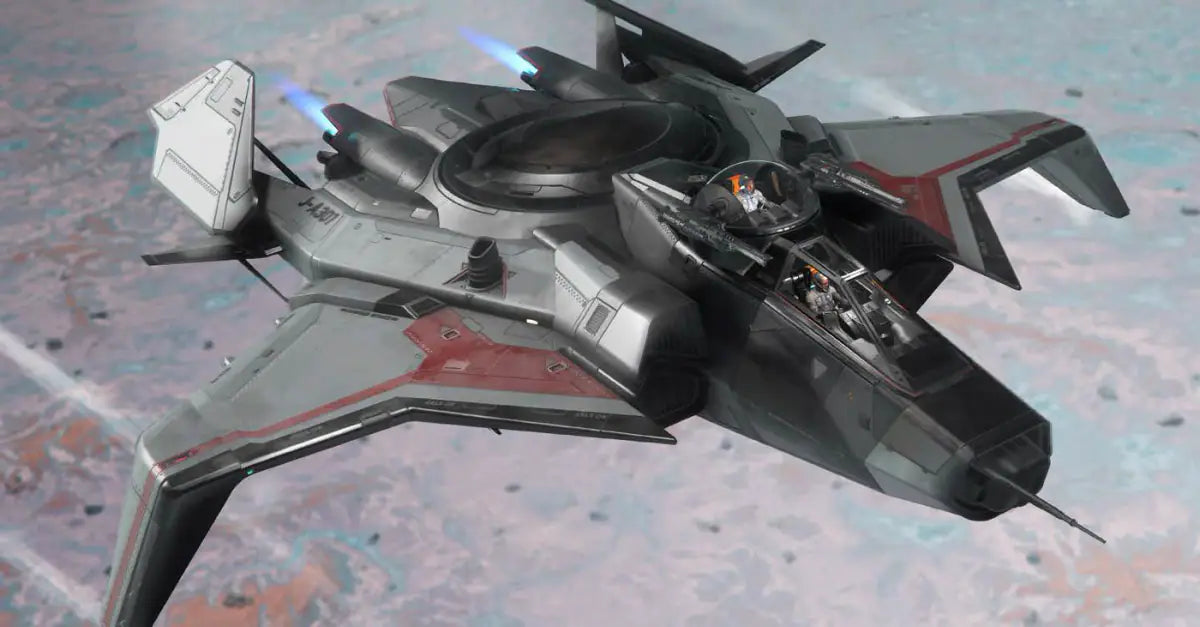 Flight ready
Gladiator
Start with a compact fighter-bomber
Torpedoes, guns and an optional turret partner keep the Gladiator useful before and after a strike.
- Combat role
- Light torpedo bomber
- Crew plan
- Pilot / optional gunner
Keep in mind: Ship strikes need the torpedo rack. A bomb configuration is for a different kind of target.
Why we picked it
You can learn the approach, launch and rearming routine without gathering a large bomber crew. Bring a friend for the turret, then use the guns when the torpedoes are gone. For a more focused heavy strike, compare the Eclipse.
Flight ready
Cutlass Black
Start fighting with a gunner
Bring a friend into the fight without giving up freight and ground trips.
- Cargo
- 46 SCU
- Operating style
- Solo; optional gunner
Keep in mind: If nearly every trip is combat, compare a dedicated two-person fighter.
Why we picked it
The Cutlass Black gives the gunner something to do and keeps the rear bay for whatever comes after the fight. That works well when your evening changes direction. Try the Hurricane or Scorpius if you both want to spend most of your time in combat.
 Flight ready
F7C-M Super Hornet Mk II
A medium fighter with room for a gunner
The standard Super Hornet Mk II gives you a medium fighter you can take out alone or share with a friend.
- Combat role
- Medium fighter
- Operators
- Pilot; second-seat option
Keep in mind: Check which weapons the pilot and gunner control with the fitted equipment.
Why we picked it
If your partner joins some nights but not every night, the standard F7C-M is worth trying together. It sits between a cockpit-only solo fighter and a larger Vanguard. The Hurricane is another option when you know you'll usually have a gunner.
 Flight ready
Vanguard Warden
A heavy fighter with a cabin
Pilot-controlled weapons, an interior and an optional gunner let you take the Warden out alone or with company.
- Combat role
- Heavy fighter
- Operators
- Pilot; optional gunner
Keep in mind: The larger hull needs more room to maneuver than a light fighter.
Why we picked it
You have somewhere to spend time between engagements, and a friend can take the turret without being essential to every trip. If you always fly with a gunner, take a look at the Hurricane too. If you mainly want to practice close dogfights, try the smaller Gladius.
 Flight ready
Hurricane
Make the gunner part of the fight
The turret is a second player's job, not spare seating. The Hurricane gives a regular pilot-and-gunner pair plenty to do.
- Combat role
- Crewed heavy fighter
- Operators
- Pilot + active gunner
Keep in mind: You lose much of its usefulness without an active gunner.
Why we picked it
The pilot positions the ship while the gunner tracks the target. Both players stay busy, and good coordination becomes part of the fun. Keep a solo fighter handy for nights when your partner is offline.
 Flight ready
Eclipse
Plan the approach, make the strike
A dedicated torpedo bomber rewards choosing the target and escape route before you launch.
- Combat role
- Torpedo strike
- Limit
- Limited torpedo supply
Keep in mind: A missed or intercepted torpedo costs ammunition and may mean another rearming trip.
Why we picked it
The Eclipse is for an attack you prepare, not a gunfight you settle into. Pick a suitable target, line up the strike and leave before the fight drags on. The Vanguard Harbinger offers more fighter work between launches, while a torpedo-equipped Retaliator gives a crew a larger bomber.
 Flight ready
M80
Heavy guns for one pilot
Two retractable Size 5 guns and two Size 4 guns give the M80 a heavy forward armament, with a bed and storage behind the cockpit.
- Combat role
- Heavy fighter
- Crew
- 1
Keep in mind: There is no gunner role or second crew seat.
Why we picked it
The M80 brings heavy guns, a small cargo space and racks for personal gear into a ship built for one pilot. Choose it for solo combat trips with an interior. The Warden can also fly solo, but keeps a turret seat available when a friend joins. That flexibility is worth keeping on your list if your plans change from night to night.
 Flight ready
Retaliator
Equip a heavy torpedo bomber
Torpedo-bay modules turn the Retaliator into a strike ship with defensive turrets for a crew.
- Required fit
- Torpedo-bay modules
- Crew plan
- Pilot and defensive gunners
Keep in mind: The base hull is not the bomber loadout. Check that the required torpedo-bay modules are included.
Why we picked it
The pilot handles the strike while gunners and escorts protect the approach and withdrawal. That gives a group a job to plan together. If you want to prepare and make the attack alone, the Eclipse is the smaller alternative.
 Flight ready
Vanguard Harbinger
Keep fighting between torpedo runs
The Harbinger combines a heavy fighter, torpedoes and a cabin for the trips between engagements.
- Combat role
- Heavy fighter / torpedoes
- Crew plan
- Pilot / optional gunner
Keep in mind: Its smaller torpedoes suit different targets from the heavy strikes of an Eclipse or Retaliator.
Why we picked it
You can launch a torpedo, keep fighting with guns and bring a friend for the turret. That suits an evening where bombing is only part of the plan. Compare the Vanguard Warden if most of your time goes into ordinary combat.
 Flight ready
Scorpius
Team up with a turret gunner
A rail-mounted remote turret gives your partner a weapon station while you fly the approach.
- Combat role
- Two-person heavy fighter
- Second seat
- Remote turret
Keep in mind: The standard Scorpius has the gun turret. Antares uses the second seat for disruption equipment.
Why we picked it
Try it with the person who will join you regularly. Can you keep the target where the gunner needs it? Can you both follow what is happening? Those are more useful questions than comparing the Scorpius and Hurricane by their weapon totals alone.
 Flight ready
Hammerhead
Give your turret crew an escort job
Multiple crewed turrets let a group defend a ship or convoy against fighters.
- Combat role
- Anti-fighter escort
- Operators
- Pilot and turret crew
Keep in mind: Empty turrets leave you with less firepower, so arrange the crew before setting off.
Why we picked it
Agree which targets and directions each gunner will cover. The Hammerhead works best as a shared defense job, with everyone helping protect the same ships. A smaller group should also look at the Redeemer instead of taking out more turret stations than it can fill.
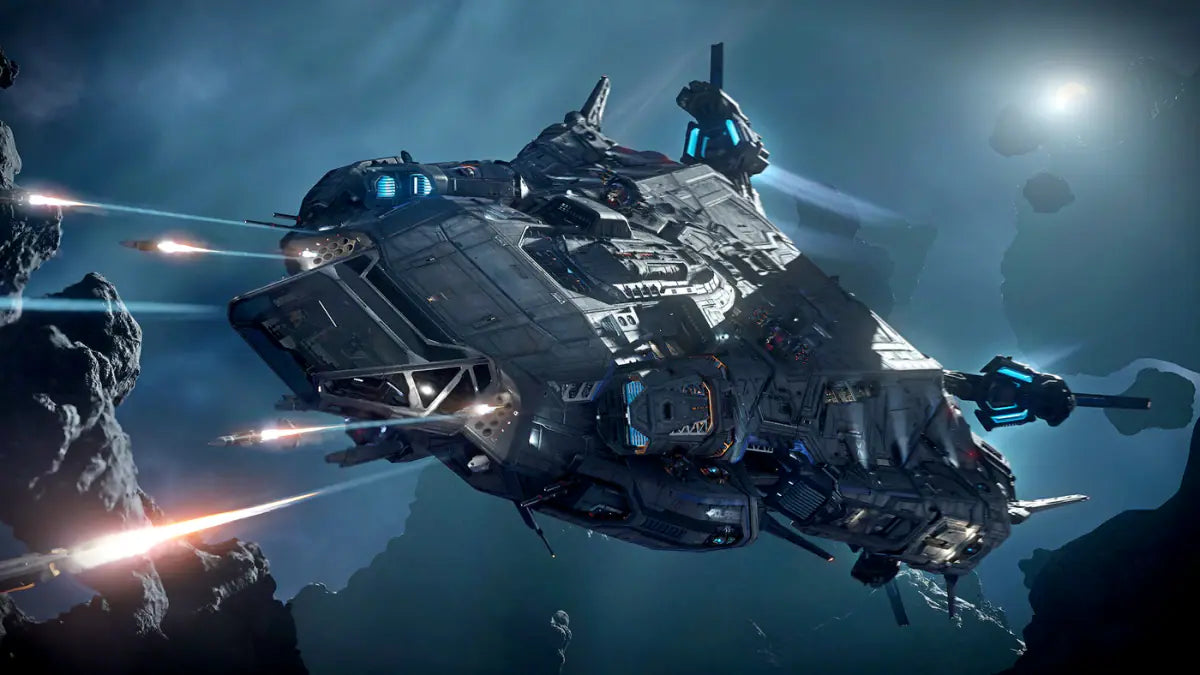 Flight ready
Polaris
Plan a capital torpedo strike
Heavy torpedoes and crew stations give a group jobs around preparing, making and defending a major attack.
- Combat role
- Capital torpedo platform
- Crew plan
- Organized crew
Keep in mind: Plan crew, ammunition, escorts and rearming before the operation.
Why we picked it
The Polaris is for a group that wants to run the whole mission together. Someone prepares the strike, others defend the ship, and support craft help keep it going. Smaller fighters still earn their place on quick contracts and nights when you do not need the flagship.
 Flight ready
Redeemer
Bring a small gunship crew
Turret stations let a few friends share escorts and sustained firefights in one ship.
- Combat role
- Crewed gunship
- Crew plan
- Pilot and turret operators
Keep in mind: Much of its firepower needs crewmates at the weapon stations.
Why we picked it
The pilot concentrates on positioning while the gunners work their targets. Try that arrangement with your regular team, then compare the Paladin and its central turret. You don't need to move to a Hammerhead unless you have people who want the extra stations.
 Flight ready
Paladin
Build the crew around the main turret
A large central turret and supporting weapon stations give a gunship team distinct roles.
- Combat role
- Crewed gunship
- Crew plan
- Assigned weapon stations
Keep in mind: It needs operators for its stations. It is not a solo dogfighter or a torpedo bomber.
Why we picked it
Who wants the main turret, and who will use the other weapons? Answer that with your crew before comparing the Paladin and Redeemer. Pick the layout that gives everyone a job they enjoy during a fight.
Match the fighter to your fights
What are you fighting, and who will be aboard? Start there. A light fighter lets you concentrate on a close duel. A turret ship gives your friend a job of their own. A bomber asks you to prepare the approach and strike instead of settling into a long gunfight.

Your next step
Give yourself time to learn a fighter before changing ships after every difficult fight. Try a Hurricane or Scorpius when a regular partner wants the turret. Add a bomber when you have targets that suit it. The Polaris needs a group to crew and support a capital strike, while the Javelin remains a future fleet project.
Choose a ship for bounty contractsFuture fleet combat ships
These designs focus on minelaying and destroyer operations. They are separate crew projects, not upgrades to a solo fighter or pilot-and-gunner pair.
 Not flight ready
Nautilus
Plan where the fight happens
A planned minelayer gives a fleet another way to control an area before an engagement.
- Intended role
- Minelaying / area control
- Operators
- Coordinated fleet crew
Keep in mind: Not flight ready. Mine deployment, recovery and countermeasures are still subject to development.
Why we picked it
The Nautilus is one to watch if you enjoy planning where an encounter happens. Your team would place the mines and protect the operation with other ships. It is a specialist role alongside fighters and escorts, not a replacement for them.
 Not flight ready
Javelin
Build a crew for a destroyer
A future capital combat ship gives an organization a flagship to equip and operate together.
- Intended role
- Capital destroyer
- Crew plan
- Organization
Keep in mind: Not flight ready. The hull purchase does not cover everything needed to equip and sustain it.
Why we picked it
The Javelin is a project for a group with people who want the stations, supply runs and fleet work. You can practice that coordination in current crewed combat ships. Smaller fighters will still be useful for nights when the whole group cannot join.
How should I test a fighter before buying?
Use opponents and a crew setup you know. Pay attention to the view, aiming, losing a pursuer and getting back to rearm. Better numbers will not help much if you struggle to put the ship where you need it.
Ships for bounty hunting and interdiction
Destroy-target bounties, interdiction and capture are different objectives. Check which missions are available.
For destroy-target contracts, start with a combat ship you can fly confidently. A hold lets you bring recovered cargo home afterward. Torpedoes suit particular large targets, not every contract. Build up through fights you can finish reliably.
Winning the fight and stopping the target from leaving are separate jobs. Most fighters need help with quantum interception. The Guardian QI has a quantum dampener to stop nearby targets from jumping away, but you still need to choose fights you can handle.
Assign the jobs before choosing the ships. A Mantis intercepts quantum travel, an EMP disrupts systems and a dampener blocks nearby jumps. Detention equipment only helps with supported capture missions. The Scorpius Antares needs a partner to operate its specialist systems.
Before you start
Read the objective. Destroying a target, stopping its jump and bringing back a prisoner need different equipment. Capture also needs a mission that supports it.
- NPC targets, dampeners, snares and EMPs
- NPC targets are computer-controlled; player targets are flown by other people. A quantum dampener blocks nearby jumps. A snare intercepts ships already traveling in quantum. An EMP, or electromagnetic pulse, disrupts ship systems instead of doing either quantum job.
Our recommendations
16 recommendationsBounty & interdiction: choose the right fit
Bounty & interdiction: choose the right fit
Avenger Titan / Constellation Taurus / Gladius / Guardian QI / Mantis / Hawk / F7C-M Super Hornet Mk II / Eclipse / Scorpius Antares
| Ship | Best suited to | Main trade-off | Key features |
|---|---|---|---|
| Avenger Titan | Learn NPC combat contracts | Build up through contracts you can finish reliably. A small mixed-mission ship will not suit every target. | Pilot weapons / freight bay; Early NPC contracts |
| Constellation Taurus | Fight heavier NPC targets and bring cargo home | The large hull is harder to maneuver in close fights, especially against agile player-flown ships. | Pilot weapons / freight bay; Heavier NPC targets |
| Gladius | Focus on the fightPractice NPC combatPractice fighting another player | There is no quantum dampener. A teammate needs to block jumps when the hunt calls for it.It has no freight bay for recovered cargo. The Avenger Titan keeps that option open.It cannot block quantum jumps by itself. Arrange support or compare the Guardian QI. | Pilot-controlled weapons; Focused fighterPilot-controlled weapons; NPC combat practicePilot-controlled weapons; Player-combat practice |
| Guardian QI | Keep a nearby target from jumping away | The dampener has range and operating limits. It cannot intercept quantum travel like a Mantis snare. | Quantum dampener; Fighter interception |
| Mantis | Intercept a ship in quantum travel | Bring fighters to protect the Mantis and deal with the intercepted ship. | Quantum snare / dampener; Combat escort |
| Hawk | Bring an EMP in a small fighter | Prisoner transport only helps with missions that support taking a target alive. | EMP; Single-prisoner compartment |
| F7C-M Super Hornet Mk II | A medium fighter with room for a gunner | Check which weapons the pilot and gunner control with the fitted equipment. | Medium fighter; Pilot; second-seat option |
| Eclipse | Plan a strike on a large NPC target | A missed or intercepted torpedo can turn the contract into an expensive rearming trip. | Torpedo strike; Limited torpedo supply |
| Scorpius Antares | Let your partner handle disruption | The second seat has no gun turret. Its dampener is also different from a quantum snare. | EMP / quantum dampener; Disruption operator |
Flight ready
Avenger Titan
Learn NPC combat contracts
Start with computer-controlled bounty targets, then use the rear bay for recovered freight or another delivery.
- Equipment
- Pilot weapons / freight bay
- Best suited to
- Early NPC contracts
Keep in mind: Build up through contracts you can finish reliably. A small mixed-mission ship will not suit every target.
Why we picked it
You do not need detention equipment for a contract that asks you to destroy the target. The Titan lets you learn those early fights and still bring cargo home. Try a Gladius if fighting becomes the main interest, or a Constellation Taurus when you need more room for recovered goods.
Flight ready
Gladius
Focus on the fightPractice NPC combatPractice fighting another player
Pilot-controlled weapons let you concentrate on flying and fighting.Work on positioning and aim against computer-controlled bounty targets in a dedicated solo fighter.Focus on positioning and aim while a teammate handles interception when needed.
- Equipment
- Pilot-controlled weapons
- Role
- Focused fighterNPC combat practicePlayer-combat practice
Keep in mind: There is no quantum dampener. A teammate needs to block jumps when the hunt calls for it.It has no freight bay for recovered cargo. The Avenger Titan keeps that option open.It cannot block quantum jumps by itself. Arrange support or compare the Guardian QI.
Why we picked it
Take the Gladius when combat is your part of the hunt. The Avenger Titan adds room for recovered cargo, while the Guardian QI can block nearby quantum jumps. Choose the equipment your job needs rather than expecting one fighter to do all three.The Gladius keeps the job focused on fighting. You control the weapons, with no gunner or cargo to manage. If you want a cabin for repeated outings, compare the Vanguard Warden. The Avenger Titan is useful when this also needs to be your everyday ship.Learn the matchup and keep a way out if the fight turns against you. A teammate with interception equipment can handle stopping the target from leaving. The Guardian QI combines nearby dampening with a fighter if you'd rather do those jobs in one ship.
 Flight ready
Hawk
Bring an EMP in a small fighter
An EMP and a single-prisoner compartment give the Hawk tools beyond its guns.
- Equipment
- EMP
- Design
- Single-prisoner compartment
Keep in mind: Prisoner transport only helps with missions that support taking a target alive.
Why we picked it
The EMP lets you help disrupt a target while the rest of the team follows up. If you just want to fight, compare a Gladius. If you need quantum dampening and more detention space, look at the Cutlass Blue.
 Flight ready
Avenger Stalker
Bring the target back
The Stalker replaces the Avenger's freight role with prisoner-transport equipment.
- Design role
- Prisoner transport
- Crew
- 1
Keep in mind: Check that the mission supports capture and transport before choosing a ship for its detention equipment.
Why we picked it
Pick the Stalker when bringing someone back is actually part of the job. If your contracts only ask you to destroy targets, the Avenger Titan lets you fight and carry recovered cargo. The detention equipment does not help with those deliveries.
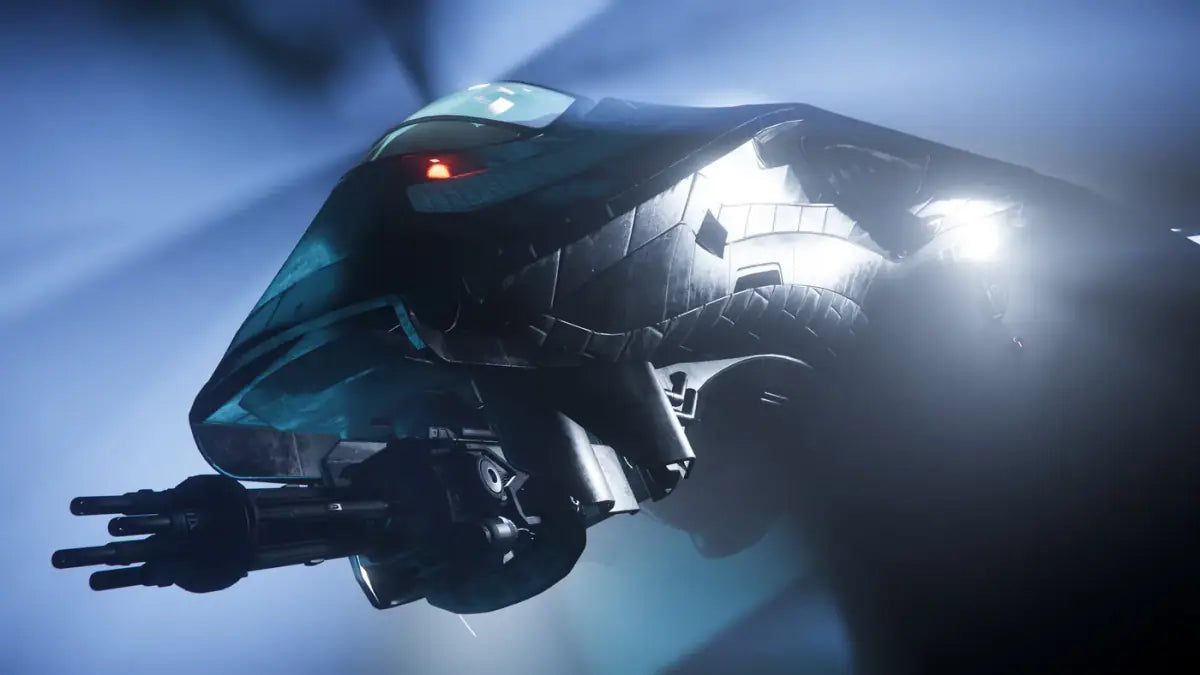 Flight ready
Avenger Warlock
Help your team with an EMP
The Warlock gives an Avenger pilot disruption equipment to support a hunt.
- Equipment
- EMP
- Team role
- Disruption support
Keep in mind: An EMP disrupts systems. It is not a quantum snare and does not provide prisoner transport.
Why we picked it
Plan what your teammates will do after the EMP hits. They might press the attack or move to secure the target. The Warlock makes sense when the team already has a way to intercept the ship and finish the objective.
Flight ready
Arrow
Try a smaller light fighter
A compact hull keeps the Arrow focused on close-range fighting.
- Combat role
- Light fighter
- Operators
- One pilot
Keep in mind: It offers little room for activities outside combat.
Why we picked it
Try the Arrow and Gladius as alternatives, not consecutive upgrades. Pay attention to the cockpit view and how easily you can judge your position through a turn. The better choice is the one you feel comfortable practicing in.
Flight ready
Constellation Taurus
Fight heavier NPC targets and bring cargo home
Pilot-controlled weapons and a large hold can suit NPC contracts with freight to recover afterward.
- Equipment
- Pilot weapons / freight bay
- Best suited to
- Heavier NPC targets
Keep in mind: The large hull is harder to maneuver in close fights, especially against agile player-flown ships.
Why we picked it
The Taurus gives you room for the cargo after the fight. If that is a regular part of your contracts, the hold can be more useful than moving to a heavier fighter alone. The Vanguard Warden is worth comparing when you mostly want combat and a cabin between jobs.
 Flight ready
Mantis
Intercept a ship in quantum travel
A quantum snare lets the Mantis pull a traveling target into an encounter for your team.
- Equipment
- Quantum snare / dampener
- Support
- Combat escort
Keep in mind: Bring fighters to protect the Mantis and deal with the intercepted ship.
Why we picked it
One player sets up the interception while the fighters get ready to act. Agree on the target and how you'll withdraw if the encounter goes badly. If you only need to block nearby jumps from your own fighter, compare the Guardian QI and its dampener.
Flight ready
Cutlass Blue
Block jumps and carry prisoners
The Cutlass Blue combines quantum dampening with a detention area for bounty work.
- Equipment
- Quantum dampener
- Design
- Prisoner transport
Keep in mind: Capturing and delivering prisoners depends on the missions and mechanics currently available.
Why we picked it
The dampener helps keep a nearby target from leaving in quantum. The prisoner space is a separate tool for jobs that support capture. If you mainly want a Cutlass for freight and mixed missions, choose the Black instead.
 Flight ready
Guardian QI
Keep a nearby target from jumping away
A quantum dampener adds pursuit equipment to the Guardian QI's fighter role.
- Equipment
- Quantum dampener
- Role
- Fighter interception
Keep in mind: The dampener has range and operating limits. It cannot intercept quantum travel like a Mantis snare.
Why we picked it
If targets keep jumping away from your fighter, the Guardian QI gives you a way to address that in the same ship. You still need to win the fight. Another option is to stay in a fighter you already enjoy and have a teammate handle the dampening.
Flight ready
F7C-M Super Hornet Mk II
A medium fighter with room for a gunner
The standard Super Hornet Mk II gives you a medium fighter you can take out alone or share with a friend.
- Combat role
- Medium fighter
- Operators
- Pilot; second-seat option
Keep in mind: Check which weapons the pilot and gunner control with the fitted equipment.
Why we picked it
The standard Super Hornet Mk II lets you hunt with or without a second player. Check who controls each weapon before setting off. If stopping quantum jumps is your job too, you need help from another ship or a fighter with a dampener, such as the Guardian QI.
Flight ready
Vanguard Warden
A heavy fighter with a cabin
Pilot-controlled weapons, an interior and an optional gunner let you take the Warden out alone or with company.
- Combat role
- Heavy fighter
- Operators
- Pilot; optional gunner
Keep in mind: The larger hull needs more room to maneuver than a light fighter.
Why we picked it
The Warden gives you an interior for repeated combat trips and a turret when a friend joins. You still have weapons to use on your own. Against players, plan how you'll stop the target leaving as well as how you'll fight it.
Flight ready
Eclipse
Plan a strike on a large NPC target
Attack a suitable large target with torpedoes, then leave and rearm.
- Combat role
- Torpedo strike
- Limit
- Limited torpedo supply
Keep in mind: A missed or intercepted torpedo can turn the contract into an expensive rearming trip.
Why we picked it
Choose contracts that suit a planned torpedo attack. The fun is in lining up the approach and timing the launch, not staying for a long gunfight. The Vanguard Warden offers more repeated fighter work, while a Constellation Taurus has a hold for recovered cargo.
Flight ready
Corsair
Bring recovered freight back from a fight
Pilot-usable weapons and an internal bay let you fight suitable NPC targets and carry recovered goods.
- Cargo
- 72 SCU
- Access
- Rear cargo / vehicle ramp
Keep in mind: Check which weapons your crew can operate. The large hull needs room to maneuver.
Why we picked it
If your contracts involve fighting and recovering cargo, compare the Corsair with the Constellation Taurus. The Corsair loads through a ramp; the Taurus uses an elevator. Try the loading routine as well as the fight, with the people who will normally join you.
Flight ready
Scorpius
Team up with a turret gunner
A rail-mounted remote turret gives your partner a weapon station while you fly the approach.
- Combat role
- Two-person heavy fighter
- Second seat
- Remote turret
Keep in mind: The standard Scorpius has the gun turret. Antares uses the second seat for disruption equipment.
Why we picked it
A Scorpius pair can concentrate on the fight while another ship handles interception. Your partner has a turret to use throughout the encounter. The Antares gives that second player disruption equipment instead, if they would prefer that job to gunnery.
 Flight ready
Scorpius Antares
Let your partner handle disruption
One player flies and fights while the other operates the EMP and quantum dampener.
- Equipment
- EMP / quantum dampener
- Second seat
- Disruption operator
Keep in mind: The second seat has no gun turret. Its dampener is also different from a quantum snare.
Why we picked it
The Antares gives your partner a job beyond aiming another gun. Work out when to use the equipment and who will finish the encounter. Choose the standard Scorpius if you would both rather have a shooting role.
Read the objective before choosing the equipment
Read the objective before choosing the ship. Destroying a computer-controlled target is mainly a combat job. Catching a player who can leave needs a way to stop them. Taking someone alive also needs a mission that supports capture and transport. In a group, agree who will find the target, who will stop it escaping and who will handle the fight.

Your next step
Start with contracts you can finish consistently. If targets keep jumping away, add a dampener or bring a teammate who has one. A Mantis snare does the different job of intercepting quantum travel and needs combat support. The Zeus Mk II MR is not flight ready; check its equipment and supported missions when it arrives.
Compare dedicated solo fightersFuture bounty-hunting ships
The Zeus MR is a future option for a shared hunting crew. Its appeal depends on the interception and capture systems it arrives with, not just its guns.
 Not flight ready
Zeus Mk II MR
Plan a hunt with a shared crew
The MR is designed for bounty work with specialist equipment and space for a hunting team.
- Intended role
- Crewed bounty hunting
- Listed crew
- 1-3
Keep in mind: Not flight ready. Its interception and capture systems must be checked when they are available.
Why we picked it
If you want the hunting team aboard one ship, keep an eye on the MR. Decide who enjoys finding the target, stopping it and handling the capture. The missions and equipment need to support those jobs before you can rely on that plan.
Do I need prisoner pods for combat bounties?
Not for a contract that only asks you to destroy the target. Prisoner pods matter when the mission supports bringing someone back alive.
Best mining ships: from solo work to a mining fleet
Ship and surface mining are playable. Arrastra and Orion are not flight ready.
The Golem and Prospector have the same stock ore capacity in this comparison. The Golem keeps things compact; the Prospector adds a cabin, bed and mining arm. Decide how you want to spend the whole trip, including time between deposits.
Separate miners let everyone fly and search independently. A MOLE puts the group together, with a pilot positioning the ship for the mining stations. In either case, plan refining and a hauler for the finished cargo.
Do you want to mine from a suit, drive your own rover or split the work with a friend? ATLS GEO, ROC and ROC-DS cover those choices. Try the terrain you want to work and check how you'll carry the equipment there.
Before you start
Ship-mined ore needs refining and a hauler for the finished cargo. For an ATLS GEO, ROC or ROC-DS, arrange transport for the equipment and a way to bring the material home.
- Ore storage and finished cargo are different
- Ore containers hold unrefined material from ship mining. Once refined, it needs a separate freight hold for transport. Do not add ore storage and cargo-grid capacity together.
Our recommendations
6 recommendationsGolem vs Prospector: compact miner or a cabin?
Golem vs Prospector: compact miner or a cabin?
Golem / Prospector
| Ship | Why we would choose it | The compromise | Stock ore |
|---|---|---|---|
| Golem | Compact mining trips in a single-seat ship. | No walkable living cabin; plan around returning to base. | 32 SCU |
| Prospector | An adjustable mining arm, a cabin and a bed. | No increase in stock ore capacity over the Golem. | 32 SCU |
Stock ore capacities checked against game-data build 4.10.0: Golem 32 SCU, Prospector 32 SCU, MOLE 96 SCU. Spare pods and different fitted containers are not included. Plan a separate hauler for refined output.
 Flight ready
Golem
Head out, mine, return to base
A compact single-seat miner keeps short trips focused on finding and working a deposit.
- Stock ore storage
- 32 SCU
- Layout
- Single-seat; no cabin
Keep in mind: There is no walkable cabin. Check the fitted mining head and supported modules.
Why we picked it
The Golem and Prospector have the same stock ore capacity here. Choose the Golem for a small, single-seat ship and trips that finish back at your usual base. Choose the Prospector if a walkable cabin and bed matter to you between deposits.
 Flight ready
ROC
Take mining onto the surface
Unload the ROC, drive out and work surface gems before returning to your carrier.
- Mineral storage
- 1.2 SCU
- Logistics
- Compatible carrier needed
Keep in mind: You need a ship to carry it. The Nomad can carry a ROC.
Why we picked it
If you enjoy getting out of the spacecraft and searching from the ground, the ROC makes that part of the mining trip. Remember to allow time to load it again before moving on. For a different way across the terrain, take a look at the ATLS GEO mining suit.
 Flight ready
ATLS GEO
Reach deposits in a mining suit
Mining equipment and a jump pack give the ATLS GEO another way across terrain that you would otherwise drive over.
- Type
- Mining power suit
- Logistics
- Transport and recovery
Keep in mind: Arrange transport for the suit and a way to bring the recovered material home.
Why we picked it
This is for the player who wants to work on foot in a suit instead of from a rover. Try it on the terrain and material you want to mine. You'll still need a carrier to move between distant areas, just as you would with a ROC.
 Flight ready
ROC-DS
Give the mining seat to a friend
A separate boom seat lets one person mine while another drives and positions the vehicle.
- Role
- Two-person surface mining
- Crew plan
- Driver and mining operator
Keep in mind: Check that your carrier fits the larger vehicle. Two standard ROCs are another option.
Why we picked it
Pick the ROC-DS if one of you wants to drive while the other mines. You'll work the same deposit as a pair. Two separate ROCs give you more independence if you'd rather each search and mine at your own pace.
Flight ready
Prospector
Start a solo mining routine
Fly and operate the mining arm from the pilot station, with a cabin and bed behind the cockpit.
- Stock ore storage
- 32 SCU
- Mining
- One pilot / mining station
Keep in mind: After refining, you need a separate freight hold to take the finished cargo to a buyer.
Why we picked it
You can reposition and mine without changing seats, which leaves you free to concentrate on the deposit. You also have a cabin and bed for a break between stops. Once you know the full trip from finding ore to selling it, you'll have a better idea whether you want more storage or help from friends.
 Flight ready
MOLE
Share the mining stations
Separate stations let friends work deposits together, with more ore storage than the smaller solo miners.
- Stock ore storage
- 96 SCU
- Mining
- Separate pilot / miners
Keep in mind: Flying alone means changing stations whenever you need to move the ship.
Why we picked it
With someone keeping the ship in position, the miners can concentrate on the rock. You can do those jobs in turn on your own, but expect extra walking. Try a full trip with your group: some crews prefer being together in a MOLE, while others enjoy flying separate Prospectors.
Golem and Prospector are our dedicated solo-miner choices. For the next scale of operation, compare Group mining; a larger crew ship is not automatically a solo upgrade.
Plan the trip from deposit to delivery
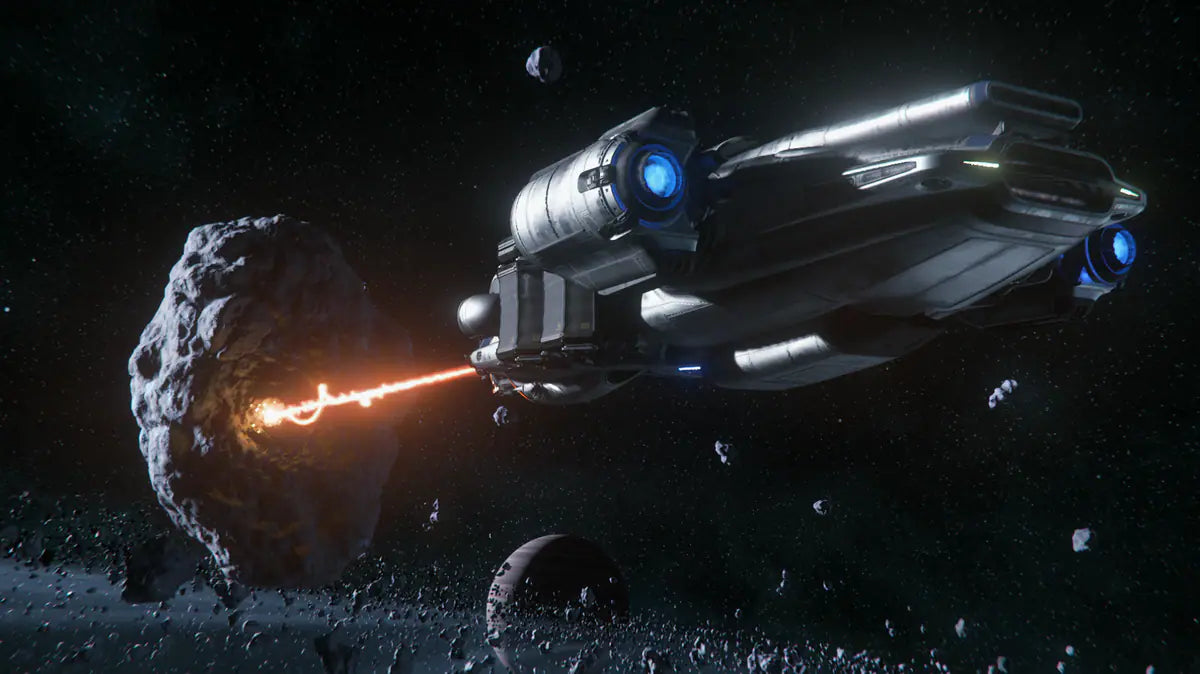
A good mining trip starts before you fire the laser. You find a deposit, decide whether your equipment can handle it and choose what is worth bringing home. A Golem or Prospector lets you learn that routine on your own. Follow the material all the way to a sale before deciding which part needs a bigger ship or another pair of hands.
Your next step
Once you're comfortable in a Golem or Prospector, try group mining in a MOLE. You can then expand to several miners with ships to haul the finished cargo. Arrastra is planned to combine mining and refining; Orion is intended for a larger organization operation. Neither is flight ready. When they arrive, try the full process before replacing a smaller fleet your group already enjoys.
Find a hauler for refined cargoFuture mining and refinery ships
These designs add refining and larger crew operations to the mining career. They are different jobs from solo ship mining or working surface gems.
 Not flight ready
Expanse
Refine ore for the mining team
A planned mobile refinery would process material brought in by other miners.
- Intended role
- Mobile refinery
- Requires
- Ore supplied by miners
Keep in mind: Not flight ready. The Expanse refines supplied ore; it does not mine it.
Why we picked it
This is for the player who wants to help the mining group without working each deposit. Miners would bring you ore and a hauler would take the finished cargo away. That makes the Expanse a separate job in the fleet, unlike a ship designed to mine and refine aboard.
 Not flight ready
Arrastra
Mine and refine with the same crew
The Arrastra is planned to bring extraction and refining together in one larger mining ship.
- Intended role
- Mining / refining
- Crew plan
- Regular mining crew
Keep in mind: Not flight ready. Crew needs and material handling may change during development.
Why we picked it
A regular mining group could keep more of the work aboard one ship instead of using a separate refinery. That is what makes the Arrastra worth watching. When it arrives, try the full route from deposit to finished cargo before changing a fleet that already works for you.
 Not flight ready
Orion
Plan large-scale mining with your group
The Orion is intended for mining with a large crew and supporting ships.
- Intended role
- Industrial mining
- Crew plan
- Organization and support fleet
Keep in mind: Not flight ready. It is a future group operation, not a solo miner upgrade.
Why we picked it
If your group wants to handle extraction, processing and transport together, the Orion is one to watch. When it is added to the game, you can assess it for organization-wide mining trips. Keep the smaller miners for shorter outings and nights with fewer people.
Is a MOLE always better than a Prospector?
No. Some experienced solo miners value the extra equipment and storage enough to accept switching stations. Others would rather keep flying and mining in one seat. Borrow a MOLE for a complete trip, including repositioning and unloading, before deciding whether that extra work suits you.
Best salvage ships for solo players and crews
Scraping and structural salvage are different jobs. A processing buffer is not the same as cargo-grid capacity.
The main difference is what happens to the material. Salvation keeps loads small, Vulture puts boxes in an enclosed hold, and Fortune dispenses them outside automatically. Try the unloading as well as the scraping.
The MOTH can do structural work from the pilot seat, with separate scraping stations for a team. The Reclaimer gives a larger crew more processing and cargo work to share. Decide who will do each part before gathering the ships.
Before you start
Find a suitable wreck and somewhere to sell the material. Leave time for the boxes, or bring a friend with a hauler.
- Scraping, structural salvage and storage
- Scraping removes material from a hull's surface. Structural salvage breaks up and processes the remaining wreck. A buffer holds the material before you box it; the cargo grid secures the containers afterward. Structural material may need further refining before sale.
Our recommendations
5 recommendationsSalvage: choose the right fit
Salvage: choose the right fit
Salvation / MOTH / Vulture / Fortune / Reclaimer
| Ship | Best suited to | Main trade-off | Key features |
|---|---|---|---|
| Salvation | Keep salvage trips small | The small cargo grid means frequent unloading or help moving material. | 6 SCU; Compact external storage |
| MOTH | Break down wrecks or bring a scraping crew | The separate scraping stations need their own operators. | 224 SCU; Structural / separate stations |
| Vulture | Run the whole salvage job yourself | Moving boxes takes you away from working the wreck. | 12 SCU; Enclosed working hold |
| Fortune | Let the ship dispense the boxes | The material still needs to be moved and sold. | 16 SCU; External auto dispenser |
| Reclaimer | Make salvage a crew job | Preparing, moving and unloading the ship take a substantial part of the session. | 420 SCU; Crewed processing / handling |
 Flight ready
Salvation
Keep salvage trips small
A compact salvager with external storage suits short scraping trips and smaller loads.
- Cargo grid
- 6 SCU
- Layout
- Compact external storage
Keep in mind: The small cargo grid means frequent unloading or help moving material.
Why we picked it
Choose the Salvation for shorter scraping trips with a small load to sell at the end. You work with external storage instead of the Vulture's enclosed hold. It suits someone who enjoys finishing one wreck and heading home more than staying out to build up a large haul.
Flight ready
Vulture
Run the whole salvage job yourself
Scrape the hull, box the material and manage it inside your own hold.
- Cargo grid
- 12 SCU
- Handling
- Enclosed working hold
Keep in mind: Moving boxes takes you away from working the wreck.
Why we picked it
The Vulture gives you an enclosed workspace where you can manage the recovered material yourself. If you enjoy that routine but keep filling up, a hauling partner can help. If trips into the hold are what you dislike, compare the Fortune and its external dispensing.
 Flight ready
Fortune
Let the ship dispense the boxes
Automatic external dispensing reduces the need to leave the pilot seat for an internal cargo hold.
- Cargo grid
- 16 SCU
- Handling
- External auto dispenser
Keep in mind: The material still needs to be moved and sold.
Why we picked it
The Fortune is our alternative for players who enjoy scraping but dislike stopping to stack boxes inside a hold. Dispensing them outside removes that particular interruption. A hauling partner can collect the output while you keep working, though selling it remains part of the job.
 Flight ready
MOTH
Break down wrecks or bring a scraping crew
You can operate structural salvage from the pilot position, while separate scraping stations give friends work to do.
- Cargo grid
- 224 SCU
- Operations
- Structural / separate stations
Keep in mind: The separate scraping stations need their own operators.
Why we picked it
Choose the kind of salvage you want to do first. Structural work can stay at the pilot seat, while a scraping trip calls for people at the other stations. For a larger crew handling processing and cargo together, compare the Reclaimer.
 Flight ready
Reclaimer
Make salvage a crew job
Salvage stations, processing and cargo handling give a regular group different parts of the same job.
- Cargo grid
- 420 SCU
- Operations
- Crewed processing / handling
Keep in mind: Preparing, moving and unloading the ship take a substantial part of the session.
Why we picked it
One person's work creates the next person's job, from collecting material to moving it through the ship. That coordination is why you bring a Reclaimer. Arrange hauling help if cargo starts backing up, and keep a smaller salvager for trips on your own.
Vulture and Fortune sit in the same price band but handle output differently. Choose the working layout you prefer; moving to a large crew ship is a different operation, not a required solo upgrade.
MOTH offers a smaller structural operation; Reclaimer gives a regular crew more processing and cargo work. Choose the way you want to divide those jobs.
Change activityCompare the whole salvage session
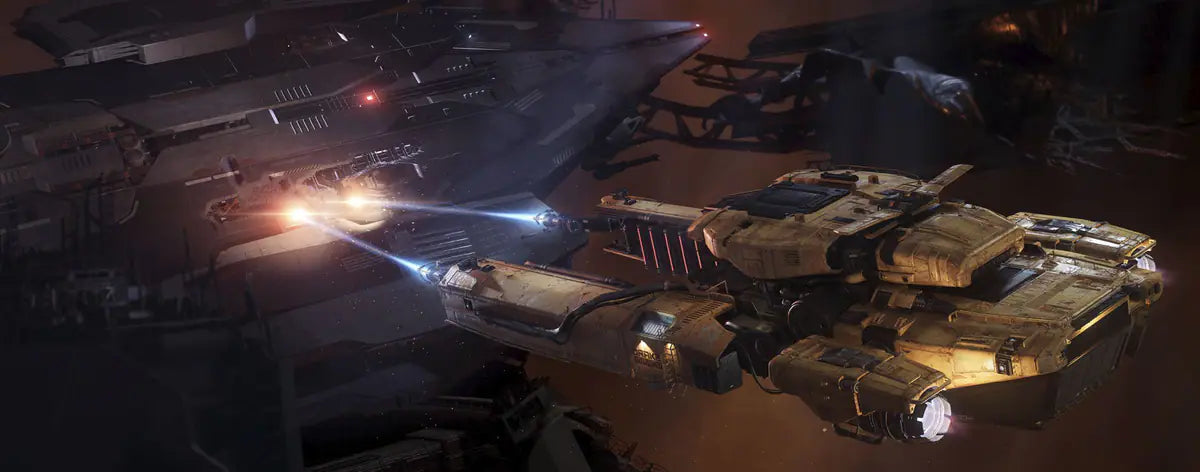
Working the wreck is only part of the trip. You still need to move the recovered material and get it sold. A small salvager lets you do the whole job yourself. A larger ship gives friends separate stations and cargo to handle. Choose the routine you enjoy, including the work after the scraping stops.
Your next step
Start with a Salvation, Vulture or Fortune for solo scraping. If boxes keep taking you away from the wreck, try a hauling partner before buying a bigger salvager. The MOTH adds structural work and separate scraping stations. The Reclaimer gives a regular crew more processing and cargo work to share.
Compare structural salvage shipsShould I measure earnings only while salvaging?
Count the whole session: finding a wreck, reaching it, handling the material and getting it sold. A fast stretch of scraping can hide a slow trip or a lot of unloading afterward.
Best medical ships for rescue and support
Bed count and treatment tier are separate. Tier 2 treats a broader range of injuries than Tier 3; regeneration has its own rules.
Before you start
Bring medical supplies. Plan how you'll reach the patient and where to take them afterward. Check treatment tier, bed count and regeneration rules separately.
- Beds, treatment tiers and regeneration
- Bed count tells you how many patients can use a bed at once. Lower-numbered treatment tiers handle more severe injuries. Regeneration means returning after death. Its rules are separate from treatment and can change with the game.
Our recommendations
6 recommendationsFrom compact ambulance to configurable medical base
From compact ambulance to configurable medical base
C8R Pisces / Cutlass Red / Terrapin Medic / Apollo Triage (includes the Apollo alternative)
| Ship | Treatment facilities | Why choose it | The limit |
|---|---|---|---|
| C8R Pisces | 1 bed / Tier 3 | A small shuttle for patient pickups. | One bed with Tier 3 treatment. |
| Cutlass Red | 2 beds / Tier 3 | Treat two patients at once and bring supplies. | Two beds do not improve the treatment tier. |
| Terrapin Medic | 1 bed / Tier 2 | Tier 2 care for more serious injuries. | One bed, compared with two in the Cutlass Red. |
| Apollo Triage | Two configurable medical rooms. | Choose the rooms your rescue team needs. | Available bed count and tier depend on the fitted modules. |
Apollo room configurations checked 10 September 2026. Treatment capability follows the installed module; do not assume the default loadout includes the most intensive care.
Flight ready
C8R Pisces
Start with a compact ambulance
A small medical shuttle for reaching a casualty, bringing them aboard and providing Tier 3 care.
- Treatment
- 1 bed / Tier 3
- Role
- Compact ambulance
Keep in mind: Injuries beyond Tier 3 treatment need further care elsewhere.
Why we picked it
Choose the C8R when you mainly answer individual rescue calls and want to get straight to the pickup. If you often need to bring back two patients, the Cutlass Red adds bed space. If one patient's injuries are the problem, the Terrapin Medic adds a higher level of treatment instead.
 Flight ready
Ursa Medivac
Reach the patient by rover
A medical rover covers the ground journey when your ambulance cannot land beside the casualty.
- Role
- Ground ambulance
- Travel
- Carrier needed
Keep in mind: Check that you're buying the Medivac variant and that it fits your carrier.
Why we picked it
The rover takes over when the last part of a rescue has to happen on the ground. Drive out from the landing site, collect the patient and return to the ambulance. If your ship can land beside the casualty, you can skip that extra transfer and leave the rover aboard.
 Flight ready
Cutlass Red
Bring back two patients
Two Tier 3 beds and room for supplies let the Cutlass Red care for two casualties at once.
- Treatment
- 2 beds / Tier 3
- Role
- Two-patient support
Keep in mind: More beds do not let you treat more severe injuries. Both are still Tier 3.
Why we picked it
The Red is the step up when rescue calls leave you choosing which casualty to take first. It gives your team room for a second patient and medical supplies without moving to an Apollo. Choose it for more bed space; choose the Terrapin Medic when more advanced treatment matters.
 Flight ready
Terrapin Medic
Treat more serious injuries
One Tier 2 bed can treat injuries beyond the Tier 3 care offered by the C8R or Cutlass Red.
- Treatment
- 1 bed / Tier 2
- Role
- Casualty recovery
Keep in mind: There is one patient bed. Make sure you choose the Medic, not the reconnaissance Terrapin.
Why we picked it
Choose the Medic when the injuries you encounter regularly exceed what a C8R or Cutlass Red can treat. You trade the Red's second bed for more advanced care for one person. That makes it a treatment upgrade, not a larger ambulance.
 Flight ready
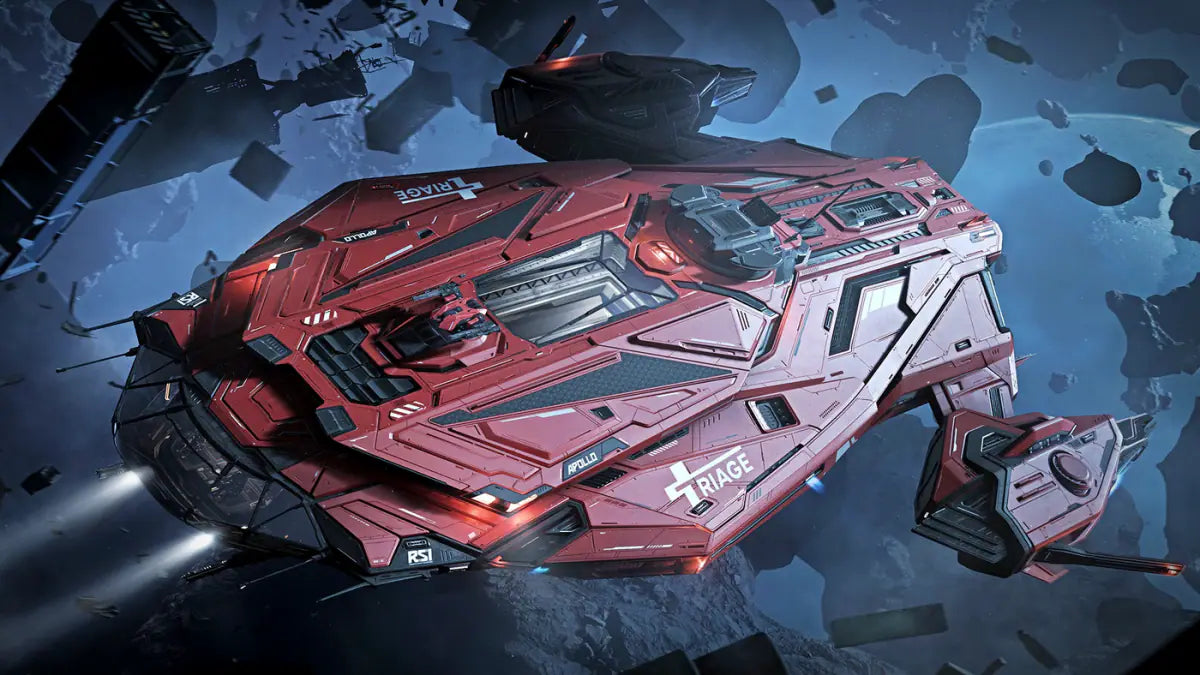
Apollo Triage
Set up a medical base for your team
Two configurable medical rooms let you choose between more patients and more advanced treatment.
- Facilities
- Two configurable medical rooms
- Treatment
- Depends on fitted modules
Keep in mind: Bed count and treatment tier depend on the medical modules included in the offer.
Why we picked it
The Apollo gives a rescue team somewhere to receive patients, not just pick them up. Choose rooms for the injuries you expect to treat and decide how casualties will reach the ship. A C8R or medical rover can still handle the pickup.
 Flight ready
Apollo Medivac
Plan for rescues near a fight
The Medivac is the Apollo variant aimed at riskier rescue work, with configurable rooms for the medical team.
- Facilities
- Configurable medical rooms
- Treatment
- Depends on fitted modules
Keep in mind: Check the defensive equipment and medical modules in the offer. You may still need an escort.
Why we picked it
We'd consider the Medivac for a rescue team that expects to work near fighting, rather than choosing it simply for a larger hospital. As with the Triage, choose between more beds and treatment for more serious injuries. Set up the rooms for your patients, then plan how to protect the pickup.
Choose the care your patients need
Think about the pickup you expect to make. A C8R is a compact ambulance. A Cutlass Red gives two patients a Tier 3 bed each, while a Terrapin Medic treats more serious injuries in one Tier 2 bed. Extra beds and better treatment solve different problems. Plan where to take anyone who needs care your ship cannot provide.
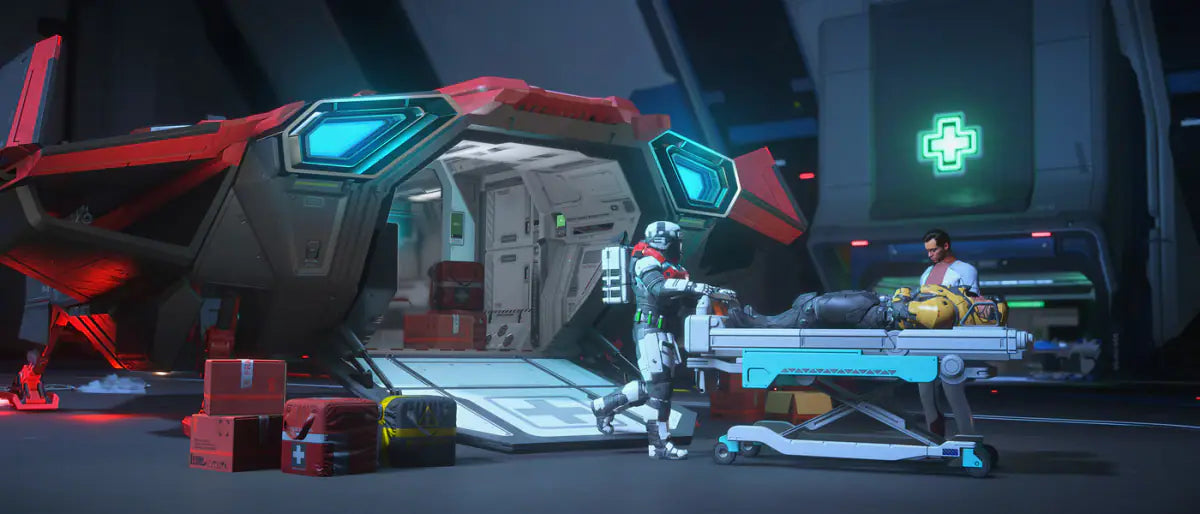
Your next step
What is holding your rescue team back: reaching patients, treating injuries or caring for several people at once? An Apollo gives you configurable medical rooms. An Ursa Medivac can reach a casualty by ground if you have a carrier for it. The Endeavor hospital is a future option, not a treatment base you can use today.
Compare Apollo with smaller ambulancesFuture ships to watch
These ships are still in development. Here is what they are intended to do and who might want to follow them.
 Not flight ready
Endeavor
Follow the planned hospital version
Medical modules are intended to make the Endeavor a treatment base for a rescue team.
- Intended role
- Modular science / medical
- Configuration
- Role-specific modules
Keep in mind: Not flight ready. The base hull is not a hospital; the required modules are separate.
Why we picked it
Smaller ambulances would bring patients to the Endeavor for care. That makes it a place to receive casualties, rather than the ship you take to every pickup. You can build a rescue routine with an Apollo and current ambulances while the larger hospital remains in development.
Should I buy a Carrack just for the medical bed?
We would choose a Carrack for expeditions. If rescue is your main job, start with the dedicated ambulances and compare their beds, treatment tiers and pickup access.
Best exploration ships for personal trips and expeditions
For travel and player-led expeditions today. Intended discovery and data-selling systems are not all delivered.
Before you start
Plan fuel, supplies, a return route and things to do with your friends. Do not count on income from discovery features that are not available yet.
- How many people do you actually need?
- Listed crew is not a minimum for every trip. Check what the pilot can use and which stations need another person. A spare seat does not automatically mean you need someone in it.
Our recommendations
9 recommendations Flight ready
315p
Pack for a trip of your own
An Origin cabin and a small freight hold give one pilot room for supplies and somewhere to stay.
- Role
- Personal exploration
- Cargo
- 12 SCU
Keep in mind: The small hull limits how much equipment and company you can bring.
Why we picked it
Pack your supplies, choose the next stop and travel at your own pace. The 315p gives a solo pilot a cabin without finding jobs for a crew. You can keep it for personal trips even after adding a Zeus Mk II ES for evenings with friends.
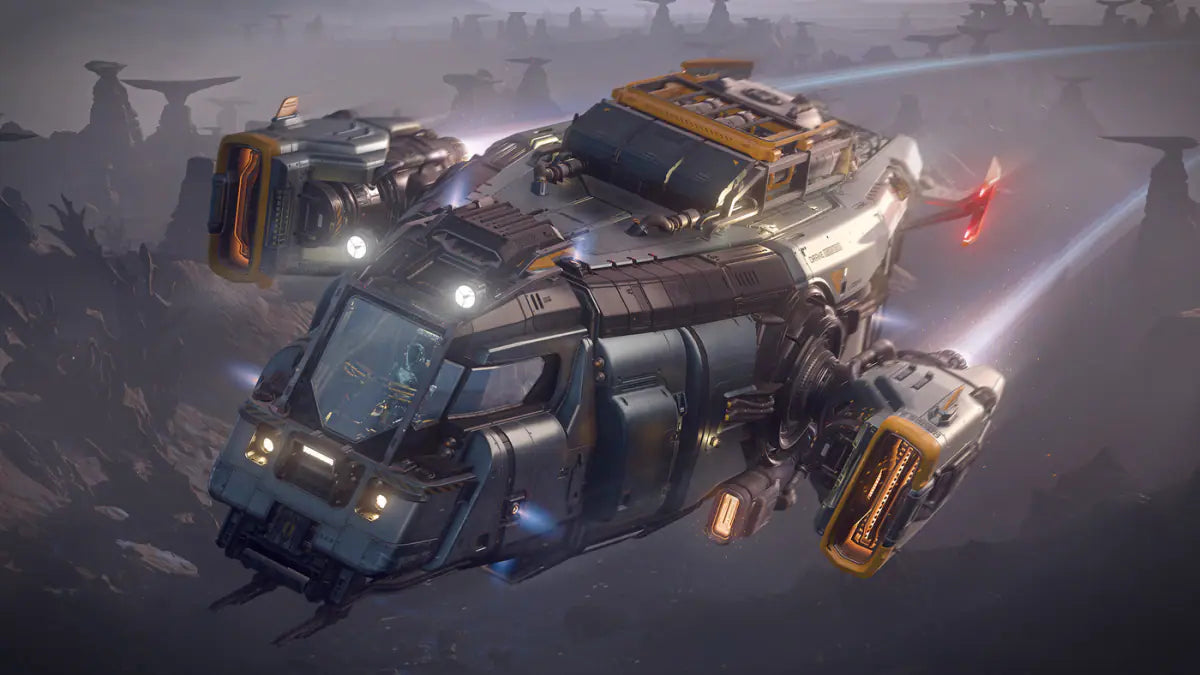 Flight ready
Cutter Rambler
Take the scenic route
A cabin designed for time away from home makes the Rambler a welcoming little travel ship.
- Purpose
- Personal expedition
- Crew plan
- Single pilot
Keep in mind: Choose it for travel and its cabin, not income from unfinished discovery gameplay.
Why we picked it
The Rambler suits trips where the stops matter more than the payout: land somewhere new, take supplies ashore and return to your own little cabin. It keeps those outings personal, without the work of organizing a crew or running a larger expedition ship.
 Flight ready
Zeus Mk II ES
Bring friends on the expedition
Shared living space and room for supplies make the Zeus ES a useful base for a small group.
- Cargo
- 32 SCU
- Role
- Small-group expedition
Keep in mind: The ES and cargo-focused CL have different equipment and cargo layouts.
Why we picked it
If friends want to join the journey, the Zeus ES gives them somewhere to spend time between stops. It can still handle other outings when the expedition ends. Compare the Freelancer DUR for a different shared interior, or the Corsair for separate quarters and more freight space.
Flight ready
Corsair
Give the expedition a base
Separate crew quarters, a rear ramp and freight space give friends a place to return to between stops.
- Cargo
- 72 SCU
- Access
- Rear cargo / vehicle ramp
Keep in mind: The large hull and crew-operated stations add work compared with a smaller travel ship.
Why we picked it
Everyone has a room, and the rear bay can carry supplies or ground equipment that fits. That works well for a trip where the plans keep changing. The Freelancer DUR keeps things smaller; a Carrack adds facilities for smaller craft and a larger expedition crew.
 Flight ready
Freelancer DUR
Travel together without a huge ship
Shared accommodation and rear cargo space give a small exploration group room for supplies.
- Role
- Small shared expedition
- Cargo
- 36 SCU
Keep in mind: Try the narrower interior with the people and equipment you normally bring.
Why we picked it
The rear ramp makes loading for ground stops straightforward, while the shared cabin keeps everyone together. Walk through the ship with your usual gear before choosing it over a Zeus Mk II ES. The Freelancer MAX is the cargo-focused sibling if a larger rover or freight load matters more.
 Flight ready
Terrapin
Take the scouting job
The base Terrapin focuses on scanning and reconnaissance rather than cargo or guest accommodation.
- Role
- Scanning / reconnaissance
- Variant
- Base Terrapin
Keep in mind: Check the scanning functions you want to use. This is not the Medic variant.
Why we picked it
The Terrapin is for the person scouting ahead, not carrying the whole expedition. Its dedicated stations give it a different job from a general travel ship. If you mainly want a cabin for friends and space for their supplies, compare the Zeus Mk II ES or Freelancer DUR.
 Flight ready
Carrack
Bring a rover and a smaller craft
Crew facilities and space for supporting craft let the Carrack act as a base for an expedition.
- Cargo
- 456 SCU
- Operations
- Crewed expedition
Keep in mind: Its size and facilities are easier to make use of with a regular crew.
Why we picked it
Fly out in the smaller craft, take the rover on a ground trip, then meet back aboard. Those are the outings that make the Carrack's facilities useful. If your group mostly stays in the main ship, a Corsair or Constellation Aquila may already cover what you need.
 Flight ready
Constellation Aquila
Explore in a Constellation
A shared interior, cargo space and exploration equipment give the Aquila room for a group trip.
- Role
- Crewed exploration
- Cargo
- 96 SCU
Keep in mind: Check which equipment and supporting craft come with the specific offer.
Why we picked it
The Aquila gives you another layout to try alongside the Corsair. Think about how you load supplies, reach the smaller craft and spend time during the flight. You can bring a group without taking on all the facilities of a Carrack.
 Flight ready
600i Explorer
Explore with a more spacious interior
Expedition facilities and an Origin cabin make the 600i Explorer worth a look when comfort matters too.
- Variant
- Explorer, not Touring
- Cargo
- 44 SCU
Keep in mind: Choose for the current interior, not an announced future rework.
Why we picked it
Take a tour with the people who will join you. If you enjoy the expedition but also want more room to relax aboard, this is the 600i to compare with the Aquila and Carrack. The Touring version has a different guest-focused layout, so check which one the offer includes.
Build around the expedition you can take
Picture the trip. A quiet solo route needs supplies and a cabin. A weekend with friends may also need rooms, a rover and a smaller craft to take out. Our choices focus on facilities you can use for those journeys now. Discovery and data-selling gameplay is still developing, so do not count on it to pay for the expedition.

Your next step
A Cutter Rambler or 315p gives you a place for personal trips. Try a Zeus Mk II ES or Freelancer DUR when friends need room. A Corsair or Aquila takes a larger group, while a Carrack gives you facilities for smaller craft too. Odyssey is a future long-range option. Check any rover against the carrier before buying the pair.
Find a ship to carry your vehicleFuture ships to watch
These ships are still in development. Here is what they are intended to do and who might want to follow them.
 Not flight ready
Odyssey
Plan a longer stay away from base
The Odyssey is intended to support a crew on extended exploration trips.
- Intended role
- Long-range expedition
- Crew plan
- Exploration crew
Keep in mind: Not flight ready. Planned self-sufficiency still requires supplies and people to run the ship.
Why we picked it
Keep an eye on the Odyssey if your group likes spending time away from regular stations. Its planned facilities may help support those trips, but they will also give the crew work to do. Current expedition ships can help you learn which facilities you actually use.
Is the 400i an exploration upgrade?
The 400i can take you on a great trip, but we recommend it mainly for its touring interior. For a small shared expedition, compare the Zeus Mk II ES or Freelancer DUR. Look at the Corsair if separate quarters and more freight space would help.
Best ships for ground teams and vehicle transport
For current ground operations. Confirm the exact vehicle-and-carrier pairing before buying.
Before you start
Try the exact vehicle through the ramp and into the bay. Leave room to enter it and unload with your supplies aboard.
- Cargo capacity doesn't tell you whether a vehicle fits
- SCU is the standard unit of cargo volume. A cargo grid secures containers, but its capacity cannot tell you whether a rover fits through the ramp or has room to unload.
Our recommendations
9 recommendationsFlight ready
Nomad
Take a ROC ground mining
Carry a ROC on the open rear bed, fly to a mining area and head out on the surface.
- Cargo
- 24 SCU
- Carries
- ROC ground miner
Keep in mind: The Nomad can carry a ROC, but that does not mean every rover will fit.
Why we picked it
The Nomad and ROC make a handy solo setup. Land near the area you want to search, unload the miner and bring it back aboard when you're ready to move. Remember that the open bed is also your cargo space, so plan what else needs to come along.
 Flight ready
Ursa
Keep the ground team together
An enclosed rover takes the group from the landing site to the objective in one vehicle.
- Role
- Enclosed rover
- Logistics
- Compatible carrier
Keep in mind: Check that it fits the carrier with room left to board and unload.
Why we picked it
Choose the Ursa when you want the group to arrive together in an enclosed rover, with supplies close at hand. It connects the landing site to the ground mission without splitting everyone across separate vehicles. For treatment aboard the rover, you need the Medivac variant instead.
 Flight ready
MTC
Bring your gear to the objective
A compact ground transport keeps weapons, armor and supplies nearby on bunker and outpost trips.
- Role
- Ground equipment transport
- Travel
- Carrier needed
Keep in mind: Check the fit through your carrier's ramp as well as inside the bay.
Why we picked it
The MTC is for ground trips where bringing the right weapons and supplies matters more than carrying a large squad. It keeps the team's gear near the objective. The Ursa is the alternative for an enclosed group ride, while the Spartan puts more emphasis on moving infantry.
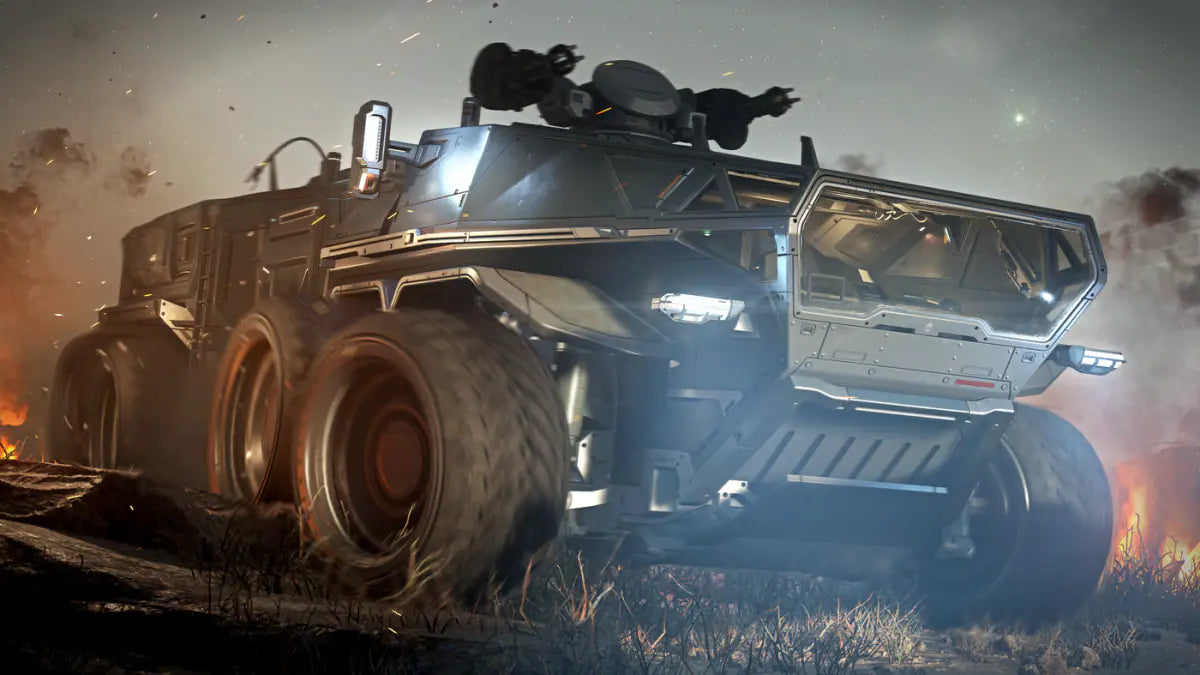 Flight ready
Spartan
Move the whole infantry squad
A ground personnel carrier brings a larger team from the landing zone to its objective together.
- Role
- Ground personnel carrier
- Crew plan
- Infantry team
Keep in mind: It needs a suitable carrier and enough passengers to make use of the seats.
Why we picked it
Bring the Spartan when the ground approach is a squad activity and everyone needs to arrive together. It gives the team a shared ride from the carrier to the objective. A smaller vehicle is enough for one or two players; the Spartan earns its place when you use the passenger space.
Flight ready
Cutlass Black
Take a small ground team
Carry a vehicle that fits and supplies in the rear bay, with a turret for a friend during the flight.
- Cargo
- 46 SCU
- Operating style
- Solo; optional gunner
Keep in mind: Check the exact vehicle fit and leave room to board and unload it.
Why we picked it
The Cutlass Black suits a ground trip that might turn into another kind of mission afterward. For a larger infantry team, look at the Valkyrie. If the height of your vehicle is the issue, compare the Asgard.
Flight ready
Valkyrie
Bring the squad to the landing zone
Troop seats and a deployment bay let a squad travel and leave the ship together.
- Role
- Troop / vehicle deployment
- Operations
- Pilot and ground team
Keep in mind: A mostly solo player will have little use for the large troop compartment.
Why we picked it
The Valkyrie puts the infantry team first: fly in together, leave the seats and deploy through the bay. We'd choose it when transporting the squad is the mission. Look at the Asgard when you need more room for a vehicle, rather than seats for a larger infantry team.
 Flight ready
Asgard
Make room for the vehicle
A vehicle-focused dropship for teams whose main equipment needs to arrive with them.
- Role
- Vehicle deployment
- Access
- Taller vehicle bay
Keep in mind: Verify ramp clearance, turning room and access with the exact vehicle loaded.
Why we picked it
Choose the Asgard when the vehicle is central to the mission, not just something to squeeze in beside the troops. Its taller bay is the reason to shortlist it over the Valkyrie for that job. Keep the Valkyrie on your list when infantry seating matters more.
Flight ready
C2 Hercules
Move a larger ground load
A large bay with front and rear ramps gives you two ways to load and unload heavy vehicles.
- Cargo
- 696 SCU
- Loading
- Front and rear ramps
Keep in mind: Check the whole load and leave enough landing space to get it out.
Why we picked it
Choose the C2 when your team needs a large transport that can return to freight work between ground missions. The through-bay layout gives you an entrance at either end instead of one route for everything. The M2 is the alternative when military deployment is the main job.
 Flight ready
M2 Hercules
Transport heavy military equipment
The military Hercules puts vehicle deployment and protection ahead of carrying the most ordinary freight.
- Role
- Heavy vehicle deployment
- Cargo
- 522 SCU
Keep in mind: The C2 is the cargo-first alternative. The M2 does not offer more freight capacity.
Why we picked it
Compare the M2 and C2 with the ground equipment your group uses. If landing near a fight is a regular part of the job, look closely at the M2's military transport equipment. If you mainly need a large bay for peaceful hauling, the C2 may cover the trip.
Choose the carrier and load together
One ROC, an infantry squad and a heavy ground vehicle need different transport. Start with the people and equipment, then check the ship around that load. Leave room to board, reach supplies and unload. Try the return trip too: everything needs to get back aboard.

Your next step
A Nomad carrying a ROC gives you a small ground-mining setup. A Valkyrie is worth a look for an infantry squad; an Asgard puts more room around the vehicle. The C2 and M2 Hercules handle larger loads. Liberator and Legionnaire are future designs for carrying smaller craft and boarding ships, respectively.
Browse vehicle carriersFuture ships to watch
These ships are still in development. Here is what they are intended to do and who might want to follow them.
 Not flight ready
Legionnaire
Bring a boarding team to a ship
A planned boarding craft focuses on reaching another ship rather than dropping troops on the ground.
- Intended role
- Ship boarding
- Requires
- Boarding team and support
Keep in mind: Not flight ready. Boarding and access systems are still part of the future design.
Why we picked it
The boarding team would take over after the approach, with other ships helping intercept and protect the target area. Follow the Legionnaire if that is the group mission you want to play. For ordinary surface deployment now, compare a Valkyrie instead.
 Not flight ready
Liberator
Take the smaller craft together
A planned light carrier would transport small spacecraft and ground equipment for a group.
- Intended role
- Light carrier
- Intended load
- Small craft and ground vehicles
Keep in mind: Not flight ready. Exact craft fit, clearance and onboard facilities need confirmation.
Why we picked it
Your group could use a Liberator to take racers to an event or move smaller ships to a shared starting point. Decide which craft you want to bring, then check their fit when the carrier is available. Do not assume every combination will fit the pads and vehicle area.
Can cargo capacity tell me whether a vehicle fits?
No. SCU measures cargo volume, not the width of a ramp or the shape of a bay. Check the exact vehicle and carrier together, including room to get out again.
Best racing ships and ground-racing options
For spacecraft racing and gravlev events. The stock 4.10 figures are not measured lap times.
Try the racers on the same course. The M50 carries more hydrogen than the base Razor; the Razor is narrower and has a higher listed forward-boost speed. Those figures cannot tell you which one you'll lap faster in. The Fury LX also needs transport because it has no quantum drive.
Pulse LX keeps the bike compact, Nox retains onboard guns, and X1 Velocity pairs naturally with the 400i's bike bay. Dragonfly adds a passenger seat for other trips. Check the event class, compare the bikes on the same terrain and arrange transport home.
Before you start
Gravlev bikes hover above the surface; spacecraft racers use a different kind of course. Check the event class and arrange transport, fuel and recovery.
- SCM speed is not a lap time
- SCM is the listed normal combat-flight speed. Boost, handling, fuel use, the course and your flying all affect a race. A higher SCM number does not tell you which racer will be fastest at your event.
Our recommendations
9 recommendationsM50 vs Razor: fuel reserve or boost-focused runs?
M50 vs Razor: fuel reserve or boost-focused runs?
M50 / Razor
| Ship | A useful reason to choose it | The trade-off | Hydrogen tank |
|---|---|---|---|
| M50 | More hydrogen reserve for planning repeated practice laps. | 11 m wide versus Razor's 9 m; lower listed forward-boost speed. | 1.6 SCU |
| Razor | A narrower hull and 595 m/s forward boost versus M50's 490 m/s. | Less hydrogen on board; a boost-speed advantage is not a lap-time result. | 0.5 SCU |
Stock figures from game-data build 4.10.0, not measured lap times. Fuel use, route and pilot technique change how those differences feel on the course.
 Flight ready
X1 Velocity
Pair a racing bike with your 400i
The lightweight, unarmed Velocity is the racing X1, with a natural home in the 400i's dedicated nose bay.
- Equipment
- Unarmed racing variant
- Carrier pairing
- 400i bike bay
Keep in mind: The Velocity has no gun. Choose the base X1, X1 Force or Nox if onboard weapons matter for your other trips.
Why we picked it
If you already tour in a 400i, the X1 Velocity gives its separate bike bay a purpose: land, unload and head for a surface course without using the main hold for the bike. You can use other suitable carriers too. Owning a 400i simply gives you a ready-made place for it.
 Flight ready
Mustang Gamma
Start learning a racing course
The racing Mustang gives you a dedicated spacecraft for practicing lines, corners and braking points.
- Type
- Spacecraft racer
- Best suited to
- Course practice
Keep in mind: It gives up everyday versatility for racing. Keep transport for other missions.
Why we picked it
A familiar course is a good place to learn what you want from a racer. Spend time in the Gamma before moving to a more expensive ship, then try alternatives on that same route. Consistent laps will tell you more than a single fast straight.
 Flight ready
Fury LX
Take a racing snub to the event
The compact Fury LX suits a race where you already have transport to the course.
- Type
- Racing snub
- Travel
- Carrier / local staging
Keep in mind: It has no quantum drive. Arrange a carrier or a nearby place to start and finish.
Why we picked it
The Fury LX is easier to enjoy when your group already carries its racers to events. If you would need to arrange another ship for every outing, compare a Mustang Gamma or M50 first. Getting to the race should not be the reason you miss it.
 Flight ready
Pulse LX
Take a compact racer along
A small frame and extra maneuvering thruster make the Pulse LX a racing-focused bike designed to travel aboard a wide range of ships.
- Layout
- Compact frame / personal storage
- Travel
- Carrier needed
Keep in mind: Check the loading path in your own carrier. A compact frame does not guarantee that every door and bay will fit.
Why we picked it
Start with the Pulse LX if space aboard your carrier is tight. Its compact frame is the main reason we would shortlist it for trips where the bike shares a ship with other equipment. There is also a small storage compartment for personal gear. The X1 Velocity is worth considering if you already have a 400i with its dedicated bike bay.
 Flight ready
Nox
Keep guns aboard your racing bike
Two Size 1 guns give the Nox an option for armed surface rides between races, unlike the unarmed X1 Velocity.
- Weapons
- Two Size 1 guns
- Travel
- Carrier needed
Keep in mind: The open riding position leaves you exposed. Having guns does not make it a protected combat vehicle.
Why we picked it
Choose the Nox if you want to race and still have onboard weapons for other surface trips. That gives it a clear difference from the stripped-back X1 Velocity. You ride alone, so a Dragonfly is more useful when taking a passenger matters. For racing, check that the event accepts your bike and fitted equipment.
 Flight ready
Dragonfly Black
Race, then take someone along
A passenger seat gives this utility gravlev bike a job between the surface events that allow it.
- Type
- Utility gravlev / event racing
- Seats
- Pilot and passenger
Keep in mind: Not every racing class accepts a mixed-purpose bike. Check the event rules.
Why we picked it
You can bring someone on a ground ride when you're not practicing the course. That makes the Dragonfly useful beyond racing. Choose a Nox or X1 Velocity if you want a more focused racer, with a carrier still needed for travel between worlds.
 Flight ready
M50
Carry more fuel for practice laps
The M50 has more hydrogen capacity than the base Razor in this comparison.
- Type
- Spacecraft racer
- Hydrogen tank
- 1.6 SCU
Keep in mind: A larger tank does not prove lower fuel use or faster laps.
Why we picked it
If you spend an evening repeating the same course, fuel reserve is worth paying attention to. The Razor is narrower and has a higher listed forward-boost speed instead. Try both through the gates and corners you actually race, including the refueling stops.
Flight ready
Razor
Try a narrower racer
The base Razor has a narrower hull and higher listed forward-boost speed than the M50.
- Variant
- Base Razor
- Hydrogen tank
- 0.5 SCU
Keep in mind: It carries less hydrogen. How often you refuel depends on the route and how you fly.
Why we picked it
The narrower body is worth trying through tight gates, and the boost speed may interest you on longer straights. Neither guarantees a better lap. Compare it with the M50 on your usual course. These differences refer to the base Razor, not the LX or EX.
 Flight ready
Sabre Peregrine
Take a Sabre racing
The Peregrine swaps the Sabre family's combat focus for a dedicated racing role.
- Variant
- Racing Sabre
- Crew
- 1
Keep in mind: Choose it as a racer, not as a Sabre that can also fight.
Why we picked it
Check the view from the cockpit, your braking points and how you recover after missing a gate. Try the same sections in an M50 or Razor. The ship you can lap consistently in is more useful than one that only feels quick when everything goes perfectly.
Try the racers on your course
Start with the event. A spacecraft race and a surface-bike route are different ways to spend an evening. Choose something you can place confidently through the corners and gates. Speed figures can suggest what to test, but repeated clean laps tell you more than one perfect run.

Your next step
Learn a spacecraft course in a Mustang Gamma or another entry racer, then try an M50 or base Razor on the same route. Surface racing needs its own bike and transport. The Ranger RC and G12r are not released. If your group already likes its racers, a carrier or recovery craft may be the more useful next purchase.
Plan transport to a surface eventFuture wheeled racers
These are planned options for racing on wheels, not spacecraft or gravlev bikes. Check the events they can enter when they arrive.
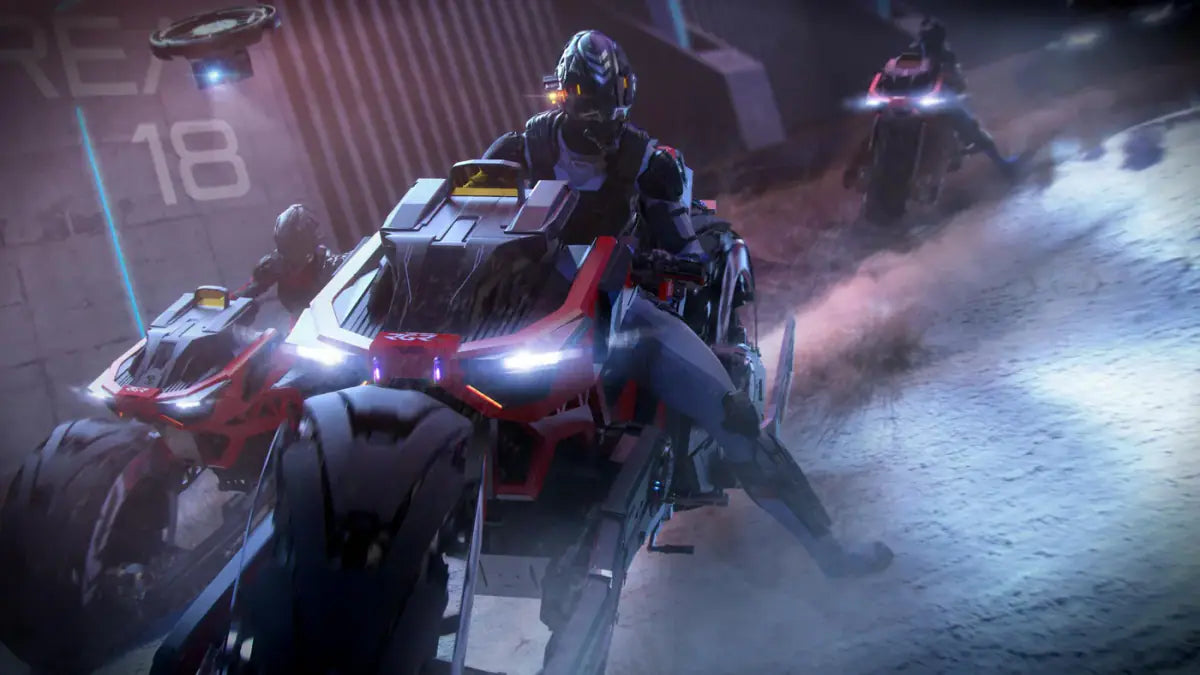 Not flight ready
Ranger RC
Try racing on wheels
The competition Ranger is planned for motorcycle-style surface events.
- Intended role
- Wheeled racing bike
- Variant
- RC competition model
Keep in mind: Not flight ready. RC is the racing model; CV is for utility and TR for combat.
Why we picked it
If you'd rather ride on wheels than hover over the ground, the Ranger RC is one to follow. The finished handling and the routes you race will decide how it compares with current bikes. You'll also need a carrier to get it to the event.
 Not flight ready
G12r
Watch for a wheeled racing rover
The racing G12 is intended for ground competition rather than touring or gravlev riding.
- Intended role
- Wheeled racing
- Logistics
- Carrier and suitable course
Keep in mind: Not flight ready. Handling, event eligibility and carrier fit remain unconfirmed.
Why we picked it
The G12r offers a future way to race on wheels without choosing an open bike. Follow the events it can enter as well as the vehicle itself. Wait for confirmed dimensions and clearance before choosing a carrier just for it.
Is SCM speed a racing ranking?
No. SCM speed is one figure. Acceleration, handling, course layout and how consistently you fly all affect the result.
Best ships for refueling, recovery and repair support
Refueling and towing are current support roles. The dedicated repair designs remain unreleased.
Before you start
Before leaving, ask how much fuel they need or where they want the ship towed. Agree where to meet and how you'll get ready for the next call.
- How many people do you actually need?
- Listed crew is not a minimum for every trip. Check what the pilot can use and which stations need another person. A spare seat does not automatically mean you need someone in it.
Our recommendations
6 recommendations Flight ready
Starlite
Start with smaller refueling calls
A compact two-pod tanker lets one pilot provide fuel without taking out a full-sized Starfarer.
- Service
- Refueling
- Operating style
- Single-seat tanker
Keep in mind: Check that the fitted pods carry the type and amount of fuel the customer needs.
Why we picked it
Meet the customer, deliver the fuel and get ready for the next call. The Starlite keeps that first service routine small. Once you regularly need more supply, compare the Starfarer, including the work of filling your own tanks again.
 Flight ready
MPUV Tractor
Help load the hauler
A dedicated tractor craft gives a loading team a way to move freight around ships and facilities.
- Service
- Cargo handling
- Travel
- No quantum drive
Keep in mind: It has no quantum drive, so it needs local storage or transport.
Why we picked it
Keep it near a place where your group regularly loads cargo. One player can move the freight while the hauler gets ready to leave. An ATLS handles boxes from a suit on the ground; the SRV has the different job of towing a ship.
 Flight ready
ATLS
Take the cargo-loading job
A tractor-equipped power suit helps you move boxes around a ship or loading area.
- Current role
- Cargo handling suit
- Not included
- Construction / mining
Keep in mind: The standard ATLS handles cargo. GEO is the mining variant.
Why we picked it
The ATLS is useful when loading is your part of the group's evening. Stay with the boxes while the pilot gets the hauler ready, then help clear the load at the destination. The MPUV Tractor does a related job from a small flying craft when the work covers a wider area.
Flight ready
SRV
Bring a stranded ship home
A towing tractor lets the SRV move a ship to a destination you agree with its owner.
- Service
- Tractor towing
- Not included
- Dedicated repair
Keep in mind: Towing moves the ship; it does not repair the damage.
Why we picked it
Ask what needs moving and where it should go. Check permission and towing limits before leaving, then arrange what happens when the hull arrives. Repairing it or processing it as salvage is another job, not part of the tow.
 Flight ready
Starfarer
Keep a fleet supplied with fuel
Large tanks and refueling equipment give a group its own tanker for longer operations.
- Service
- Fuel support
- Operations
- Larger tanker logistics
Keep in mind: You need to resupply the tanker, crew it and find enough demand for the fuel.
Why we picked it
The Starfarer is worth considering when you already know who needs the fuel. Plan the meeting points and service calls with your group, including how the tanker gets filled again. The Starlite keeps smaller jobs simpler; the Gemini is the military variant to compare for a fighting fleet.
 Flight ready
Starfarer Gemini
Take fuel support with the combat fleet
The military Starfarer adds defensive equipment, including a forward missile rack, to its tanker role.
- Service
- Fleet refueling
- Variant
- Military-oriented tanker
Keep in mind: Check the fitted equipment and arrange an escort where needed.
Why we picked it
The missile rack is one difference to examine beside the standard Starfarer. Your main job is still bringing fuel to the fleet, so plan around the route, supply and crew. Protection matters, but it does not replace a plan for getting the tanker out of trouble.
Start with a service people need
Someone is short of fuel, a ship needs towing or the fleet has cargo to load before leaving. If you enjoy solving those problems, support work gives you plenty to do. Pick the job first. A tanker, tug and loading craft help in different ways.
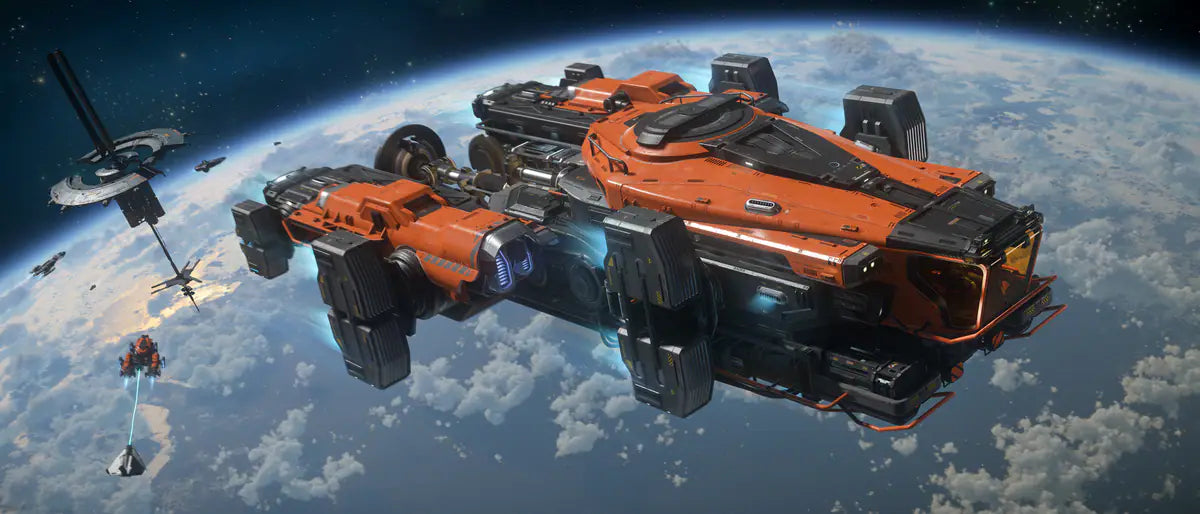
Your next step
Try a smaller refueling call in a Starlite or a tow in an SRV. Look at a Starfarer when your regular customers need more fuel. The Vulcan is planned to repair, refuel and rearm; the Crucible is designed for dedicated repair work. Both remain unreleased, so use current ships for services you want to provide now.
Find a hauler for fleet suppliesFuture ships to watch
These ships are still in development. Here is what they are intended to do and who might want to follow them.
 Not flight ready
Vulcan
Answer different kinds of service call
The Vulcan is planned to repair, refuel and rearm other ships.
- Intended role
- Repair / refuel / rearm
- Listed crew
- 1-3
Keep in mind: Not flight ready. These are intended services, not jobs available from the Vulcan today.
Why we picked it
If you like variety in support work, this is a design to watch. One call might need fuel and another ammunition or repairs. When those tools arrive, compare the supplies and crew they need with the dedicated ships you would otherwise use.
 Not flight ready
Crucible
Bring the repair workshop
A dedicated repair design is intended to help a crew get damaged ships working again.
- Intended role
- Dedicated repair
- Crew plan
- Fleet support crew
Keep in mind: Not flight ready. Repair limits and the craft its facilities can accommodate need confirmation.
Why we picked it
This is for players who want to do the repair, not just tow the hull home. A tug could bring the damaged craft while other players supply and operate the workshop. The Crucible would work alongside an SRV, not simply replace it with a larger towing ship.
Can an SRV replace a repair ship?
No. An SRV tows the ship. Repairing the damage is another job after it arrives. The Crucible is a planned repair ship, not a capability included with the tug.
Best luxury ships for touring with friends
For personal touring and hosting, not a promise of paid passenger missions.
Before you start
Think about who will join you and which rooms they will use. A larger yacht also needs more support. Hosting friends is different from paid passenger missions.
- How many people do you actually need?
- Listed crew is not a minimum for every trip. Check what the pilot can use and which stations need another person. A spare seat does not automatically mean you need someone in it.
Our recommendations
7 recommendations Flight ready
100i
Enjoy a small Origin cabin
A walkable cabin gives you somewhere to settle in between personal trips and short stops.
- Purpose
- Solo touring
- Cargo
- 2 SCU
Keep in mind: The small hold suits errands and supplies rather than regular freight work.
Why we picked it
If you like the interior and usually travel alone, the 100i can be all the touring ship you need. The 300i offers a larger cabin. The 85X is another small option if bringing a passenger matters more than having somewhere to walk around.
 Flight ready
300i
Make yourself at home between stops
The 300i gives you a cabin for solo trips and a small hold for supplies and errands.
- Purpose
- Personal touring
- Cargo
- 8 SCU
Keep in mind: Choose it for the interior and trips you enjoy, not for maximum cargo capacity.
Why we picked it
The 300i is a personal travel ship you can also use for everyday stops. You get the Origin cabin without moving into a yacht built around guests. A 400i becomes more useful when friends regularly want to join the trip.
 Flight ready
85X
Take someone on a short flight
Two seats let you share a trip without taking out a large touring ship.
- Purpose
- Two-seat runabout
- Accommodation
- No expedition cabin
Keep in mind: There is no walkable cabin for an extended stay.
Why we picked it
The 85X is a small runabout for a flight together, not a yacht where guests move around. Pick it when the second seat is what you need. For a solo trip with a cabin, compare the 100i; for shared living space, look at the 400i.
 Flight ready
400i
Bring a bike on a comfortable trip
A dedicated bike bay and comfortable crew quarters suit trips that mix flying with a ride on the surface.
- Purpose
- Personal luxury touring
- Listed crew
- 3
Keep in mind: Cargo-first ships make better use of the space if hauling is your main job.
Why we picked it
The 400i is our smaller touring choice for friends who want to get out and do things between flights. Its separate nose bay takes an X1, leaving the main hold for other supplies. Choose the 600i Touring when guest suites and spending time aboard matter more than that bike-carrying layout.
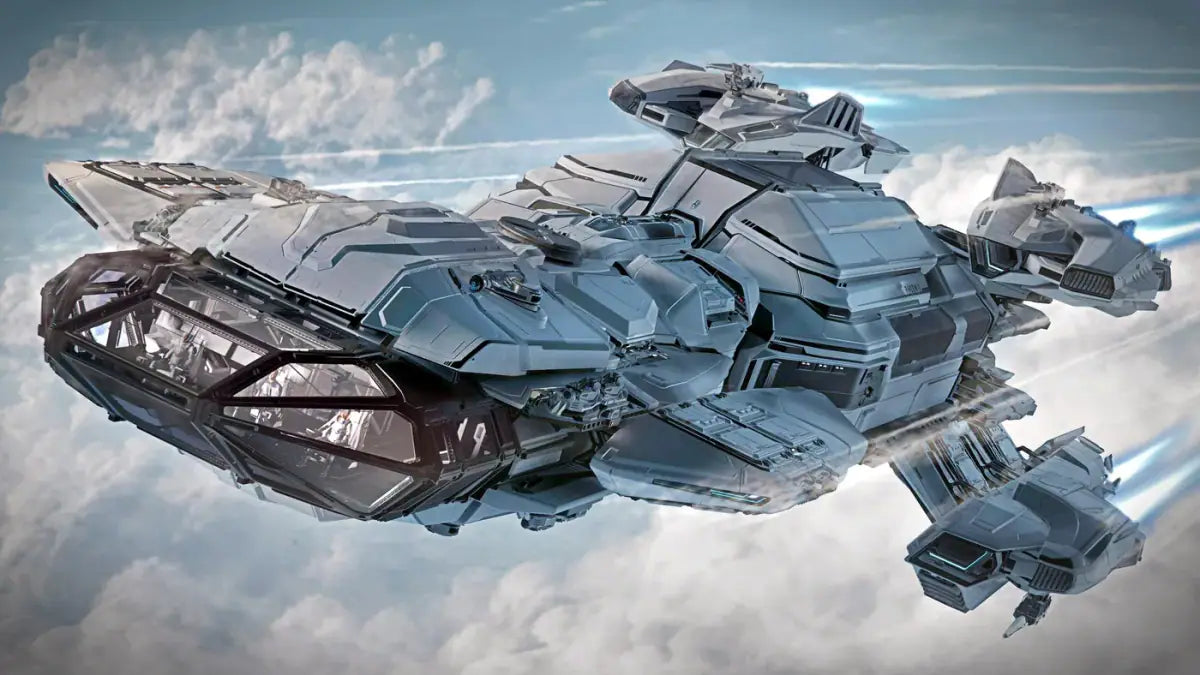 Flight ready
Constellation Phoenix
Spend the flight in a guest lounge
A master suite, guest accommodation and a bar make the Phoenix a social alternative to a working Constellation.
- Purpose
- Luxury guest transport
- Accommodation
- Guest lounge and suites
Keep in mind: Check the included craft and which guest facilities are usable in the current ship.
Why we picked it
The Phoenix gives a familiar Constellation a different purpose: friends can meet around the bar and dining area while you travel. We'd choose it for that shared lounge, not for hauling the most freight. The 600i Touring is the alternative when dedicated guest suites matter more.
Flight ready
600i Touring
Make room for your guests
Guest suites, a lounge and a bar give friends their own spaces as well as somewhere to gather during the flight.
- Purpose
- Social / touring interior
- Listed crew
- 5
Keep in mind: Make sure you choose Touring. The Explorer has a different interior and purpose.
Why we picked it
Choose the Touring when you're inviting people aboard for the journey itself. Guests can leave their suites and meet in the lounge, so the ship becomes part of the evening rather than just transport. The 400i suits a smaller traveling group; the 600i makes hosting the reason to step up.
 Flight ready
890 Jump
Give the gathering its own yacht
A capital-sized ship with guest areas lets you host an event as well as travel to one.
- Purpose
- Group hosting
- Operations
- Capital ship crew
Keep in mind: You need people to operate and support the yacht as well as guests to enjoy it.
Why we picked it
The 890 Jump suits a gathering where spending time aboard is the point. Hosting, flying and supporting the trip become jobs to share. For a few friends on an ordinary evening, the 600i Touring is also worth considering.
Choose somewhere you want to spend time
You do not need a profit calculation to enjoy a ship. A cabin you like, room for friends and a journey worth taking can be the whole point. Try a 100i or 300i for personal trips, or an 85X to take a passenger. A larger yacht makes sense when spending time aboard is part of the evening.
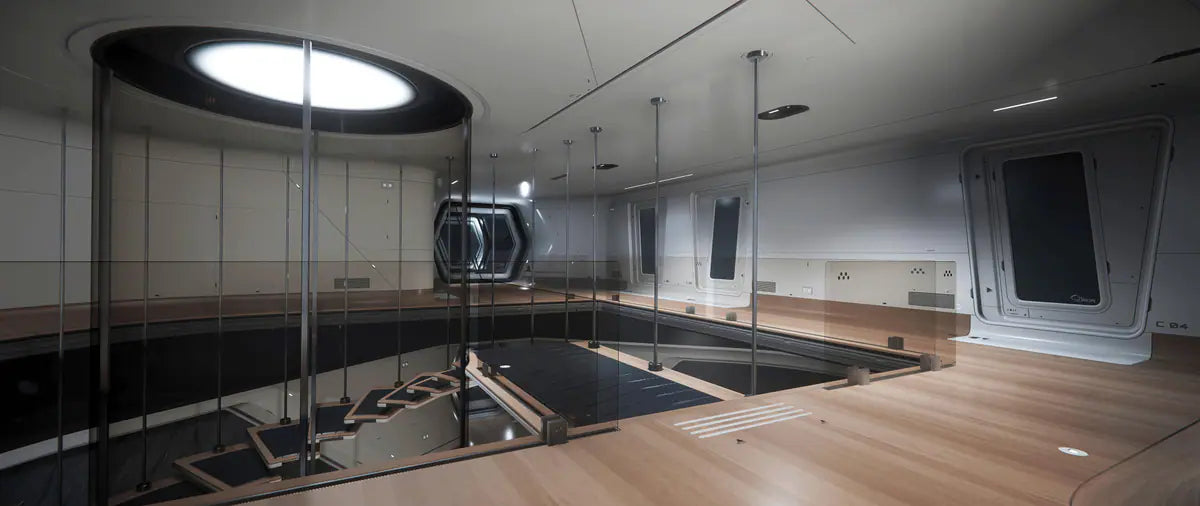
Your next step
Look at a 400i or Constellation Phoenix when you want shared space, then try the 600i Touring with the people who will use its guest areas. An 890 Jump can host a larger event with a crew to run it. You don't need to climb the whole ladder. The E1 Spirit and Genesis are future commercial passenger ships, a different job from hosting friends.
Compare smaller exploration shipsFuture passenger ships
These ships are planned for commercial passenger services, rather than private trips with friends.
 Not flight ready
E1 Spirit
Plan a passenger service
The passenger-focused Spirit is intended for premium travel on a smaller scale than the Genesis.
- Intended role
- Premium passenger service
- Career
- Future passenger operations
Keep in mind: Not flight ready. Commercial passenger gameplay is different from hosting friends aboard a yacht.
Why we picked it
Looking after passengers could make the journey your job, from boarding to arrival. Follow the E1 if that interests you more than moving freight. A touring ship lets you host friends now, but the paid service depends on passenger missions and systems still to come.
 Not flight ready
Genesis Starliner
Run a larger passenger route
A planned passenger transport would give a crew a ship for regular commercial departures.
- Intended role
- Commercial passenger transport
- Crew plan
- Staffed service operation
Keep in mind: Not flight ready. Seat count does not tell you which missions or operating costs will be available.
Why we picked it
Bring passengers aboard, complete the flight and get ready for the next departure. That is the service the Genesis is designed around, rather than a private gathering on a yacht. Watch the cabin and mission systems before making plans that rely on passenger income.
Does luxury mean exploration?
A yacht can take you to interesting places, but our touring choices put the cabin and guests first. Exploration ships are selected for the supplies, equipment and smaller craft they can bring on an expedition.
Data, science and other specialist ship choices
Herald, Mako, Sen and Mercury are flyable, but their intended specialist professions are incomplete. Endeavor is not flight ready.
Before you start
Check which equipment works now and which parts of the career are still planned. Keep an everyday ship for missions the specialist cannot do.
- Flight ready does not mean everything is finished
- A ship can be flyable while some equipment, missions and intended gameplay are still incomplete. Check the features you want to use now as well as its future plans.
Our recommendations
4 recommendationsFlight ready
Herald
Try a dedicated data-courier design
A compact information courier gives data-running fans a distinctive ship to own and fly.
- Design role
- Data courier
- Career
- In development
Keep in mind: The intended paid data-running career is not fully available.
Why we picked it
Choose the Herald for its compact courier design and cabin, with the understanding that its main career is still developing. It is a ship for someone who enjoys that particular role and look now. The Mercury is a more practical alternative if the purchase also needs to cover regular freight jobs.
 Flight ready
Reliant Sen
Take a small research ship out
The science-focused Reliant gives observation trips and research roleplay a ship of their own.
- Design role
- Science / research
- Career
- In development
Keep in mind: Science mechanics are incomplete. Check the specific functions you want to use now.
Why we picked it
The Sen suits someone who enjoys the research theme and wants a compact ship to explore it in. The Reliant Mako is the sibling for camera-based reporting. Neither requires you to commit to a large future laboratory to enjoy a specialist interest.
 Flight ready
Reliant Mako
Cover a player-run event
An optical camera turret gives you a way to follow races, fleet gatherings and other players' stories.
- Equipment
- Optical camera turret
- Design role
- Reporting
Keep in mind: Check the camera functions you need. A complete paid reporting career is not available.
Why we picked it
If you'd rather plan the shots than join the race, take a look at the Mako. Try the camera on an event you could actually cover and see whether it helps you get the footage you want. The Reliant Sen serves the research theme instead.
 Flight ready
Mercury
Haul cargo while data running develops
An internal freight bay gives the Mercury work you can do now alongside its data-courier role.
- Current use
- Cargo transport
- Design role
- Data courier
Keep in mind: Cargo transport is available, but the intended data-running profession is incomplete.
Why we picked it
The Mercury is worth a look if you like the Herald's courier idea but still want regular cargo jobs. Walk from the rear ramp to the cockpit and try loading the bay. That is the ship you'll use while waiting for more of its data role to arrive.
These are different specialist interests, not a three-step career ladder. Buy for usable features or roleplay today, not an assumed future income stream.
Separate the ship from the future profession
You might want to film a race, join a research-themed trip or follow data running as it develops. These ships give you something different to explore outside cargo and combat. Their intended careers are not fully available yet, so take a close look at the features and activities you can enjoy now.
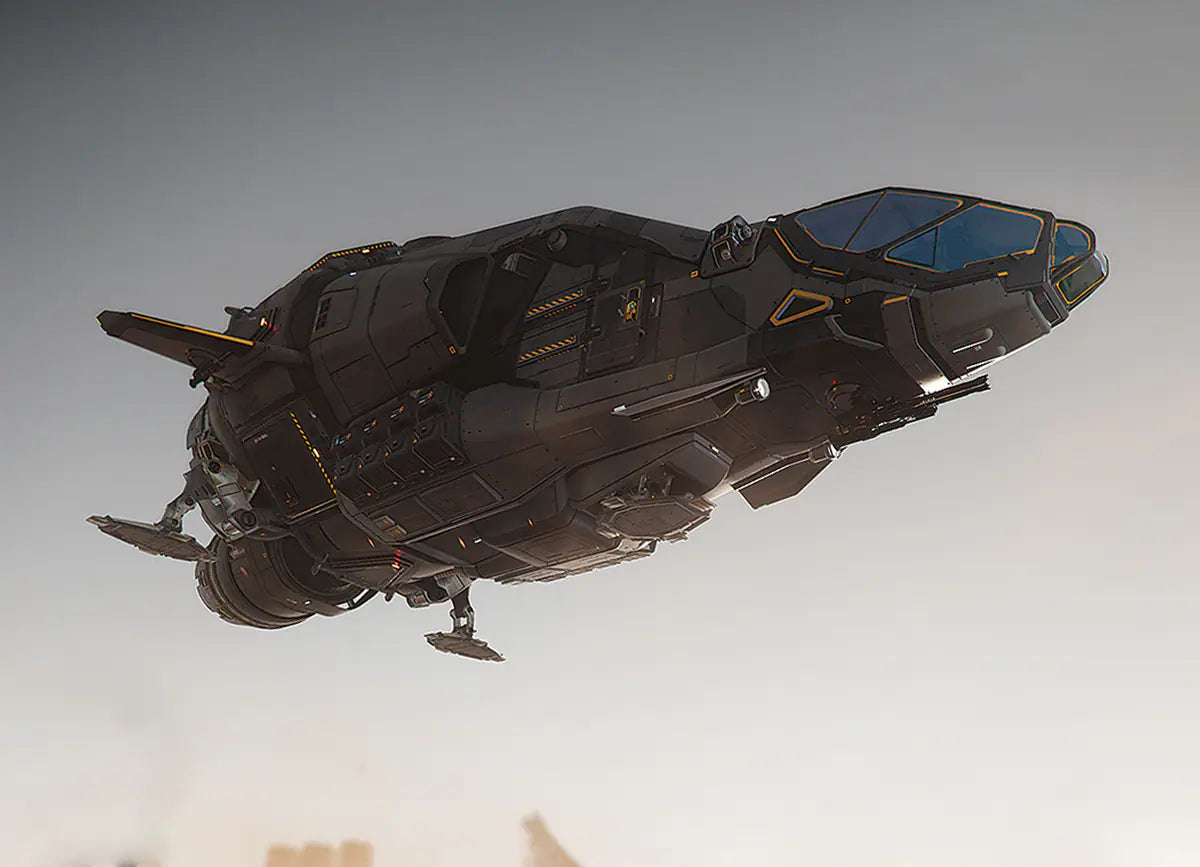
Your next step
Try the Mako camera at a player-run event, or tour the Herald and Reliant Sen if their specialist roles interest you. The Mercury also has a cargo bay for everyday work. Endeavor is not flight ready; its research modules could give a science team a larger base once the relevant gameplay is available.
Find a flexible everyday shipFuture ships to watch
These ships are still in development. Here is what they are intended to do and who might want to follow them.
Not flight ready
Endeavor
Plan a research base for your crew
Planned research modules would give a science team a larger shared laboratory.
- Intended role
- Modular science / medical
- Configuration
- Role-specific modules
Keep in mind: Not flight ready. A base hull does not include an equipped laboratory; check the research modules.
Why we picked it
Choose the research facilities your team wants to use, then check what the offer includes. The modules decide which work the ship could support. A hospital is a different configuration, not something that automatically comes with the science setup.
Does flight ready mean the career is finished?
No. The ship can be flyable while some equipment, missions or intended gameplay is still unfinished.
Ships for base-building plans and large operations
ATLS, CSV-SM and freighters can move materials now. Galaxy, Pioneer and Liberator are not flight ready; their planned roles remain future options.
Before you start
Check the hull, included modules and release status. These are future building plans; current freighters can handle supply runs now.
- Check which module comes with the ship
- A module changes the ship's setup for a particular job. The base hull does not include every planned module, so check the specific offer.
- Flight ready does not mean everything is finished
- A ship can be flyable while some equipment, missions and intended gameplay are still incomplete. Check the features you want to use now as well as its future plans.
Our recommendations
5 recommendationsFlight ready
ATLS
Take the cargo-loading job
A tractor-equipped power suit helps you move boxes around a ship or loading area.
- Current role
- Cargo handling suit
- Not included
- Construction / mining
Keep in mind: The standard ATLS handles cargo. GEO is the mining variant.
Why we picked it
You can use an ATLS now to move boxes between stores, vehicles and ships. That is useful work for a group even while construction systems develop. A CSV-SM carries supplies across the ground, and a freighter brings them from farther away.
 Flight ready
CSV-SM
Move supplies around the site
A surface cargo vehicle handles short material runs around an outpost, hangar or loading area.
- Current role
- Surface materials transport
- Not included
- Building fabrication
Keep in mind: SM transports materials. It does not fabricate buildings.
Why we picked it
Once the spacecraft has landed, you may still need to move supplies across the ground. That is the CSV-SM's job. An ATLS helps with individual boxes at the loading point, while the CSV carries them along the route. Remember to plan its ride to the next site.
Flight ready
C1 Spirit
Start with smaller supply runs
A rear tractor and enclosed hold help one pilot bring materials and supplies to the team.
- Cargo
- 64 SCU
- Loading
- Rear tractor
Keep in mind: This is a cargo ship, not built-in construction machinery.
Why we picked it
Load at your staging point, deliver to the group and return for the next batch. The C1 keeps the run small enough to manage alone. If those loads regularly fill the hold, look at a larger hauler instead of making repeated trips for the same equipment.
Flight ready
RAFT
Keep supplies coming to the group
External cargo access makes the RAFT useful for repeated material runs.
- Cargo
- 192 SCU
- Loading
- External freight
Keep in mind: Check the containers and facilities on the route. The RAFT carries materials; it does not build structures.
Why we picked it
You can reach the load from outside without filling an internal room. Try that with the supplies your group already needs. The RAFT gives you a hauling job now, whether the destination is a current fleet operation or part of a future building plan.
Flight ready
C2 Hercules
Bring the bigger supply load
A large bay and ramps at both ends let you bring supplies or compatible ground vehicles to the group.
- Cargo
- 696 SCU
- Loading
- Front and rear ramps
Keep in mind: The C2 transports equipment. It does not construct buildings.
Why we picked it
If every supply run leaves something behind, the C2 is worth a look. Try loading the full set of equipment and arrange help unloading at the other end. It can support your fleet now without depending on a future construction ship.
Give every ship a job
Who wants to build, and who enjoys bringing the supplies? Both belong in the plan. An ATLS, CSV-SM and freighters can help your group move materials now. Galaxy and Pioneer are future ships, so keep the construction plans separate from the cargo work you can already do.

Your next step
Add the job your team is missing: loading, transport or support. Pioneer is planned for construction, Galaxy changes role with its module, and Liberator and Kraken-family carriers move smaller craft. They are not interchangeable upgrades. Check release status, included equipment and the crew each would need.
Choose a hauler you can use todayFuture ships to watch
These ships are planned for different jobs. Check the modules and equipment your group would need.
 Not flight ready
Galaxy
Give the ship a job with a module
Planned modules would let the Galaxy take on different roles in a fleet.
- Intended role
- Configurable multirole
- Configuration
- Role-specific modules
Keep in mind: Not flight ready. The base hull does not include every planned module.
Why we picked it
Start with the job your group needs, then find the module that is meant to do it. Check the exact offer instead of assuming the hull comes with every facility. Keep that job covered by current ships until the configuration you want is available.
Not flight ready
Pioneer
Build a place for your group
A planned construction flagship would bring builders, materials and transport together on one project.
- Intended role
- Base construction
- Operations
- Crew and logistics
Keep in mind: Unreleased. You cannot use this ship for its intended construction work today.
Why we picked it
Who wants to build, and who would enjoy supplying the site? The Pioneer is worth following if your group is excited about both sides of that project. When it arrives, try the building process before planning around it. Joining another owner's crew is also a way to take part.
Not flight ready
Liberator
Take the smaller craft together
A planned light carrier would transport small spacecraft and ground equipment for a group.
- Intended role
- Light carrier
- Intended load
- Small craft and ground vehicles
Keep in mind: Not flight ready. Exact craft fit, clearance and onboard facilities need confirmation.
Why we picked it
Your group could use a Liberator to take racers to an event or move smaller ships to a shared starting point. Decide which craft you want to bring, then check their fit when the carrier is available. Do not assume every combination will fit the pads and vehicle area.
Do I need to own the flagship myself?
No. Joining another owner's crew can be a good way to enjoy a large ship. Owning it also means arranging the equipment, supplies and people to run it.
How we choose these ships
We choose ships for the job you want to do and the people who will join you. We use reviewed specifications and documented features to explain the differences. These are The Impound's recommendations, not personal flight-test results or promises of earnings.
Budget, Premium and End Game are relative to each activity, not live store prices or performance rankings. Check included equipment and modules. Renting, earning a ship in-game or joining another owner's crew can also be a useful next step.
Ship data dated 2026-09-03; gameplay notes reviewed 2026-09-08. Wording updated 15 September 2026. Balance, release status and missions can change.


